
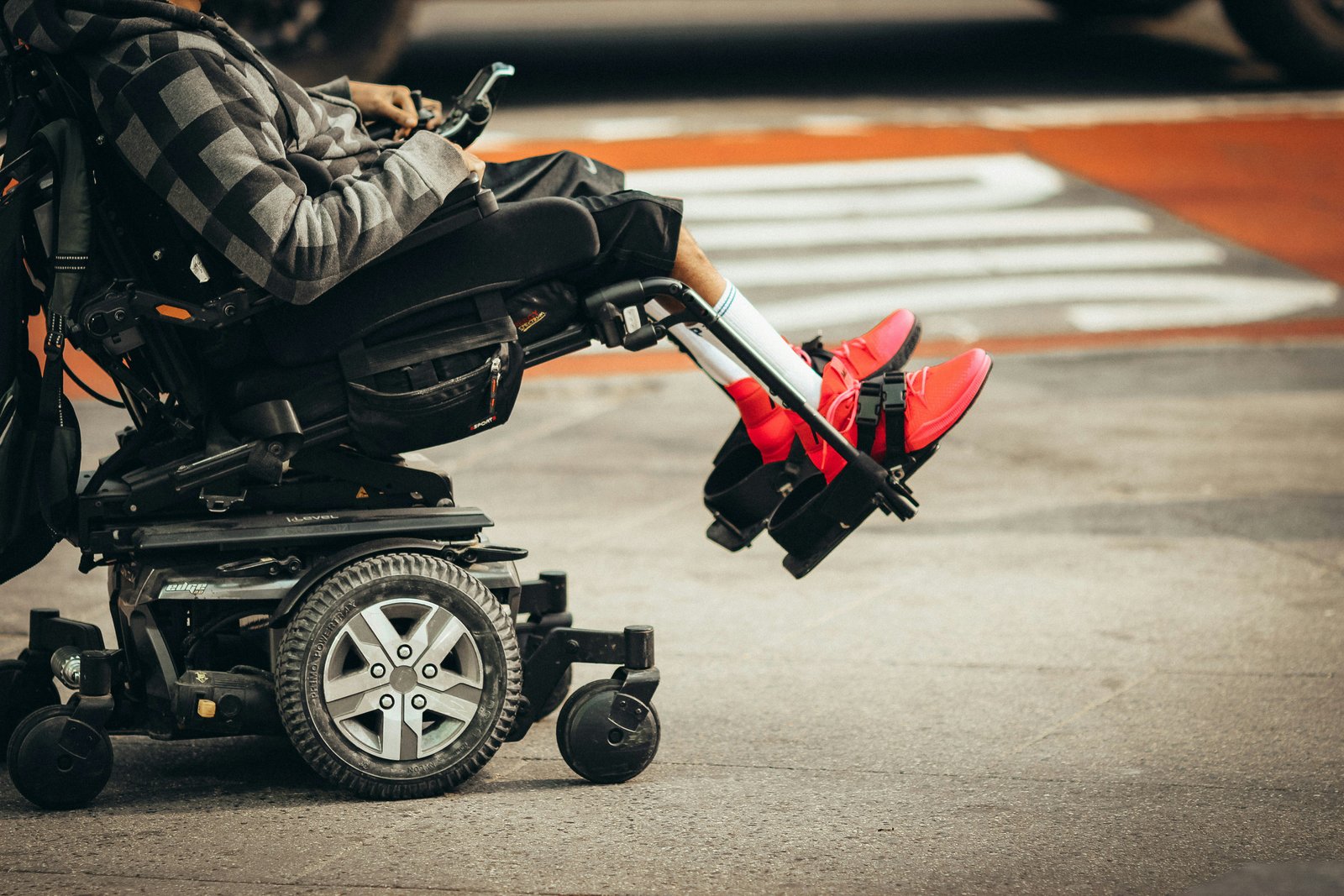

Two weeks after a $274.5 million overhaul of a taxpayer-funded program for people with disabilities, Marylanders who depend on the service say they can no longer reliably get to work or medical appointments.
Chris Danielsen, who is blind, recently booked a ride to work that never arrived, forcing him to find another way to get there. Days later, he said, drivers called to tell him they were waiting for him.
“It either wouldn’t come, or I wouldn’t know whether it was coming or not,” Danielsen told Spotlight on Maryland. His frustration stems from a November 9 redesign of Maryland’s Call-a-Ride program, which provides subsidized, on-demand transportation for people with disabilities. Riders who previously booked directly with transportation companies must now use a centralized phone system or a mobile app.
The Rollout
A Spotlight on Maryland review of state procurement records shows the rollout followed years of contracting problems involving protests, flawed evaluations, staffing shortages, and millions of dollars in retroactive spending authority.

In August, Maryland’s Board of Public Works approved a five-year, $274.5 million contract to manage and deliver Call-a-Ride services. The winner, Baltimore-based MJ Management Services LLC, was the same company that administered the previous contract.
The Maryland Transit Administration said it has taken immediate action and that “fixing the issues on this app-based service is our top priority.”
The Impact
Danielsen, second vice president of the National Federation of the Blind of Maryland, said he has compiled a list of users who have complained that the transition has led to missed pickups, scheduling errors, and difficulty reaching dispatchers. For a program that provided more than 1.4 million rides in fiscal 2025, the consequences extend beyond inconvenience. Some passengers rely on the service to get to dialysis and other time-sensitive medical appointments.
“People are in potentially life-threatening situations,” Danielsen said.
He demonstrated the new app for Spotlight on Maryland outside his downtown Baltimore apartment. He said its round-trip feature schedules return pickups immediately after drop-off, regardless of the requested time. He now books one-way rides. He also said the system frequently fails to provide driver and vehicle details, raising concerns about passengers getting into the wrong cars. “That system was not ready for prime time,” he said. “They launched it anyway.”
The Procurement Mess
State records trace the replacement contract to August 2022, when the MTA solicited bids in hopes of awarding a contract in spring 2023. That did not happen.
Following bid protests, the MTA acknowledged defects in its evaluations and restarted the process. A procurement officer’s departure in 2024 and staffing shortages stalled the review. A 2025 cybersecurity attack interrupted access to procurement documents. Officials later discovered calculation errors that understated projected contract costs. Another protest delayed final approval until August 2026.
In October 2025, the Board of Public Works approved a $95.1 million contract modification, including $42.25 million in retroactive authority for services provided after the previous spending authorization was exhausted.
The State’s Response
The MTA said it has decreased phone wait times, made trips more reliable, corrected fares, and added protections for wheelchair users. During a November 18 meeting with disability advocates, MTA Administrator Tony Bridges acknowledged their concerns and pledged improvements.
Meanwhile, the state’s own Call-a-Ride policy contains a caveat: vehicle availability, wait times, and pickups are not guaranteed. The program is classified as a supplemental service, separate from federally mandated ADA paratransit. Under its rules, a missed pickup classified as a no-show can reduce a customer’s monthly allotment of 62 trips. Repeated violations can lead to suspension.
Danielsen said he wants Maryland to restore the previous booking system until the replacement functions reliably. “Just because we’re people with disabilities doesn’t mean that we don’t deserve to be treated equally, to be treated respectfully,” he said.
The Bottom Line
Maryland’s $274.5 million Call-a-Ride program for people with disabilities is failing users after a flawed app rollout, according to riders and advocates. Blind user Chris Danielsen says the new system has led to missed pickups, scheduling errors, and safety concerns. The MTA says it is working to fix the problems. The rollout followed years of procurement delays, protests, and staffing shortages.
My Opinion
Maryland is spending two hundred seventy-four million dollars on a program that is supposed to help people with disabilities get to work, to the doctor, to the grocery store. And it’s not working.
The MTA says it is working on it. Already, there has been decreased wait times and added protections for wheelchair users and it has met with the National Federation of the Blind. It says fixing the app is its “top priority.”
But the state’s own policy says vehicle availability, wait times, and pickups are not guaranteed. It says the program is a “supplemental service” and a missed pickup can reduce a rider’s monthly allotment of trips. It also says repeated violations can lead to suspension. In other words, when the system fails, the rider pays the price.
Maryland spent $274.5 million on a contract that took four years to award, went through multiple protests, and was delayed by a cyberattack and staffing shortages. The same company that ran the old system is running the new one. And the new one does not work.
People with disabilities are not asking for special treatment. They are asking for the same thing everyone else wants: to be able to get where they need to go. The state of Maryland promised them that. Then it rolled out a broken app and told them to download it.
Danielsen said it best. “Just because we’re people with disabilities doesn’t mean that we don’t deserve to be treated equally, to be treated respectfully.” He is right. And the state should be ashamed that he had to say it.