

In a sudden escalation of tensions with a key ally, U.S. President Donald Trump has threatened to impose a crippling 100% tariff on all Canadian goods if Prime Minister Mark Carney finalizes a trade agreement with China.
The 100% Threat and a “Drop Off Port” Warning
Trump issued the threat on his social media platform, Truth Social, stating, “If Canada makes a deal with China, it will immediately be hit with a 100% Tariff against all Canadian goods and products coming into the U.S.A.” He accused Carney of trying to turn Canada into a “Drop Off Port” for Chinese goods to enter the U.S. market, a move he called “sorely mistaken.”
The threat marks a sudden hardening of Trump’s stance. Just weeks before, he had hailed the potential Canada-China deal—which would see Canada ease tariffs on Chinese electric vehicles in exchange for lower Chinese levies on Canadian farm goods—as “a good thing.”
A Relationship in Sharp Decline
The tariff threat is the latest in a series of confrontations that have plunged U.S.-Canada relations to a new low. The rift was publicly ignited at the World Economic Forum in Davos, where Prime Minister Carney warned of a “rupture” in the U.S.-led world order—remarks widely seen as targeting Trump without naming him. Trump responded defiantly in his own speech, declaring, “Canada lives because of the United States.”
Since then, Trump has withdrawn Canada’s invitation to his newly formed “Board of Peace” and blasted the country for being “against The Golden Dome being built over Greenland,” a reference to a planned anti-missile shield, and for “doing business with China.”
Carney’s Pushback and a “New World Order”
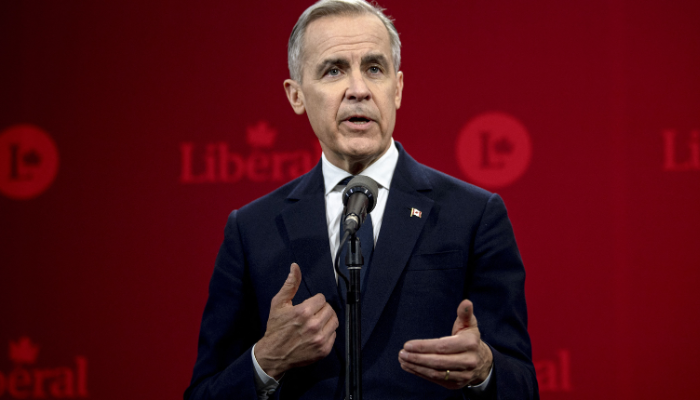
Prime Minister Carney has pushed back against both the personal and political criticisms. On Thursday, he asserted, “Canada doesn’t live because of the United States. Canada thrives because we are Canadians.” He has framed the China deal as a necessary adaptation, telling reporters earlier this month that “the world has changed” and that progress with China sets Canada up “well for the new world order.”
Experts note that Canada’s foreign policy is undergoing a significant shift, driven in part by the unpredictability of its largest trading partner. The threat of 100% tariffs now places the country in an impossible bind: choose closer ties with China and face economic retaliation from the U.S., or abandon the deal and cede strategic autonomy.
With no timeline provided for the threatened tariffs and no immediate comment from the White House or Carney’s office, the stage is set for a potential trade war that could redefine North American alliances.