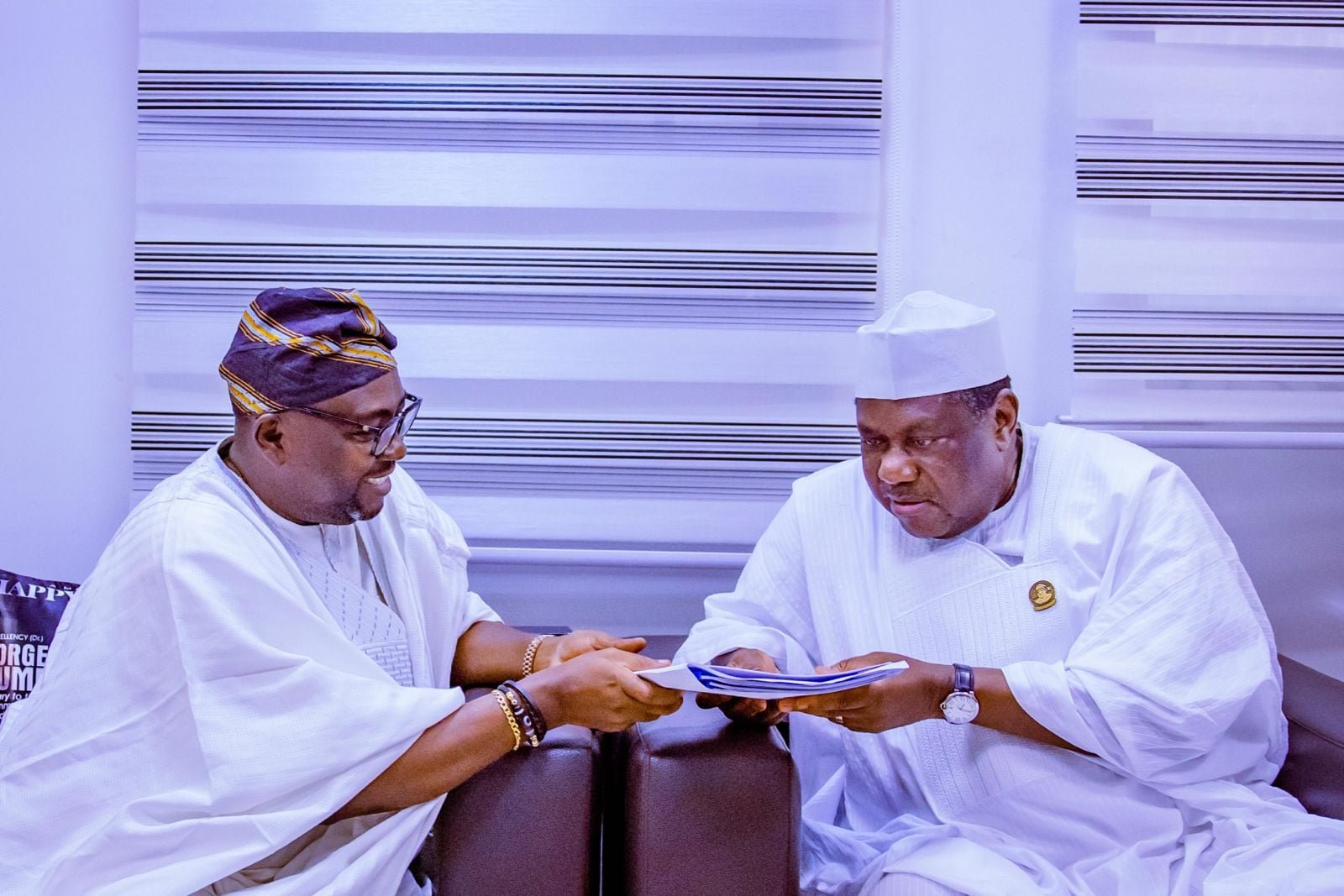

The Minister of Power, Adebayo Adelabu, has resigned his position to pursue his governorship ambition in Oyo State. In a resignation letter dated April 22, 2026, and addressed to President Bola Tinubu, Adelabu said the decision would take effect from April 30, 2026, to allow for a smooth transition.
According to the letter, the minister was stepping down with “a deep sense of honour and profound gratitude.” “I write with a deep sense of honour and profound gratitude to formally tender my resignation as the Minister of Power of the Federal Republic of Nigeria,” he wrote. “This resignation is to take effect on 30th April 2026, in order to allow sufficient time for a smooth and orderly handover of responsibilities.”
But for millions of Nigerians who have endured relentless blackouts during his tenure, there is little to be grateful for. Adelabu is leaving the Power Ministry in much the same condition he found it: broken.
The Record He Leaves Behind
Adelabu took over as Minister of Power at a time when Nigeria’s electricity sector was already in crisis. The grid was unreliable. Generation was low. Distribution companies were inefficient. Gas supply was intermittent. His task was to fix it.
He did not.
During his tenure, the national grid collapsed multiple times — in some cases, multiple times within a single month. In October 2025, the grid collapsed three times in one week, plunging the country into darkness. In February 2026, another collapse left hospitals, businesses, and homes without power for days. Each time, Adelabu appeared before cameras to offer explanations. Ageing infrastructure. Gas shortages. Vandalism. Debt owed to gas suppliers. The excuses were many. The solutions were few.
Nigeria’s power generation has remained stubbornly low, hovering between 3,500 and 4,500 megawatts for a country of more than 200 million people. By comparison, South Africa — with a smaller population — generates over 25,000 megawatts when its grid is functional. Adelabu promised to increase generation to 6,000 megawatts. He never came close.
The Electricity Act of 2023, which decentralized the power sector and allowed states to generate and distribute electricity, was passed before he took office. Adelabu’s role was to implement the reforms. Implementation lagged. States complained of federal foot-dragging. Investors complained of unclear regulations. Ordinary Nigerians complained of paying for darkness.
Adelabu has blamed the problems on factors beyond his control: the gas companies, the distribution companies, the transmission company, state governments, and previous administrations. At various points, he has been in conflict with virtually every stakeholder in the sector. That may be accurate. It is also an admission that he could not manage those relationships to produce results.
The Political Calculation
Adelabu is not a novice in Oyo politics. He was the governorship candidate of the All Progressives Congress in 2019, losing to the incumbent, Seyi Makinde of the Peoples Democratic Party. That loss was not narrow. Makinde won decisively. But Adelabu has remained a significant political figure in the state, leveraging his business background and his family name — he is a grandson of the late Oyo State politician and business magnate, Chief Adegoke Adelabu.
His record at the Power Ministry is a liability. His opponents will not hesitate to remind voters that he oversaw a sector that failed them repeatedly. They will ask: if you could not keep the lights on in Abuja, how will you run Oyo State? They will point to the grid collapses, the unfulfilled promises, and the long hours Nigerians spent in darkness.
Adelabu’s defenders will argue that the problems he faced were structural, not personal. They will say no single minister could have fixed the power sector in such a short time. They will argue that he inherited a mess and did his best under impossible circumstances. But “did his best” is not a campaign slogan. And voters who cannot remember the last time they had 24 hours of uninterrupted electricity may not be in a forgiving mood.
The Risk
The risk for Adelabu is substantial. He is leaving a federal cabinet position — a senior role with national visibility and access to the President — for a state-level race that he lost the last time he ran. There is no guarantee he will win. The incumbent, Makinde, remains popular in parts of the state. The APC in Oyo has not been unified. And Adelabu’s record as Power Minister gives his opponents an easy line of attack.
If Adelabu loses, he will have resigned from a powerful federal position for nothing. There is no automatic return to the cabinet. He would be a former minister and a two-time loser. That is not a resume for future political office. It is an epitaph.
The Smart Move?
But there is also a case that this is a smart move. Adelabu is not getting younger. The 2027 election cycle is approaching. If he wants to be governor of Oyo State, this may be his best chance. Staying in the cabinet would have kept him in Abuja, away from the grassroots organizing required to win a state election. Resigning now gives him time to campaign, build alliances, and repair relationships within the APC in Oyo.
The timing also matters. President Tinubu approved his request. That suggests the President is not standing in his way. In Nigerian politics, a sitting president’s blessing — or at least his lack of opposition — is a valuable asset. Adelabu is also a businessman with resources. He is not starting from zero.
But none of that erases his record. The lights did not stay on during his tenure. And in a political campaign, that is not a detail. It is the opening argument for the other side.
What This Means for Tinubu’s Cabinet
Adelabu’s resignation is a loss for the Power Ministry, though whether it is a significant loss depends on one’s view of his performance. Finding a replacement who can navigate Nigeria’s complex electricity sector will not be easy. The timing — just over a year before the 2027 elections — means the President may appoint a caretaker or an acting minister rather than a substantive replacement.
Whoever takes over will inherit the same collapsing grid, the same gas shortages, and the same angry public. They will also inherit the lesson of Adelabu’s tenure: promises are not enough. Results matter.
The Bottom Line
Minister of Power Adebayo Adelabu has resigned effective April 30, 2026, to pursue the governorship of Oyo State. During his tenure, Nigeria’s national grid collapsed multiple times. Power generation remained stagnant. His promises to increase output to 6,000 megawatts went unfulfilled. Critics say he failed to manage the sector’s complex stakeholders. Supporters say he inherited an impossible problem.
Adelabu lost the 2019 governorship race in Oyo State. He is now resigning from the cabinet to try again. But he leaves behind a record that his opponents will use against him. The lights did not stay on. And in a state where voters are as frustrated with the power supply as anyone else, that is not a small thing.
Big risk or smart move? The answer depends on whether voters remember his tenure at Power — or only care about what he promises to do next.