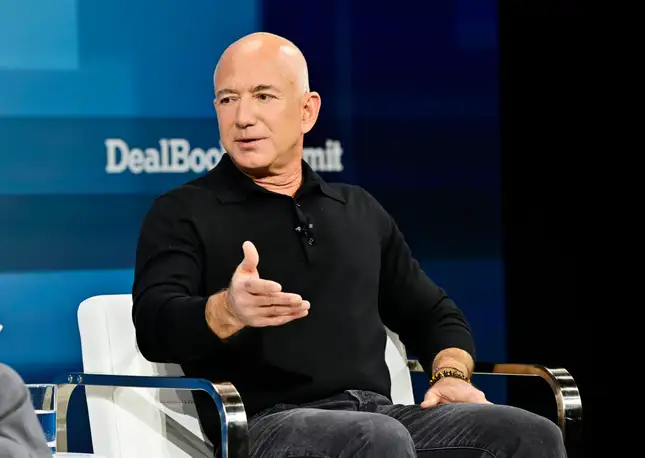

The world’s second-richest man has a proposal for the rest of America: stop taxing the bottom half of earners entirely.
Jeff Bezos, speaking from Blue Origin’s rocket factory in Florida during a CNBC interview, argued that the United States has a spending problem, not a revenue problem. His solution? Eliminate federal income taxes for the lowest-earning 50% of Americans.
Bezos pointed to IRS data showing that the top 1% of earners already pay 40% of all income taxes, while the bottom 50% pay just 3%. He argued that making nurses, teachers, and other workers pay zero in federal income tax would actually make the tax system more progressive, not less.
“The issue is spending, not revenue,” Bezos said, according to the summary of his remarks.
The Math Behind the Proposal
Bezos’s proposal is striking because it comes from someone whose personal fortune is estimated at $280 billion. He is not proposing a tax cut for himself or his peers. He is proposing to lift the tax burden entirely from half of Americans who earn the least.
IRS data support his claim about the distribution of tax payments. The top 1% do pay a disproportionate share. But that is largely because they earn a disproportionate share of the national income. The bottom 50% of earners collectively make less than the top 1% — far less.
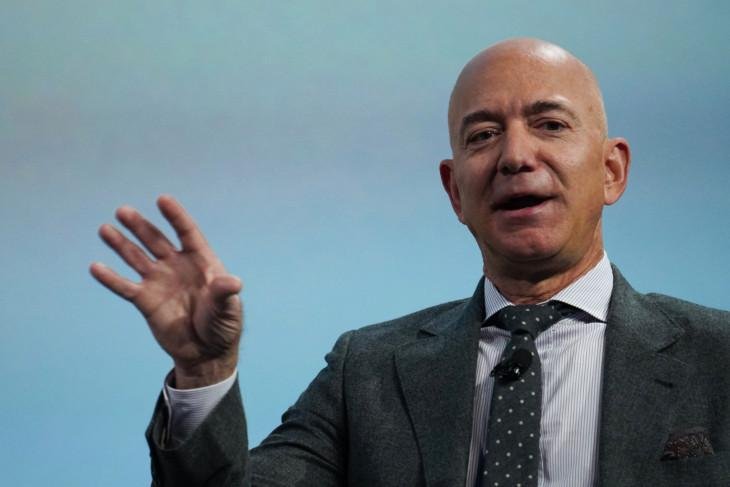
Bezos argued that eliminating taxes for low earners would not starve the federal government of revenue, because that group contributes so little to begin with. He also criticized government waste, citing New York City schools as an example of inefficiency, and drew a comparison to Amazon’s customer service standards.
The Spending Critique
Bezos did not limit his remarks to taxes. He argued that the federal government’s real problem is not inadequate revenue but excessive and inefficient spending.
He pointed to waste in government programs and suggested that the same rigor applied in the private sector is missing in public sector spending. The comparison to Amazon’s customer service — which Bezos himself has acknowledged has struggled in recent years — was a pointed self-criticism. Even Amazon, he suggested, is held to higher standards than the government.
What He Plans to Do With His Fortune
Bezos also addressed his personal wealth. He said he plans to donate the majority of his $280 billion fortune to causes including climate change and inequality. That is not a new pledge — he has made similar commitments before — but the timing, alongside his tax proposal, reinforces his argument that the wealthy can and should contribute more voluntarily while the government should tax less at the bottom.
Critics will note that Bezos has faced scrutiny over Amazon’s labor practices, its opposition to union organizing, and the relatively small percentage of his wealth he has donated to date compared to peers like Warren Buffett and Bill Gates. Supporters will argue that a billionaire advocating for lower taxes on the poor is not what anyone expected.
The Bottom Line
Jeff Bezos proposed eliminating federal income taxes for the lowest-earning 50% of Americans during a CNBC interview from Blue Origin’s Florida rocket factory. He argued that the U.S. has a spending problem, not a revenue problem, and that the top 1% already pay 40% of all income taxes while the bottom 50% pay just 3%.
Bezos criticized government waste, citing New York City schools as an example, and acknowledged that even Amazon’s customer service standards have slipped. He reiterated his pledge to donate most of his $280 billion fortune to climate change and inequality causes.
The proposal is unlikely to become policy. But coming from one of the richest men in the world, it has already started a conversation about who pays what — and whether the bottom half of Americans should pay anything at all.