Boeing is making another expensive push to keep the long-delayed next-generation Air Force One program on schedule, committing additional resources to deliver the first presidential aircraft in 2028.
The aerospace giant is expanding production, strengthening certification and testing teams, and accelerating work across multiple fronts to prevent further setbacks on one of the most complex aircraft conversion projects ever undertaken.
Boeing recently disclosed that accelerating work on the program will require an additional $280 million, marking the latest cost increase on the more than $4 billion project. Because Boeing signed a fixed-price contract, the manufacturer is absorbing most of those additional expenses itself, pushing its cumulative losses beyond $3 billion.
“We’ve made the decision to add significant resources to support the build and test schedule on VC-25B,” Boeing President and CEO Kelly Ortberg said while announcing the company’s latest quarterly results.
The Complexity of the Project
Much of the program’s delay stems from the extraordinary complexity of converting two Boeing 747-8 aircraft originally built for the now-defunct Russian airline Transaero into presidential command posts. Boeing has had to overcome supplier failures, workforce security clearance challenges, extensive wiring work, evolving communications requirements, and structural repairs after stress-corrosion cracks were discovered in the airframes.
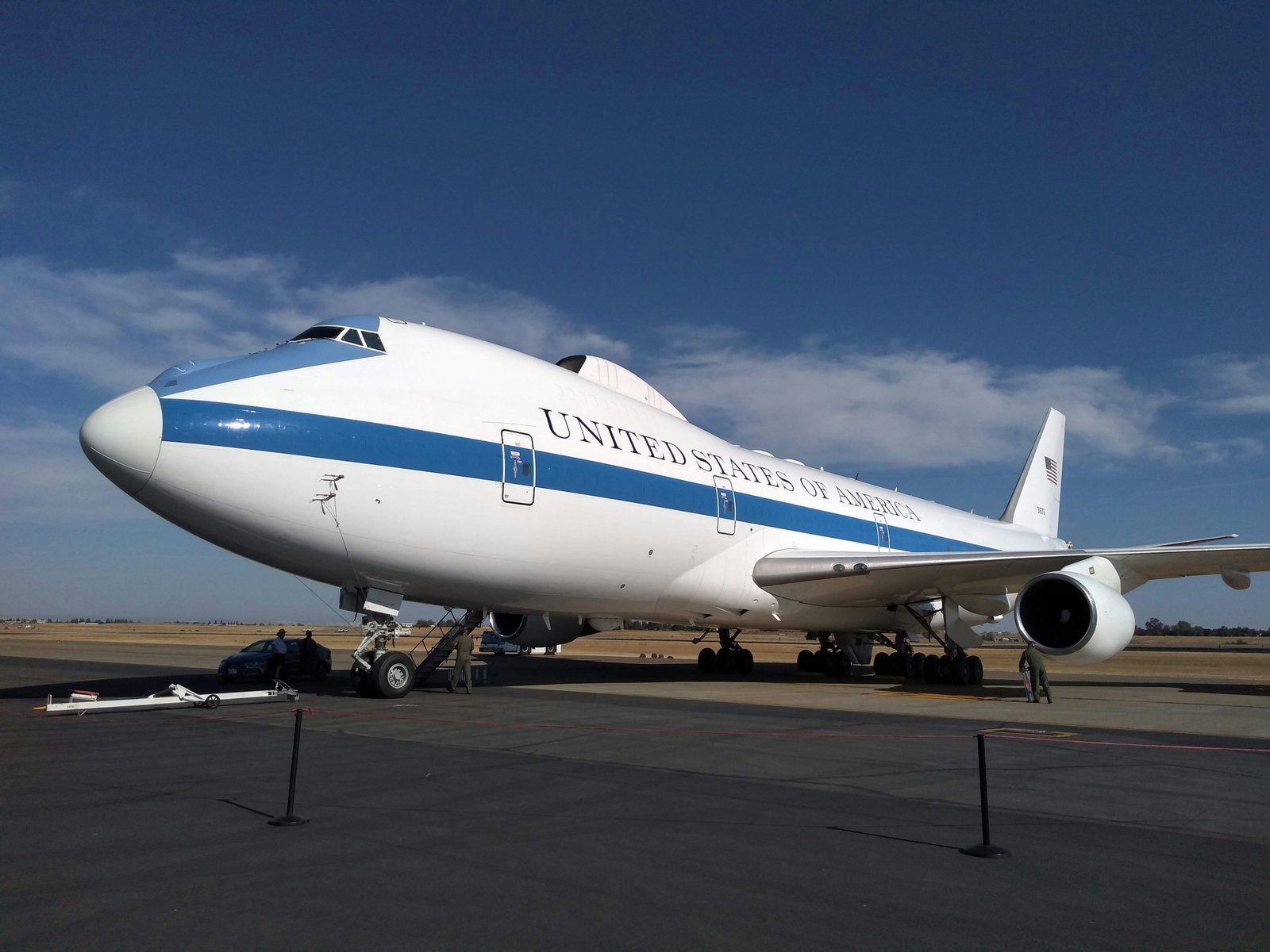
The additional spending is being directed toward completing structural modifications and the enormous amount of wiring required for the aircraft’s communications, defensive systems, and mission equipment. Boeing is also reinforcing its certification and flight-test workforce while working with the US Air Force to transition from an FAA-led certification process to a military certification framework.
The Flying White House
The permanent VC-25B fleet represents far more than a luxury Boeing 747. Based on the 747-8 platform, the aircraft is designed to serve as an airborne White House for the next 30 to 40 years.
Compared with current VC-25A aircraft, the new jets will be larger, faster, and capable of flying roughly 8,900 miles without refueling, thanks in part to more efficient GEnx engines. Inside, they will feature secure worldwide communications comparable to those available in the White House, upgraded electrical systems, military-specific avionics, advanced medical facilities, executive workspaces, multiple meeting areas, and classified defensive systems.
However, one notable capability will disappear. Unlike the current VC-25A fleet, the new aircraft will not include aerial refueling capability, a requirement that was removed to reduce costs, engineering complexity, and schedule risk.
The Interim Solution
The prolonged delays prompted the Air Force to acquire a donated Boeing 747-8 from Qatar as an interim “Bridge” Air Force One. Converted by L3Harris in about 10 months, the aircraft entered presidential service earlier this year but is now undergoing additional upgrades after concerns emerged about its defensive and mission capabilities.
Until Boeing delivers the permanent VC-25Bs, the aging VC-25A fleet and the interim Bridge aircraft will continue sharing presidential transport duties.
The Air Force has also purchased additional Boeing 747-8 airframes for training and spare parts while constructing a full-scale cabin mock-up so White House personnel can begin familiarizing themselves with the aircraft before it enters service.
The Bottom Line
Boeing is spending an additional $280 million to keep the Air Force One program on track for a 2028 delivery. The company has already absorbed more than $3 billion in losses on the fixed-price contract. The VC-25B aircraft, based on the Boeing 747-8, will serve as an airborne White House for the next 30-40 years, featuring secure communications, advanced medical facilities, and classified defensive systems. An interim “Bridge” Air Force One, donated by Qatar, is currently in service while Boeing completes the permanent fleet.