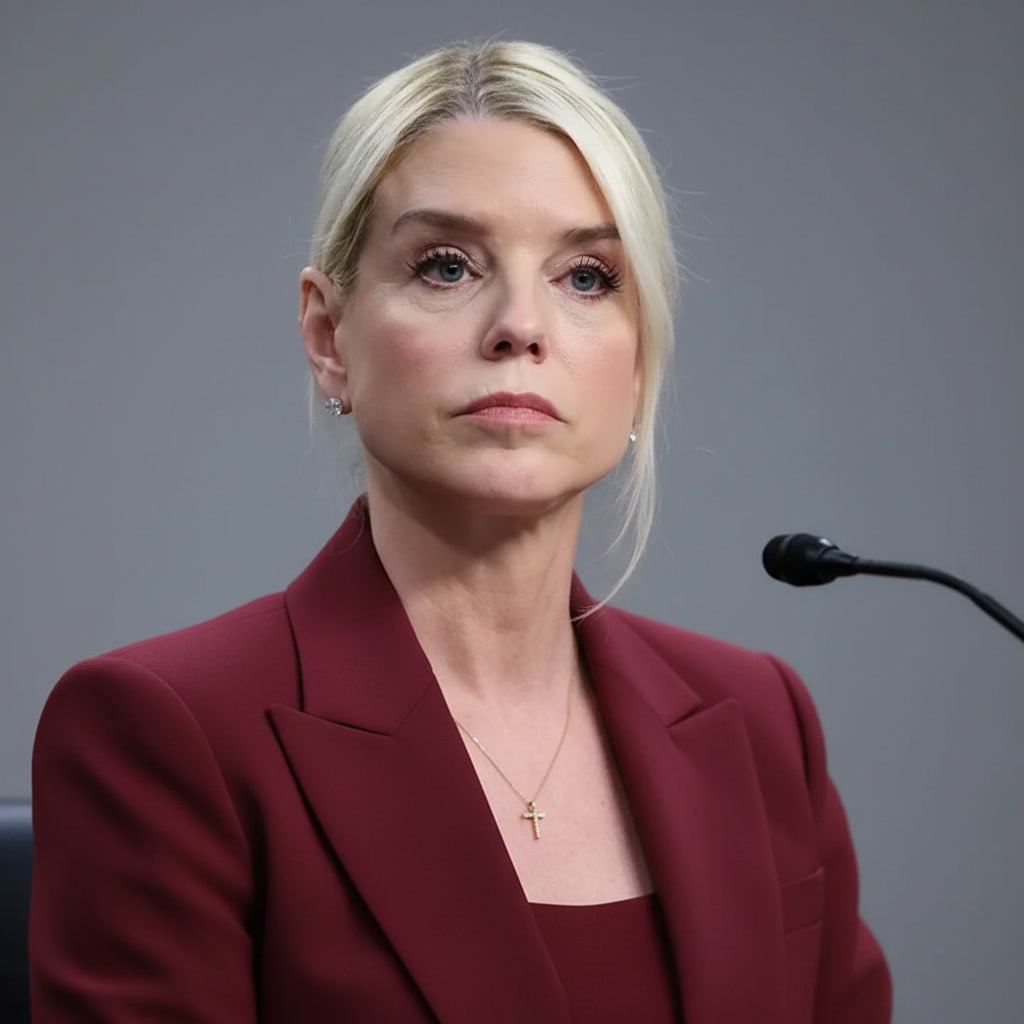
Former United States Attorney General Pam Bondi is expected to appear before members of the House Oversight Committee on Friday for a closed-door session concerning her handling of documents linked to convicted sex offender Jeffrey Epstein.
The Republican-controlled committee subpoenaed Bondi in March to answer questions regarding the Department of Justice’s release of millions of pages of Epstein-related records while she headed the agency.
Critics, including survivors and Democratic lawmakers, have accused Bondi of mishandling the process. They alleged that conflicting statements were made about the content of the files, sensitive information belonging to survivors was exposed, and certain records connected to President Donald Trump were omitted from the release.
Epstein died in a New York jail in 2019 while awaiting trial on federal sex trafficking charges.
Bondi has defended the DOJ’s actions, insisting officials worked under intense pressure to meet deadlines set by Congress for reviewing and releasing the materials.
Before returning to office, Trump had promised to make major Epstein-related information public, but some of his supporters and opponents later argued that the disclosures under Bondi fell short of expectations.
“We haven’t seen the full release of the files, so that’s already a violation of the law,” said Dani Bensky, who accused Epstein of abusing her when she was younger.
Bensky also criticised the disclosure process, saying the release of documents containing victims’ private details “sends such a chilling effect to the rest of the survivor community.”
Aside from the Epstein controversy, Bondi’s tenure at the Justice Department drew criticism from legal observers who argued that the department was used to advance Trump’s political agenda.
Trump removed Bondi from office in April, though he later described her on social media as “a Great American Patriot and a loyal friend.” Bondi, in turn, said serving as attorney general was “the honor of a lifetime.”
During a tense House Judiciary Committee hearing in February, Bondi expressed sympathy for Epstein’s victims while defending the department’s actions.
“To address the Epstein files, more than 500 attorneys and reviewers spent thousands of hours painstakingly reviewing millions of pages to comply with Congress’ law,” she said.
“We’ve released more than 3 million pages, including 180,000 images, all to the public while doing our very best in the time frame allotted by the legislation to protect victims.”
The upcoming interview has also sparked controversy because it will take place privately and only be transcribed instead of recorded on video under oath.
California Representative Robert Garcia, the committee’s top Democrat, objected to the arrangement.
“We’re demanding that it be both videotaped under oath and released to the public,” Garcia told NPR.
The Oversight Committee has already questioned several high-profile figures linked to Epstein investigations, including Ghislaine Maxwell, former associates, and former President Bill Clinton alongside Hillary Clinton.
According to the committee, Bondi’s testimony transcript will eventually be released publicly.
Bensky also argued that a transcript alone would not be enough.
“It should be transcribed, it should be filmed, and it should be publicly released as quickly as possible,” she said, adding that “context is lost” when interviews are only transcribed.
Meanwhile, Democrats raised concerns after reports emerged that Harmeet Dhillon, the Justice Department’s current assistant attorney general for civil rights, is among the lawyers representing Bondi during the interview.
However, legal experts noted that such arrangements are common when former government officials testify on issues connected to their previous roles.
The Justice Department said Dhillon and other officials would attend the session “to assist the Committee in understanding the Department’s role in implementing and complying with the Epstein Files Transparency Act during her tenure.”