
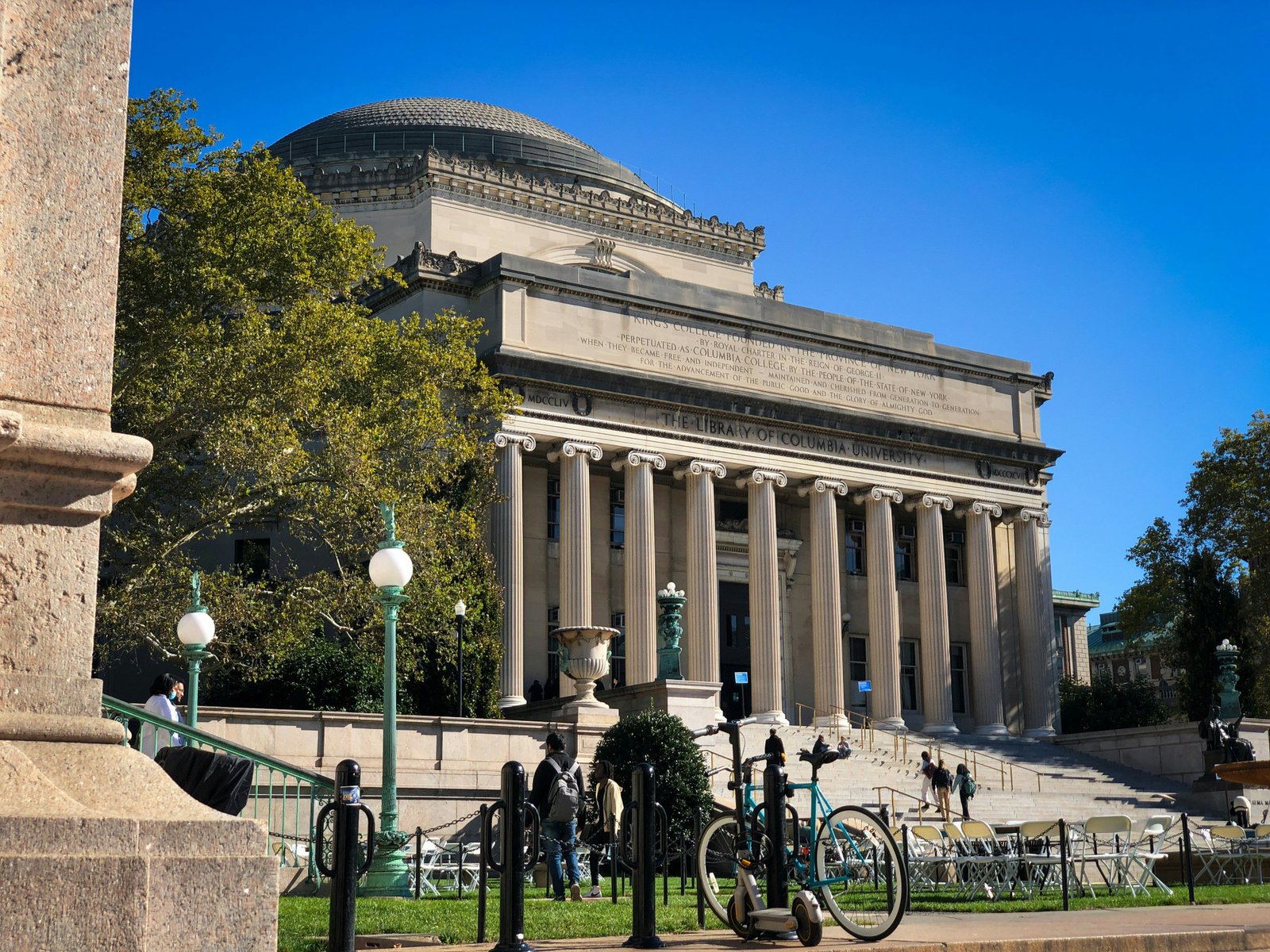
Columbia University’s International Students and Scholars Office warned international students Thursday that the Department of Homeland Security has proposed raising the fee for a work authorization program from a base of $470 to $70,000.
The proposal targets Optional Practical Training — a 12-month work authorization program that lets international students on an F-1 visa work in their field of study without applying for a work visa — and also seeks to add a $30,000 fee for OPT extensions, including the 24-month STEM OPT extension available to international students who have graduated from a DHS-approved STEM field.
What DHS Is Proposing
Under the proposal, schools would have to pay $70,000 for each student seeking Optional Practical Training and $30,000 for applications for program extensions. That represents a sharp increase from the current fee of around $500, which international students have historically paid themselves .
The program allows foreign students on F-1 visas to temporarily work in the United States in jobs related to their fields of study after graduation. The program is a key driver of foreign student enrollment and often serves as a bridge for those students to transition to other immigration statuses, like the H-1B visa, to continue working in the country .
Why DHS Says It’s Needed
“Optional Practical Training was never meant to be a back door into the American workforce, a subsidy for cheap labor, or a prize for those who game the system,” an unnamed DHS spokesperson said in a press release. “DHS is upskilling OPT to require foreign students to justify their worth to employers. American workers should not have to compete against a program that has been turned into a pipeline for cheap foreign labor”.
The public has 60 days to comment on the proposal before DHS can finalize it and put it into effect. The proposal could also face legal challenges from higher education groups or business associations.
The Impact on Students
The proposal marks the latest federal crackdown on international students’ ability to work in the United States, which has led members of the Columbia College Student Council to advocate for the University to offer alternative professional pathways for its international students.
“International students are running out of time,” CCSC International Students Representative Haris Shah said.
A senior international student at the School of General Studies, who was granted anonymity due to concerns her visa would be changed, said she originally intended to work in finance in the United States but has found it harder to secure a job.
“When this news came out, it largely interrupted my planned career trajectory and where I’m going to live for the next few years,” the student said. “Now I’m 99 percent sure I won’t get something, and I am 100 percent sure I’m going back to Europe” .
The Broader Crackdown
The DHS announcement comes after a series of changes that affect international students’ ability to work in the country. The ISSO announced in August that it would review international students’ approvals for Curricular Practical Training after the federal government tightened restrictions on eligibility.
The Trump administration has been putting pressure on international students in many ways as part of its wider efforts to crack down on immigration. Last year, the administration began suddenly terminating the legal status of thousands of international students, detaining and deporting many of them. This summer, it finalized a rule that sought to prevent international students from staying in the U.S. for more than four years without approval, though a federal court prevented that rule from taking effect in September.
The Bottom Line
DHS has proposed raising the OPT work authorization fee from $500 to $70,000, with an additional $30,000 for extensions. Columbia’s ISSO alerted students Thursday. The proposal is part of a broader Trump administration crackdown on international students. Students say it is disrupting their career plans and forcing them to consider leaving the country. The public has 60 days to comment, and legal challenges are expected.
My Opinion
A $70,000 fee for a work authorization program is not a fee. It is a wall. And the wall is designed to keep people out.
Optional Practical Training is a bridge that allows international students who graduate from American universities to work in their field of study for a year, often as a stepping stone to an H-1B visa or a green card. Some of them stay and build companies. Some of them stay and cure diseases. Some of them stay and teach the next generation of American engineers. The program is not perfect, but it is one of the most effective tools America has for retaining the talent it educates.
The DHS spokesperson said OPT “was never meant to be a back door into the American workforce, a subsidy for cheap labor, or a prize for those who game the system.” That is a caricature, not an argument. OPT holders are not cheap labor. They are graduate students with advanced degrees from some of the best universities in the world. They are not gaming the system. They are using the system exactly as Congress designed it.
The $70,000 fee is not about protecting American workers. It is about making sure that international students never get the chance to compete. And the students are already responding. One told the Columbia Spectator she is “100 percent sure” she is going back to Europe. Multiply that by thousands of students across the country, and you have a brain drain that will take decades to reverse.