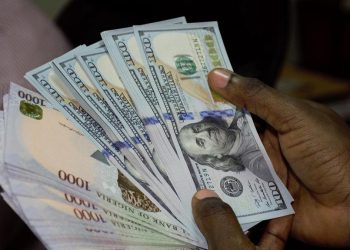


The Nigerian Naira showed a slight recovery this week, offering a brief moment of relief after weeks of sustained volatility in the parallel foreign exchange market.
Despite this modest improvement, the broader outlook for the local currency remains fragile, as persistent pressures continue to weigh heavily on the forex landscape.
As of Wednesday, February 26, trading activity in the black market, widely known as Aboki FX or the Bureau De Change (BDC) segment, reflected ongoing instability, with the Naira still struggling against major global currencies.
Black Market Exchange Rates
Dollar to Naira (USD/NGN): Buying – ₦1,378 | Selling – ₦1,440
Euro to Naira (EUR/NGN): Buying – ₦1,640 | Selling – ₦1,680
Pound to Naira (GBP/NGN): Buying – ₦1,900 | Selling – ₦1,940
While the slight dip suggests marginal strengthening, traders caution that underlying market pressures remain unresolved.
Foreign exchange dealers continue to cite scarcity of forex supply alongside strong demand from importers, travelers, and businesses navigating an uncertain economic environment.

Underlying Drivers of the Forex Strain
Nigeria’s foreign exchange challenges remain deeply structural rather than cyclical.
A key concern is policy consistency. Market participants argue that frequent shifts in forex regulations by the Central Bank of Nigeria (CBN) have created uncertainty, complicating planning for businesses and investors alike.
Investor sentiment has also been affected by broader macroeconomic conditions. Inconsistent policy signals, combined with inflationary pressures, have weakened confidence and reduced capital inflows.
Nigeria’s longstanding trade imbalance further compounds the situation. Heavy reliance on imports — from consumer goods to industrial inputs, continues to exert pressure on foreign reserves, while export earnings remain insufficient to offset demand.
Foreign Direct Investment (FDI) inflows have also slowed, with investors citing insecurity, infrastructure gaps, and economic unpredictability as major deterrents.
Although global factors such as oil price fluctuations and international economic tensions contribute to volatility, analysts note that domestic vulnerabilities remain the dominant drivers of currency weakness.
Impact on Cost of Living
For many Nigerians, exchange rate movements translate directly into daily economic realities.
The persistent weakness of the Nigerian Naira has continued to push up prices across essential sectors, including food, transportation, healthcare, rent, and education.
Households and small businesses remain particularly exposed, as declining purchasing power intensifies financial strain.
Outlook
While recent movements hint at temporary stabilization, analysts warn that sustained recovery will require structural adjustments, clearer policy direction, improved export performance, and renewed investor confidence.
For now, the black market remains a critical barometer of market sentiment, reflecting the pressures shaping Nigeria’s economic landscape.