
• Home
  • News
  • Government
  • Business & Finance
  • Entertainment
  • Sports
  • Tech
  • Health
  • About Federal Character
  • Advertise With Us
Federal Character
No Result
View All Result
Federal Character
  • Home
  • News
  • Government
  • Business & Finance
  • Entertainment
  • Sports
  • Tech
  • Health
  • About Federal Character
  • Advertise With Us
No Result
View All Result
Federal Character
No Result
View All Result
Home Government
German Chancellor Olaf Scholz Loses Confidence Vote

German Chancellor Olaf Scholz Loses Confidence Vote

Paving Way for Early Elections

Benita OrumabyBenita Oruma
2 years ago
in Government
Reading Time: 2 mins read
A A
0
Facebook ShareWhatsapp ShareX Share

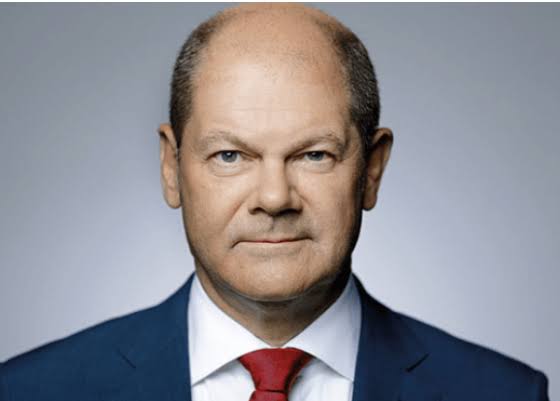
German Chancellor Olaf Scholz has lost a vote of confidence in parliament, setting the stage for early elections on February 23. While the defeat reflects the challenges facing his government, it also opens the door for a fresh political start and a chance to tackle Germany’s pressing issues with renewed vigor.

The vote was not unexpected. Scholz himself called for it, calculating that an early election might be the best opportunity to reinvigorate his Social Democratic Party (SPD) and offer voters a clear choice on Germany’s future direction. “It is now up to the people to determine the political course of our country,” Scholz said, framing the upcoming election as a critical moment to chart a new path.

Table of Contents

Toggle
  • Why the Vote Matters
  • A Tested Democratic Mechanism
  • Challenges and Opportunities Ahead
  • A Path Forward

Why the Vote Matters

This vote comes two months after the collapse of Scholz’s three-party coalition, which left him leading a fragile minority government. Unable to pass new laws without the support of the opposition Christian Democratic Union (CDU), his administration was largely paralyzed.
With Germany grappling with a stalled economy and global crises, continuing without a strong mandate until the scheduled election in September 2025 risked undermining public confidence and delaying crucial reforms.

Despite lagging behind the CDU in opinion polls, Scholz is using this moment to advocate for transformative policies, including significant investments in defense and infrastructure. His main rival, CDU leader Friedrich Merz, has promised tax cuts and a focus on fiscal discipline, ensuring a robust debate over Germany’s future priorities during the campaign.

A Tested Democratic Mechanism

Though dramatic, the no-confidence vote is not a crisis but rather a constitutional tool designed to resolve political deadlock. Since World War II, German chancellors have used this mechanism five times to dissolve parliament and call early elections, most notably Gerhard Schröder, who relied on it twice. This system was deliberately designed to maintain stability, avoiding the chaotic politics of the Weimar Republic era.

Challenges and Opportunities Ahead

The collapse of Scholz’s coalition stemmed from deeper political divisions, particularly over fiscal policy. Disagreements between Scholz’s SPD and the liberal Free Democratic Party (FDP), led by Finance Minister Christian Lindner, reached a breaking point over proposals to loosen Germany’s strict debt rules to fund infrastructure projects and support for Ukraine. When Lindner blocked these measures, the coalition unraveled.

Yet the political fragmentation underlying this crisis is a more significant challenge. Germany’s parliament is increasingly diverse, with more parties represented than ever before. While this reflects a broader spectrum of political voices, it has also led to heightened polarization. The far-right Alternative for Germany (AfD), for example, has seen its popularity surge, polling at nearly 20%, compared to 10.4% in 2021.

A Path Forward

Despite these challenges, the upcoming election represents an opportunity for Germany to address its economic and political issues head-on. It offers a chance to restore stability, modernize the country’s infrastructure, and reaffirm its commitment to European leadership and global engagement. Scholz’s call for “massive investment” signals his intention to steer Germany toward a future-oriented path, while Merz’s fiscal proposals highlight the need for balanced governance.

The road ahead may be uncertain, but Germany’s robust democratic institutions and commitment to resolving differences through dialogue and elections provide reason for hope. As voters prepare to make their voices heard, this election could mark the beginning of a new chapter for Europe’s largest economy.


Tags: confidencefederal characterGerman ChancellorGerman Chancellor Olaf Scholz Loses Confidence VoteNewsOlaf Scholzvote
Share234SendTweet147
Benita Oruma

Benita Oruma

Benita Oruma is a lawyer in training, a 400 level student in the university of Ibadan. She is a content writer with interest in corporate affairs and the marketplace.

Related Stories

Elon Musk’s Bid To Overturn Twitter Investor Ruling Fails

Maye Musk on Elon Musk: Her Son “Just Wants to Do Good” but Steps on Toes

byEriki Joan Ugunushe
0

​​Every mother sees the world a little differently through the eyes of her child, but few parents have a perspective quite like Maye Musk on Elon Musk. Sitting...

​DOJ Probes DEA Over Fentanyl "Walking" Strategy

Mexican Drug Suspect Arrested In Nigeria As NDLEA Uncovers Meth Lab

byAyobami Owolabi
0

A suspected Mexican drug kingpin, Arturo Carrera Loaiza, was arrested at Lagos International Airport last month while attempting to leave Nigeria, the National Drug Law Enforcement Agency has...

Trump Administration Spent $9.5bn Paying Federal Workers To Stay Home

Trump Administration Spent $9.5bn Paying Federal Workers To Stay Home

byAyobami Owolabi
0

The administration of US President Donald Trump spent an estimated $9.5bn last year on salaries for federal workers placed on paid administrative leave, despite the programme being part...

US Lawmakers Move To Ban Permanent Fence Around Capitol

US Lawmakers Move To Ban Permanent Fence Around Capitol

byAyobami Owolabi
0

US lawmakers have introduced legislation seeking to prevent the installation of permanent fencing around the United States Capitol, arguing that the complex should remain accessible to the public....

Next Post
Why the EU is Dragging Britain to the Court of Justice

Why the EU is Dragging Britain to the Court of Justice

Leave a Reply Cancel reply

Your email address will not be published. Required fields are marked *

Federal Character

We bring to you precise and factual news.
Towson, Baltimore, Maryland, USA

Recent Posts

  • Maye Musk on Elon Musk: Her Son “Just Wants to Do Good” but Steps on Toes
  • Amazon Wage Bump Drives Minimum Pay to $20 an Hour Alongside New Perks
  • Mexican Drug Suspect Arrested In Nigeria As NDLEA Uncovers Meth Lab

Categories

  • Beauty
  • Business & Finance
  • Entertainment
  • Fashion & Lifestyle
  • Food & Nutrition
  • Government
  • Health
  • News
  • Politics
  • Sports
  • Tech

Weekly Newsletter

  • Home
  • About Federal Character
  • Advertise With Us
  • Cookie Policy
  • Sitemap

Copyright © FederalCharacter.com 2026 .

Welcome Back!

Login to your account below

Forgotten Password?

Retrieve your password

Please enter your username or email address to reset your password.

Log In
No Result
View All Result
  • Home
  • News
  • Government
  • Business & Finance
  • Entertainment
  • Sports
  • Tech
  • Health
  • About Federal Character
  • Advertise With Us

Copyright © FederalCharacter.com 2026 .