
On the tenth day of a war that has already reshaped the Middle East, Iran’s hardliners delivered a defiant message to the world: the Islamic Republic is not crumbling.
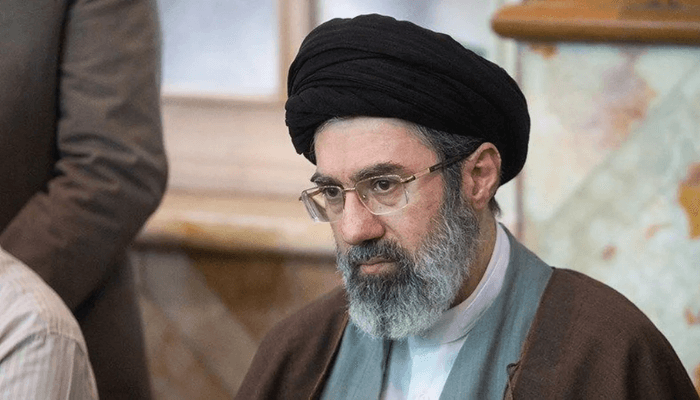
Thousands took to the streets Monday to proclaim loyalty to new Supreme Leader Ayatollah Mojtaba Khamenei, the 56-year-old cleric whose ascendance dashes any hope of a moderate shift in Tehran — and sent global markets into a tailspin.
In Isfahan’s historic Imam Square, loyalists gathered as explosions from apparent airstrikes echoed in the distance. They waved Iranian flags, held portraits of Mojtaba’s slain father, Ali Khamenei, and chanted “God is the Greatest.” A eulogist in Tehran sang: “Either death or Khamenei, our blood leads to paradise.”
Politicians and military institutions issued swift pledges of loyalty. “We will obey the commander-in-chief until the last drop of our blood,” a defense council statement declared.

A Nation Divided
Iranians contacted by telephone painted a country split between supporters hailing the choice as defiance and opponents despairing that their hopes for change have been crushed.
“I am so happy that he is our new leader,” said Zahra Mirbagheri, a 21-year-old university student in Tehran. “It was a slap in the face to our enemies that thought the system will collapse with the killing of his father. Our late leader’s path will continue.”
But others voiced fear and resignation. Babak, a 34-year-old businessman in the central city of Arak who asked to withhold his family name, said the regime’s security apparatus remains firmly in control.
“The Guards and the system are still powerful. They have tens of thousands of forces ready to fight to keep this regime in place. We, the people, have nothing,” he said.
Many Iranians had initially celebrated the elder Khamenei’s death, just weeks after his security forces killed thousands of anti-government protesters in the worst domestic unrest since the 1979 revolution. But with the country under relentless attack, there has been little sign of anti-government activity.
The New Leader
Mojtaba Khamenei, a Shi’ite cleric whose power base lies in the security forces and their vast business empire, has been declared “unacceptable” by President Donald Trump, who has demanded Iran’s unconditional surrender. Israel had previously warned it would kill whoever succeeded his father unless Iran ended its hostile policies.
The new supreme leader’s wife, son, and mother also died in the opening U.S.-Israeli strikes, according to Iranian state media. His rise appears to have been orchestrated by the Revolutionary Guards, who have consolidated control over the succession process.
Oil Markets in Turmoil
The prospect of prolonged hardline rule — and extended conflict — sent oil prices surging in record leaps. Brent crude futures shot as high as $119.50 a barrel in what would have been the biggest one-day rise on record, before settling around $99.25. Since the war began, Brent has surged by as much as 65%.
The Strait of Hormuz, through which a fifth of global oil and liquefied natural gas normally flows, remains effectively shut. Tankers have been unable to sail for more than a week. Producers are halting pumping as storage fills.
Sources said Monday that Saudi Arabia had curbed production at two oil fields, becoming the latest Gulf producer to cut supply after Iraq and Kuwait. The UAE also reduced output.
The prospect of a prolonged energy crisis — reviving memories of the 1970s oil shocks — sent global stock markets into a nosedive. Bond yields surged as investors bet central banks would cancel rate cuts or impose hikes to fight inflation.
Trump is expected to review options to tame domestic oil prices, including a possible release from strategic reserves or restricting U.S. exports. The political stakes are enormous: gasoline prices have particular resonance ahead of November’s midterm elections.
Trump posted on Truth Social: “Short-term oil prices, which will drop rapidly when the destruction of the Iran nuclear threat is over, is a very small price to pay for U.S.A., and World, Safety and Peace. ONLY FOOLS WOULD THINK DIFFERENTLY!”
War Intensifies
In Tehran, black smoke choked the city after an oil refinery was hit — an escalation in strikes on Iran’s domestic energy supplies. World Health Organization chief Tedros Ghebreyesus warned of severe health risks.
“Damage to petroleum facilities in Iran risks contaminating food, water and air — hazards that can have severe health impacts, especially on children, older people, and people with pre-existing medical conditions,” he posted on X.
Turkey said NATO air defenses had shot down a ballistic missile fired from Iran that entered Turkish airspace — the second such incident of the war. Iran did not immediately comment.
Israel’s military announced new attacks in central Iran and struck Beirut, extending its campaign against Iran-backed Hezbollah, which has fired across the border.
At least 1,332 Iranian civilians have been killed, according to Iran’s U.N. ambassador. Lebanon has reported scores dead. In Israel, a man died from shrapnel wounds near Tel Aviv’s airport, raising the Israeli death toll to 11.
What Comes Next
The hardliners have rallied. The new leader is in place. The war continues. And global markets are bracing for what comes next — a prolonged conflict that could reshape the Middle East and the world economy.