

A former Nigerian senator has issued a blistering critique of modern counter-terrorism, publicly endorsing what he frames as the only strategy with teeth: full-throated, public collaboration with a Western superpower. In a move that breaks from diplomatic subtlety, Ben Murray-Bruce has not just supported recent U.S.-Nigeria airstrikes on ISIS—he has hailed them as the essential, controversial new blueprint the entire world must follow.
The former Bayelsa Senator took to X, not to offer meek approval, but to deliver a strategic manifesto. He framed the fight against the Islamic State as a “grave threat to global peace and security,” a menace so vast that expecting Nigeria to shoulder it alone is not just unfair, but a strategic fantasy born of limited resources. His argument is a direct challenge to isolationist impulses everywhere: effective counter-terrorism is a collective international responsibility, or it is a failure.

The “Controversial Tactic”: Outsourcing the Heavy Lifting?
At the heart of Murray-Bruce’s statement is a raw, politically charged truth many leaders are reluctant to state so plainly.
The “controversial new tactic” he champions is not a secret weapon, but a public admission of dependency. It is the formal, operational marriage of local intelligence and ground truth with the vast, unparalleled firepower of the United States military. He commended the strikes precisely because Nigeria collaborated and provided critical intelligence, while the U.S. delivered the decisive kinetic punch.
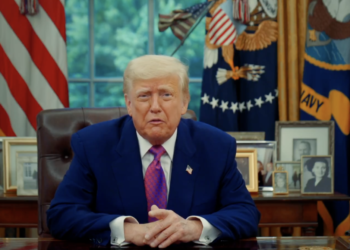
This is a radical departure from the often-sovereignty-obsessed rhetoric of counter-terrorism. Murray-Bruce is arguing that in the face of a transnational terrorist empire, national pride must be subordinated to pragmatic efficacy. His full-throated praise for Presidents Donald Trump and Bola Tinubu—calling the strikes “necessary, justified, and ultimately the right course of action”—is a calculated political endorsement designed to cement this partnership as the new normal.
Why This Endorsement is a Geopolitical Gambit
This is far more than a simple “thank you” note. Murray-Bruce’s statement is a deliberate political signal with global reverberations. For Western audiences, it is a rare, unambiguous validation of U.S. military intervention in Africa, rebranding it not as imperialism but as necessary burden-sharing. For African capitals, it is a provocative model: instead of struggling with under-equipped forces, seek open, formalized alliances that bring overwhelming force to bear.
The controversy lies in the nakedness of the proposition. It dares to suggest that for some nations, sovereignty in security matters is less valuable than sovereignty through security, guaranteed by a powerful ally. Critics will call it a capitulation; advocates will call it the only realistic path to survival against an enemy like ISIS.
By framing this collaboration as the “right” and “justified” course, Murray-Bruce has thrown down a gauntlet. He is arguing that the era of symbolic, under-resourced solo campaigns is over. The future of defeating terror networks, he insists, looks like this: joint operations, shared responsibility, and the controversial, undeniable power of letting a superpower do what it does best.