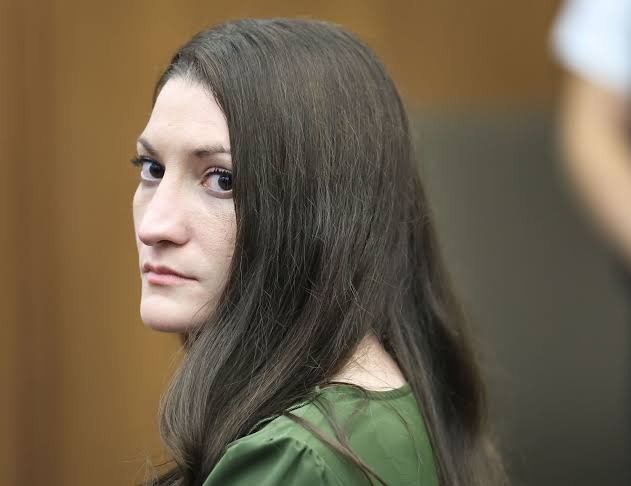

The Plymouth County Courthouse did not deliver a verdict; it delivered an impasse. An 11-to-1 deadlock that ended in a mistrial is not a victory for Lindsay Clancy, nor is it justice for Cora, Dawson, and Callan. It is a systemic issue where a single holdout juror refused to cross the threshold of reasonable doubt.
Looking at this purely through my lens, in my opinion, the prosecution messed the case up.
If you walk into a courtroom representing three dead children whose lives were violently snuffed out in their own basement, and you walk out with a deadlocked jury, your trial strategy failed. The Commonwealth had every tool necessary to secure a first-degree murder conviction. They had the timeline, the forensic evidence, and the cold, unyielding mechanics of the crime. Yet, they allowed the defense to trap them in an academic debate over medical terminology. A sharper prosecutorial strategy could have pinned Lindsay Clancy to the wall.
1. The Core Prosecutorial Error
The prosecution’s fatal mistake was allowing the trial to become an autopsy of maternal mental health care rather than a prosecution for triple homicide.
The defense team, led by Kevin Reddington, executed a good pivot. They turned Lindsay Clancy into the primary victim, a woman over-medicated, failed by her doctors, and consumed by postpartum psychosis. The prosecution took the bait. They spent weeks calling forensic psychiatrists and psychologists to argue over whether Clancy had “Bipolar II,” “Major Depressive Disorder,” or “Postpartum Psychosis”. They allowed the jury to feel that if Clancy was even slightly mentally ill or over-medicated, she could not be held fully responsible.

How they should have argued it:
Under Massachusetts law (Commonwealth v. McHoul), mental illness alone does not excuse murder. The law demands a binary test: Did she lack the substantial capacity to appreciate the wrongfulness of her conduct, or to conform her conduct to the requirements of the law?
The prosecution should have ceded the mental health argument entirely. They should have said to the jury:
“Members of the jury, we do not dispute that Lindsay Clancy was anxious, depressed, or overwhelmed. But depression is not a license to kill. Anxiety does not erase the ability to distinguish right from wrong. The medical chart is a distraction; look at her actions.”
Failing to Weaponize the Mechanics of the Crime
The prosecution allowed the strangling of three children to be discussed in sterile, clinical language. Strangulation is not an impulse. Strangulation takes time. It requires sustained, continuous physical exertion for several minutes per child.
How they should have pinned her:
The prosecution needed to walk the jury through those agonizing minutes step-by-step, child-by-child:
- Cora (5 years old): She was old enough to fight back, to look her mother in the eyes, to ask why. Clancy had to wrap the exercise band around her neck, apply maximum force, and hold it continuously while her eldest daughter asphyxiated.
- Dawson (3 years old): After Cora went limp, Clancy did not snap out of it. She did not stop. She walked over to her three-year-old son, wrapped the band, and applied the exact same methodical, killing force.
- Callan (8 months old): Finally, she moved to her infant baby.
Doing this once might be argued as a sudden psychotic break. Doing it three distinct times in sequence requires sustained purpose, awareness, and physical intent. The prosecution should have hammered this home: At any point during those 10 to 15 minutes of manual execution, if she had a moment of maternal instinct, she could have stopped. She didn’t.
The Flawed Suicide Narrative
The defense framed Clancy’s leap from the second-story window as the desperate act of a psychotic mother trying to end her life alongside her children. The prosecution attempted to counter this late in the trial by reviving a theory that she “faked” or calculated her suicide attempt, but they presented it weakly, allowing it to sound like speculation.
How they should have flipped the narrative:
Instead of trying to prove she faked jumping out of a window, which sounds absurd to a jury looking at a paralyzed woman in a wheelchair, the prosecutor should have focused on timing and self-preservation.
Clancy slashed her wrists and neck before jumping. But notice when she jumped: right when she knew her husband, Patrick, was about to walk through the front door.
- Why send Patrick to a restaurant miles away to pick up takeout, and then text him to add an extra errand at CVS?
- Because she needed a precise 30-to-40-minute window of absolute privacy.
- Someone in the grip of an acute, chaotic psychotic hallucination does not perform time-distance calculations on Google Maps to coordinate an errand run for their spouse.
The prosecutor should have argued that the jump was not a command from a hallucinated voice, it was the realization of what she had done, combined with the panic of being caught red-handed. Planning the errand proved premeditation; the timing of the leap proved consciousness of guilt.
Over-Relying on Academic Experts Instead of Common Sense
The prosecution called Dr. Kirk Heilbrun and Dr. Avram Mack, academics who offered dense, technical critiques of Clancy’s self-reported symptoms. Heilbrun testified that Clancy’s claim of hearing a voice for the first time during the killings was “a very unusual manifestation”.
While scientifically accurate, “unusual manifestation” is weak, timid language in a courtroom. It leaves open reasonable doubt.
How to close the trap:
The prosecution should have attacked her post-arrest statements directly. Four days before the killings, Clancy searched her phone for: “Can you treat a sociopath?” Right before the murders, she wrote notes stating: “Medication stole my motherhood… prescription medication stole me from my own body.”
This is not the profile of a woman hearing demonic voices; this is the profile of an angry, resentful woman constructing a justification. She blamed her medications for her maternal dissatisfaction. The prosecution failed to weave these digital footprints into a compelling narrative of cold, calculated resentment. They should have presented her not as a hallucinating puppet, but as a woman who made a conscious decision to destroy her domestic life and blame the medical system for it.
What About the Victims? The Tragic Lost Perspective
The defendant sits before the jury every day, paralyzed, weeping, visibly broken. She is alive, human, and present. The victims, Cora, Dawson, and Callan are absent. They are reduced to names on an indictment or photos on an evidence board.
The defense successfully made the trial entirely about Lindsay Clancy’s suffering. But what about the children who had lives ahead of them? Five-year-old Cora, who was learning to read. Three-year-old Dawson, who was sitting on the couch eating chicken nuggets just minutes before his life was taken. Eight-month-old Callan, an innocent baby who relied entirely on his mother for safety.
When a legal system allows a trial to drift so far into medical sympathy that it forgets the fundamental cruelty inflicted on three defenseless infants, the prosecution has failed its primary duty: to be the unyielding voice for those who can no longer speak.
The Verdict on the Retrial
If Plymouth County District Attorney Timothy Cruz decides to retry Lindsay Clancy this fall, he cannot simply rerun the same pattern.
To secure a conviction, the prosecution must strip away the medical academic noise. They must stop arguing over psychiatric definitions and force the jury to confront the physical, calculated realities of January 24, 2023. They must prove that while Lindsay Clancy may have been depressed, exhausted, and angry, she was not insane. She knew what she was doing, she planned the time to do it, and she executed it with terrifying precision.
Anything less will result in another deadlocked jury, leaving the memory of three murdered children without justice.