In a Minnesota courtroom more than a decade ago, federal prosecutors said Salah Osman Ahmed had helped the US government. Now, a different team of federal prosecutors says his citizenship should be revoked.
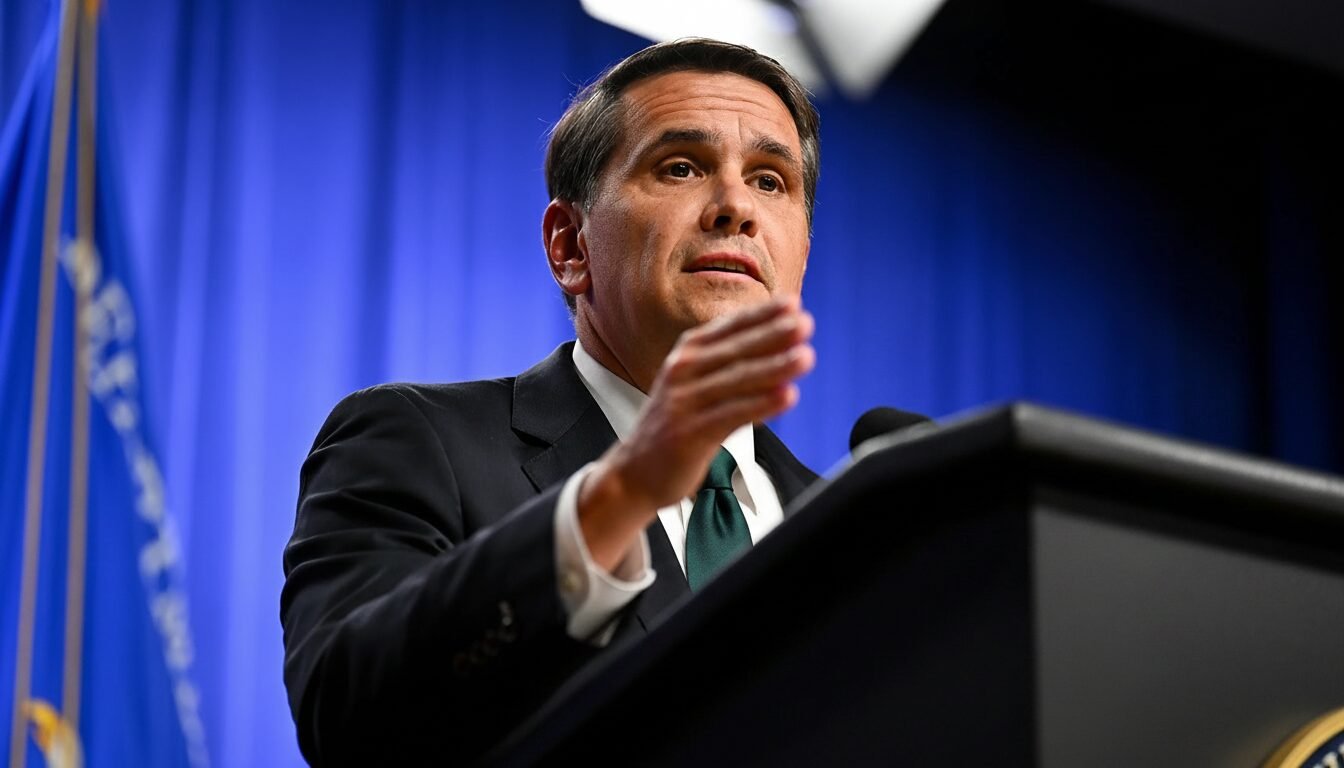
The case against Ahmed, 44, is part of what Attorney General Todd Blanche bills as “the largest denaturalization effort in modern history.” Researchers say more than 170 civil denaturalization lawsuits have been filed since President Donald Trump’s second term began. But several details about this Minnesota case make it different from others on the docket, according to experts who spoke with CNN.
“This is important beyond just this one case,” said Irina Manta, a visiting professor at Villanova University’s law school who studies denaturalization. “I really think they are testing the limits here.”
The Case
Ahmed came to the United States at 15 and became a citizen in August 2007. Four months later, he flew to Somalia to join al-Shabaab’s fight against Ethiopian troops. He spent months in a safe house, raised funds, underwent weapons training, and helped clear land for a training camp before fleeing and returning to the US.
Federal agents arrested him in 2009. He pleaded guilty to providing material support to terrorists and was sentenced to three years in prison. In 2012, he became a cooperating witness in the trial of Mahamud Said Omar, a mosque janitor convicted of funneling money to al-Shabaab. During Ahmed’s 2013 sentencing, the prosecutor said his decision to leave al-Shabaab was “commendable.”
Now the government wants to strip his citizenship
The Legal Argument
Most denaturalization cases focus on crimes committed before someone becomes a citizen or on alleged fraud during the naturalization process. In this case, authorities are arguing that Ahmed’s citizenship should be revoked because of conduct that occurred after he became an American.
To do that, they are invoking a McCarthy-era provision of the law that is rarely, if ever, used. The provision states that if someone joins or affiliates with certain organizations within five years after naturalization, it is seen as evidence they were not “attached to the principles” of the US Constitution when they became citizens.
“As far as I’m aware, there has actually never been a case that relied solely on this provision,” Manta said. “No government, no regime has been aggressive enough to try it. But this regime has announced that it wants essentially quotas of how many people it’s going to denaturalize.”
The Cooperating Witness Problem
Ahmed’s lawyer, Daniel Gerdts, called the case “shameful.” “He helped them put together their terrorism case,” Gerdts told CNN. “Their reward for him doing that is to take away his citizenship. That makes us look terrible as a nation.”
A former federal law enforcement official who worked on similar counterterrorism cases warned that revoking a cooperating witness’s citizenship could have far-reaching implications.
“Nobody’s going to cooperate,” the official said. “This is so short-sighted just as a policy matter that it’s totally counterproductive to our national security.”
John Miller, CNN’s chief law enforcement and intelligence analyst and a former FBI assistant director, said the question is not whether the government can pursue denaturalization, but whether it should. “It’s a question of equity,” he said. “Is it the right thing to do?”
The Broader Implications
Advocates fear the provision could be applied more broadly in the future, not only to designated terrorist groups but also to others accused of endangering national security or being enemies of a presidential administration.
“No one can or should be denaturalized for engaging in political conduct that this administration disagrees with,” said Steven Salky, an attorney tracking denaturalization filings. “But this administration may try.”
The case is one of more than 170 filed since January 2025, according to researchers. A recent raid on Rep. Ilhan Omar’s DC-area home as part of what sources describe as an immigration-fraud probe brought increased attention to the administration’s intensifying focus on denaturalization. Omar has not been charged with any crime and denies wrongdoing.
The Bottom Line
A Minnesota denaturalization case against Salah Osman Ahmed could test the limits of US citizenship law. The government is invoking a rarely used McCarthy-era provision to argue that Ahmed’s post-naturalization conduct proves he was never loyal to the Constitution. Experts warn the case could deter future cooperating witnesses in terrorism cases and have broader implications for naturalized citizens. The Justice Department says its denaturalization efforts are a top priority.
My Opinion
The government asked Salah Osman Ahmed to help them. He did. He testified against al-Shabaab. He helped put a terrorist behind bars. A prosecutor called his break from the group “commendable.” And now the government wants to take away his citizenship for the same conduct it once praised.
The Justice Department will say it is following the law. But the law it is invoking is a McCarthy-era provision that has rarely, if ever, been used. It allows the government to argue that conduct after naturalization proves someone was never loyal in the first place. That is a dangerous precedent. If the government can use post-citizenship conduct to strip someone of their citizenship, then no naturalized American is safe.