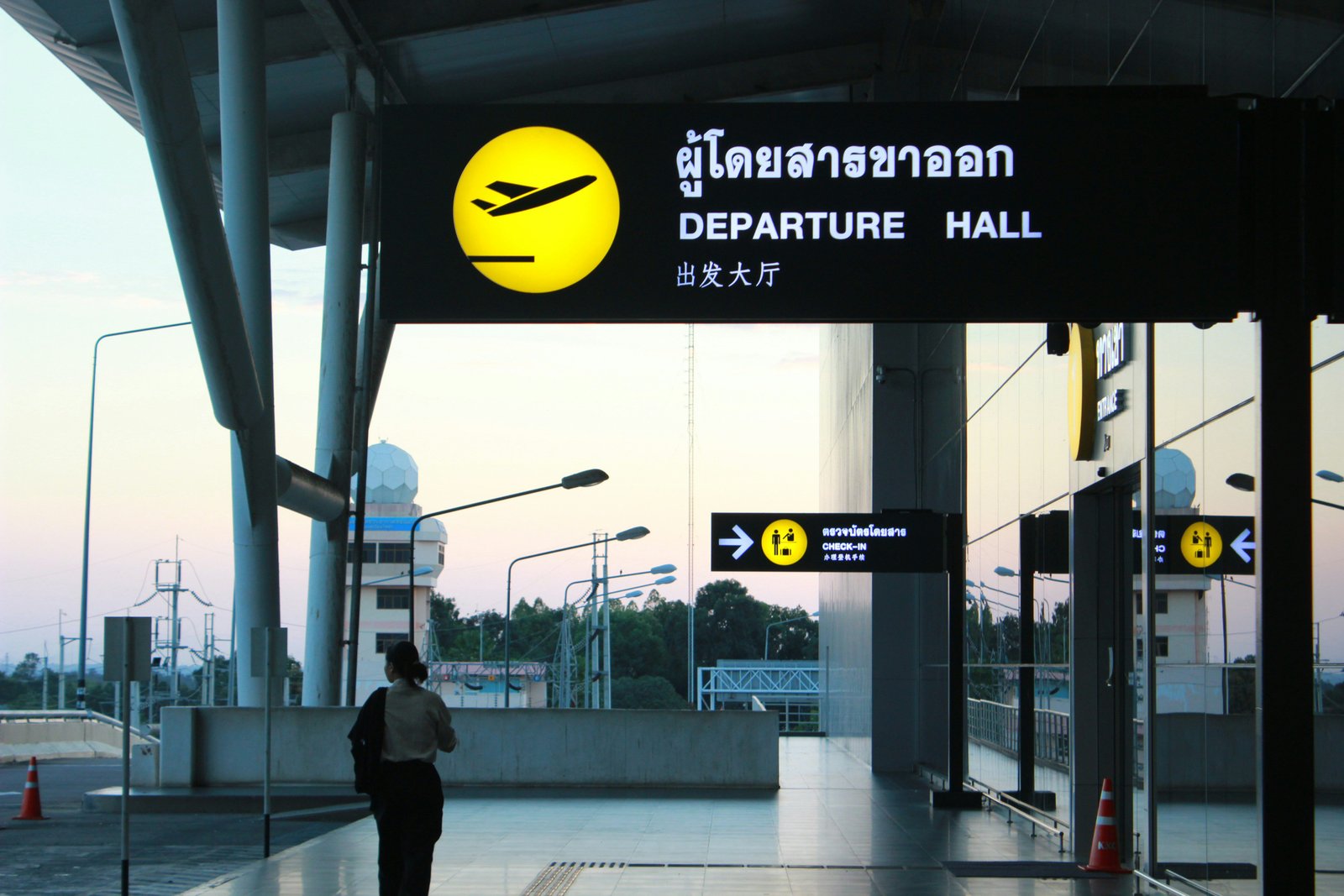

Thailand’s Finance Ministry is considering a new departure tax that would initially charge THB1,000 each time a traveller leaves the country by air, regardless of nationality, under draft legislation now open for public consultation.
The Revenue Department has published the principles of the proposed Departure Tax Act, which would replace the approach under Thailand’s existing 1983 legislation. Public consultation runs from September 30 to October 29, 2026.
Under the proposal, the tax would apply to people of all nationalities departing Thailand, with a statutory ceiling of THB5,000 per departure. The initial rate would be set at THB1,000 for air travel, while departures by land and sea would initially be exempt.
Why the Change?
The Finance Ministry said the proposal was intended to make more effective use of state resources within the fiscal-discipline framework and provide greater flexibility in responding to potential future emergencies.
The proposed system differs from the 1983 departure-tax regime, which applied only to Thai nationals and foreign nationals with permanent residence in Thailand. That system originally charged THB1,000 for air departures and THB500 for land or sea departures. Land and sea travel was exempted from the tax in 1986, followed by air travel in 1991. The Revenue Department states that the existing regime is currently exempt from collection in all cases.
How It Would Work
Under the new proposal, travellers would be required to pay the tax before leaving Thailand. Airlines or their ticketing agents would generally collect it at the same time as the airfare.
The change would affect not only passengers but also international passenger carriers, ticket agents, airport operators, and government agencies involved in international travel, including the Immigration Bureau, Department of Airports, and Civil Aviation Authority of Thailand.
Who Would Be Exempt?
For air passengers, the proposed exemptions would broadly follow those used for the Passenger Service Charge. They include specified members of the Royal Family and their entourages, the Supreme Patriarch, foreign heads of state, official government guests, children aged two or under, inspection teams from the Organisation for the Prohibition of Chemical Weapons, and passengers travelling on government aircraft.
International transit passengers who remain within designated transit areas would also be exempt. Crew members and other transport personnel travelling without paying a fare while carrying out duties for their employer would not be subject to the tax.
Penalties and Timeline
The proposal would give authorised officials powers to assess and collect unpaid taxes, penalties, and surcharges. Failure to pay or remit the tax could result in a penalty equal to twice the amount of tax due, plus a surcharge of 1.5% per month on unpaid tax.
If enacted, the legislation would take effect 180 days after publication in the Government Gazette. Travellers who bought their tickets before the law took effect would not be liable for the new tax, even if their departure occurred after its commencement date.
The proposal remains under public consultation and has not yet taken effect. The Revenue Department is accepting comments until October 29.
The Bottom Line
Thailand is considering a THB1,000 departure tax for all air travellers, regardless of nationality. The proposal would replace the current 1983 legislation, which is effectively unenforced. Airlines would collect the tax with airfares. Children under two, transit passengers, and certain officials would be exempt. The tax would take effect 180 days after publication if enacted. Public consultation is open until October 29.
My Opinion
Thailand is not a cheap destination anymore, and this tax makes it more expensive. But that is not really the issue. The issue is who pays and who benefits.
A THB1,000 departure tax on every air traveller sounds small. It is roughly $30. But for a family of four, that is $120 added to the cost of leaving. For budget travellers and backpackers, that is a meal or a night’s accommodation. Thailand’s tourism industry depends on those travellers. The country welcomed nearly 40 million visitors last year. If even a fraction of them decide the extra cost is not worth it, the economic ripple effects will be larger than the tax revenue.
The government says the money will help with fiscal discipline and future emergencies. But that’s a vague claim. There is no clear plan for where the revenue goes. Will it fund airport infrastructure? Tourism promotion? Public health? Without that clarity, the tax looks less like a policy and more like a cash grab.
Thailand already charges a passenger service charge at airports. Adding a departure tax on top of that makes air travel more expensive without making it better. If the government wants to raise revenue from tourism, it should do so transparently and invest it back into the industry that generates it. Otherwise, this is just another fee that makes Thailand less competitive than its neighbours.