
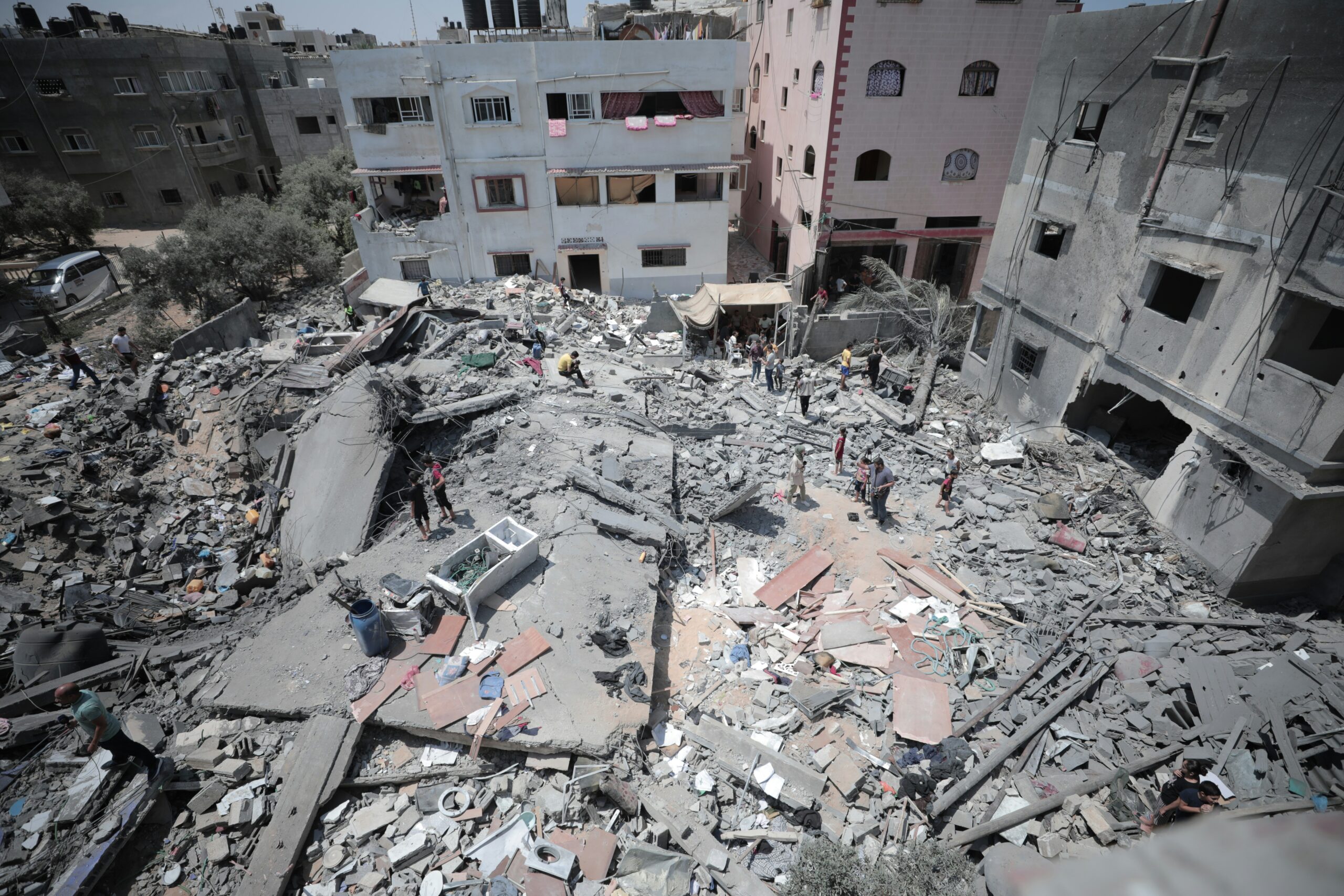
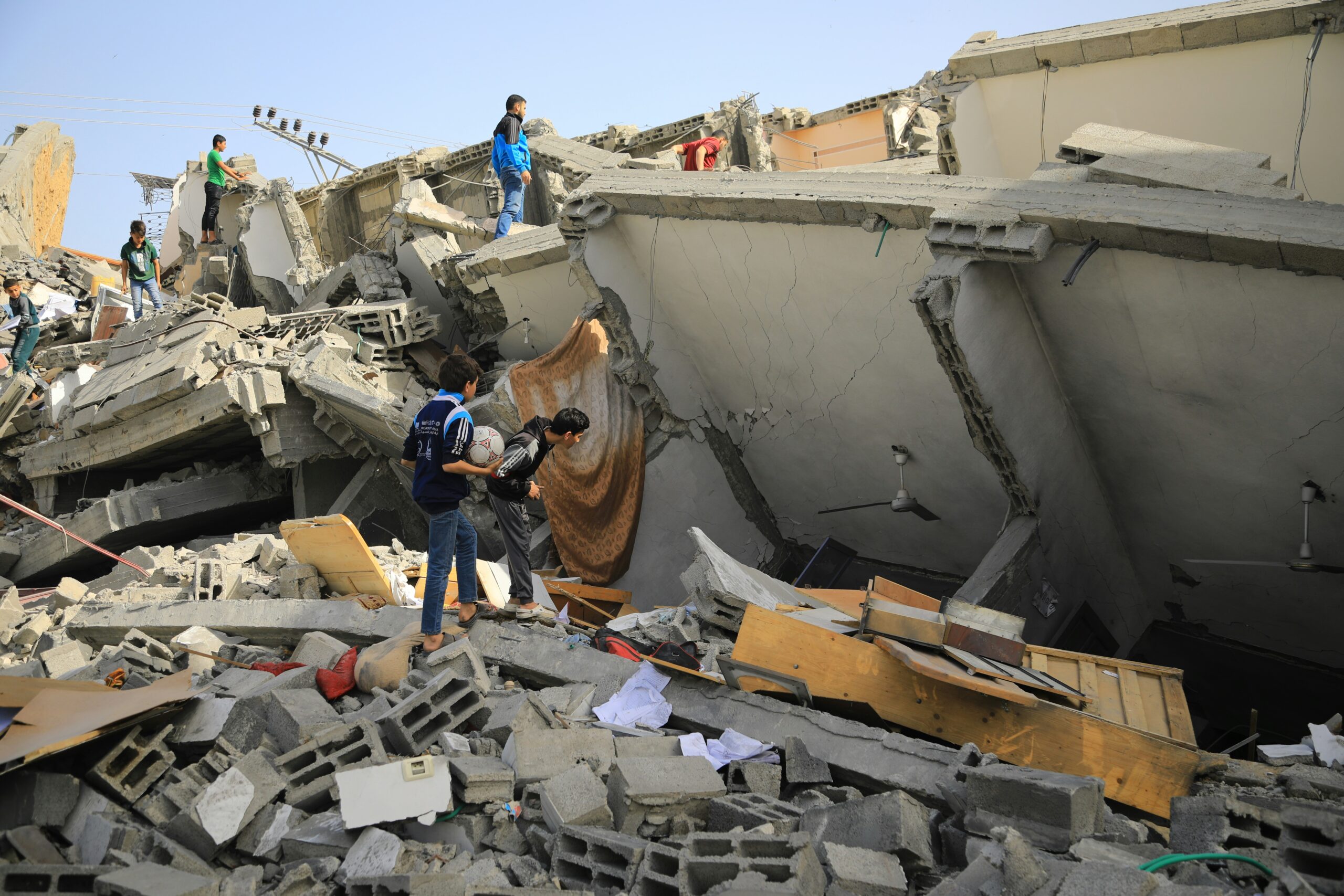
The United States has unveiled a staggering, multi-billion-dollar masterplan for a “New Gaza,” an architectural and ideological blueprint to physically and politically remake the devastated Palestinian territory from the ground up. Presented by President Donald Trump at the signing of his new Board of Peace in Davos, the vision features skyscrapers, coastal tourism zones, and massive housing estates—a stark, jarring contrast to the current landscape of 60 million tonnes of rubble and dire humanitarian crisis that persists even under a fragile ceasefire.
The slides, displayed to world leaders, depict a territory utterly transformed: 180 high-rise towers lining the Mediterranean, new seaports and airports, and vast zones for “advanced manufacturing” and “data centers.” Trump, framing the project through his real estate instincts, called Gaza “a beautiful piece of property” with prime “location on the sea.” His son-in-law and senior adviser, Jared Kushner, who helped broker the October ceasefire, described the plan as aiming for “catastrophic success,” moving beyond earlier ideas of a partitioned Gaza to a wholesale, U.S.-directed reinvention.
‘Remaking Gaza in Its Own Image’: Security, Demilitarization, and Displacement
The plan is controversial precisely because it seeks to imprint a distinctly American and Israeli vision onto Gaza’s future. A critical element is a wide, empty security perimeter strip of land running along the Egyptian and Israeli borders, where Israeli forces would remain indefinitely “until Gaza is properly secure.” This condition, coupled with Kushner’s declaration that demilitarization “is starting now,” makes the flashy reconstruction entirely contingent on the complete political and military neutering of Hamas.
This approach has drawn immediate accusations of using reconstruction as a tool of pacification and political engineering. The plan’s first phase, “New Rafah,” would see over 100,000 housing units built in a city that has been “largely levelled” and is currently inside Israeli-controlled territory. For critics, this echoes Trump’s controversial past suggestion to permanently relocate Gazans and turn the territory into “the Riviera of the Middle East,” raising fears that rebuilding could cement displacement and erase Palestinian political aspirations.
The ‘Technocratic’ Governance: Bypassing Palestinian Political Factions
Central to the U.S. vision is sidestepping existing Palestinian leadership. The plan delegates administration not to the Palestinian Authority (PA) in the West Bank, which President Mahmoud Abbas insists must have a central role, but to a new, U.S.-backed National Committee for the Administration of Gaza (NCAG). Kushner stated this technocratic body would “work with Hamas on demilitarization,” a demand Hamas has historically refused without statehood guarantees.
This creates a fundamental contradiction: the U.S. is planning a multibillion-dollar future for Gaza while negotiating the disarmament of its governing authority. Trump issued a blunt warning to Hamas: “They have to give up their weapons, and if they don’t do that, it’s going to be the end of them.” The entire glittering vision of “New Gaza” thus rests on a security ultimatum that could itself collapse the fragile ceasefire, which has already seen hundreds of Palestinian casualties in recent months.
Why It Matters
Proponents, including Israeli President Isaac Herzog, have praised Trump’s “leadership.” Kushner called it a “hope” and a “destination,” promising a Washington donor conference soon to outline “amazing investment opportunities.” He claimed “New Rafah” could be built in two to three years.
However, for many Palestinians and international observers, the plan looks less like hope and more like a geopolitical land grab wrapped in architectural renderings. It proposes importing a model of gleaming towers and industrial parks onto a traumatized population of 2.1 million, while its map carves out permanent security zones for a former occupying force and installs a new, untested governing body.
The controversial U.S. plan to remake Gaza in its own image is therefore more than a reconstruction proposal. It is a high-stakes gamble to use concrete, steel, and capital to solve a decades-old political conflict, attempting to build a new reality so compelling that it forces the old, intractable one to disappear. Whether it becomes a blueprint for peace or a monument to overreach will depend on whether the people of Gaza see their own future reflected in America’s shiny, controversial new vision.