
Ukraine is seeing a rising number of premature births, emergency cesarean sections, and other pregnancy complications. Some areas near the front lines have seen rates of premature births nearly double since Russia’s full-scale invasion began in 2022, according to United Nations data.
Experts say the reasons are complex, but the profound psychological and physical stress the war is inflicting on pregnant mothers is a primary driver.
“We’re seeing this real link between acute stress and birthing and pregnancy-related complications,” said Isaac Hurskin, a spokesperson for the UN Population Fund.
Inside a Perinatal Center Under Siege
At the regional perinatal center in Zaporizhzhia, a city less than 50 kilometers from the front lines, doctors are working around the clock to save the smallest and most vulnerable patients. The center has become a refuge for pregnant women fleeing active combat zones, many of whom arrive already in distress.
Dr. Andrii Lobanov listens to premature babies’ heartbeats inside temperature-controlled incubators. Nurses like Victoria Bohdanova change diapers and check temperatures with precision and care. The equipment is modern. The staff is dedicated. But the stress on mothers is relentless.
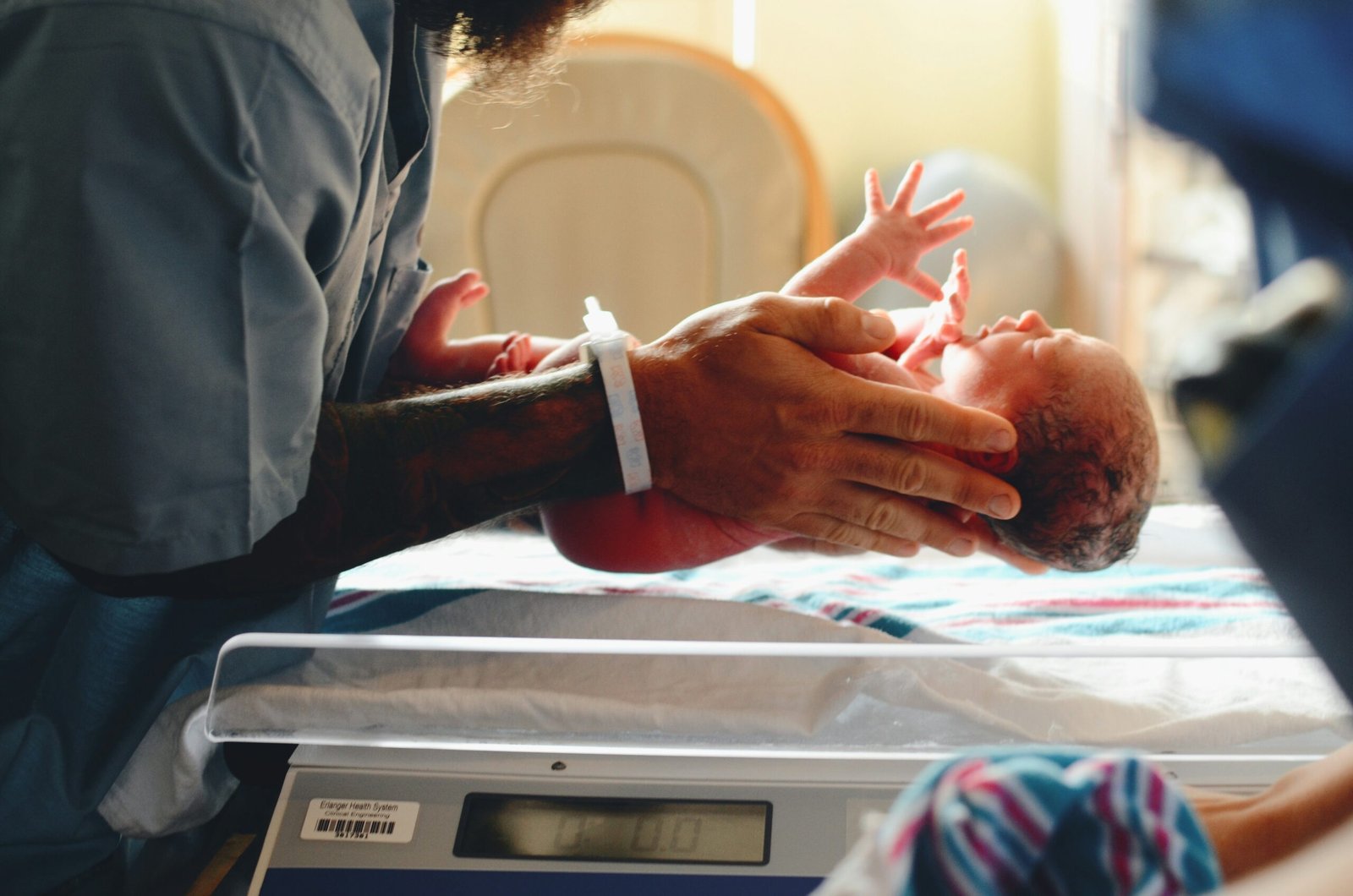
Olha Karpenko is one of them. She gave birth to her daughter, Diana, by emergency cesarean section. After the delivery, a doctor held the newborn girl up for her mother to see for the first time. It was a moment of joy overshadowed by the circumstances that brought them there.
Dasha Kosmin touches her son Mark in the ICU department of the children’s regional hospital in Zaporizhzhia. Marharyta Nekhoroshyva holds her son Mark inside a shelter at the same hospital. These are not normal births. These are wartime deliveries.
The Science of Stress
The link between stress and pregnancy complications is well documented. Chronic stress can increase blood pressure, restrict blood flow to the placenta, and trigger early labor. In a war zone, that stress is not occasional. It is constant.
Air raid sirens. Explosions. Displacement. Loss of family members. Lack of sleep. Lack of food. Lack of safety. These are not abstract pressures. They are the daily reality for pregnant women in Ukraine.
The UN data shows that areas near the front lines have seen the most dramatic increases in premature births. Correlation is not causation, but the pattern is hard to ignore. Where the war is most intense, the health outcomes for pregnant women and their babies are worst.
The Human Faces Behind the Numbers
The AP photo gallery captures the human cost of the crisis. A doctor holds newborn Diana after performing a cesarean section on her mother. Mariia Skladan, her husband Vladyslav, and their daughter Elina pose for a photo after the mother and baby left the perinatal center. A woman pushes her baby in a stroller past a car workshop destroyed in a Russian attack.
These are not statistics. They are families. They are survivors. But they are also evidence of a crisis that is not getting the attention it deserves.
The war in Ukraine has been ongoing for more than four years. Global attention has shifted to other conflicts. But for the women giving birth in Zaporizhzhia and other front-line cities, the war is not background noise. It is the defining reality of their children’s first days of life.
The Bottom Line
Ukraine is seeing a rising number of premature births, emergency cesarean sections, and other pregnancy complications as a direct result of the stress of war, according to UN data. Some areas near the front lines have seen rates of premature births nearly double since Russia’s full-scale invasion began in 2022. Experts point to the profound psychological and physical stress inflicted on pregnant mothers as the primary cause. Doctors in Zaporizhzhia are working around the clock to save babies born too soon, but the crisis is deepening as the war continues.
The war’s visible toll is counted in casualties and destroyed buildings. Its hidden toll is measured in incubators, emergency C-sections, and babies fighting for their lives before they were due. Ukraine’s premature birth crisis is a war crime that does not have a name. But it has faces.