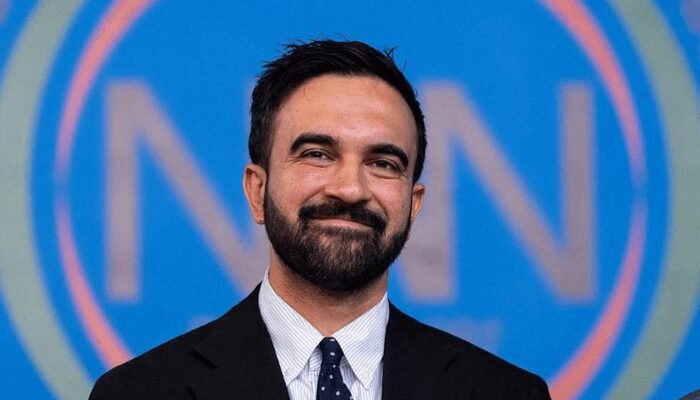

New York City Mayor Zohran Mamdani has come under scrutiny over his presentation of a $131.5 million settlement involving food delivery company DoorDash, with questions raised about how much of the money actually represents unpaid wages to workers.
Mamdani recently announced the settlement, saying DoorDash had underpaid more than 260,000 workers and that the city had secured the recovery of the money.
“DoorDash underpaid more than 260,000 workers, and today we are getting that money back,” he said at a press conference where he displayed a large symbolic cheque.
The settlement followed a three-year investigation by the city’s Department of Consumer and Worker Protection into DoorDash’s payment practices.
While DoorDash acknowledged that about $6.6 million in payments failed to reach New York City Dashers and another $5.7 million was paid late, the total amount of the settlement is considerably larger.
The admitted payment shortfalls amount to roughly $12.3 million, representing less than 10 per cent of the $131.5 million settlement.
Data cited in the criticism of the settlement also showed that 65 per cent of the affected workers were allegedly owed $1 or less, while the average missing payment was about $7.70.
A larger portion of the settlement arose from a dispute over how DoorDash calculated payments for workers’ on-call time.
The city argued that DoorDash had failed to properly compensate Dashers for periods when they were available through the app but were not actively completing deliveries.
DoorDash, however, had maintained that its existing method of calculating on-call compensation was “fair, practical and legal.”
Rather than pursue a lengthy court battle, the company agreed to the city’s formula as part of the settlement.
The agreement did not result from a court ruling determining that DoorDash had violated the law. Instead, the consent order brought the city’s administrative investigation to an end without a hearing or judicial determination.
Department of Consumer and Worker Protection Commissioner Sam Levine acknowledged the complexity of the matter, saying, “It’s complicated.”
Under the settlement, workers are expected to receive about $115.4 million of the $131.5 million.
The remaining funds will cover $11.3 million in civil penalties, $4.3 million for a new monitoring programme and approximately $468,000 for administering the settlement.
Questions have also been raised about how the penalty funds and monitoring money will be used, with grants expected to go towards the Workers Justice Project and Princeton University’s Workers’ Algorithm Observatory.
The city investigation involved lawyers, investigators, economists and data scientists who examined about 110 million working hours and 152 million DoorDash transactions.
The scale of the investigation has prompted questions about the amount of taxpayer-funded resources devoted to the case.
Another issue concerns Mamdani’s role in the settlement.
Although the mayor has publicly highlighted the agreement as an accomplishment of his administration, the investigation began under his predecessor, Eric Adams, and was already significantly advanced before Mamdani assumed office.
Mamdani therefore inherited an investigation that had been underway for years before the settlement was completed.
The DoorDash agreement has consequently generated debate over both the size and composition of the settlement, as well as the extent to which the new mayor should receive credit for its conclusion.