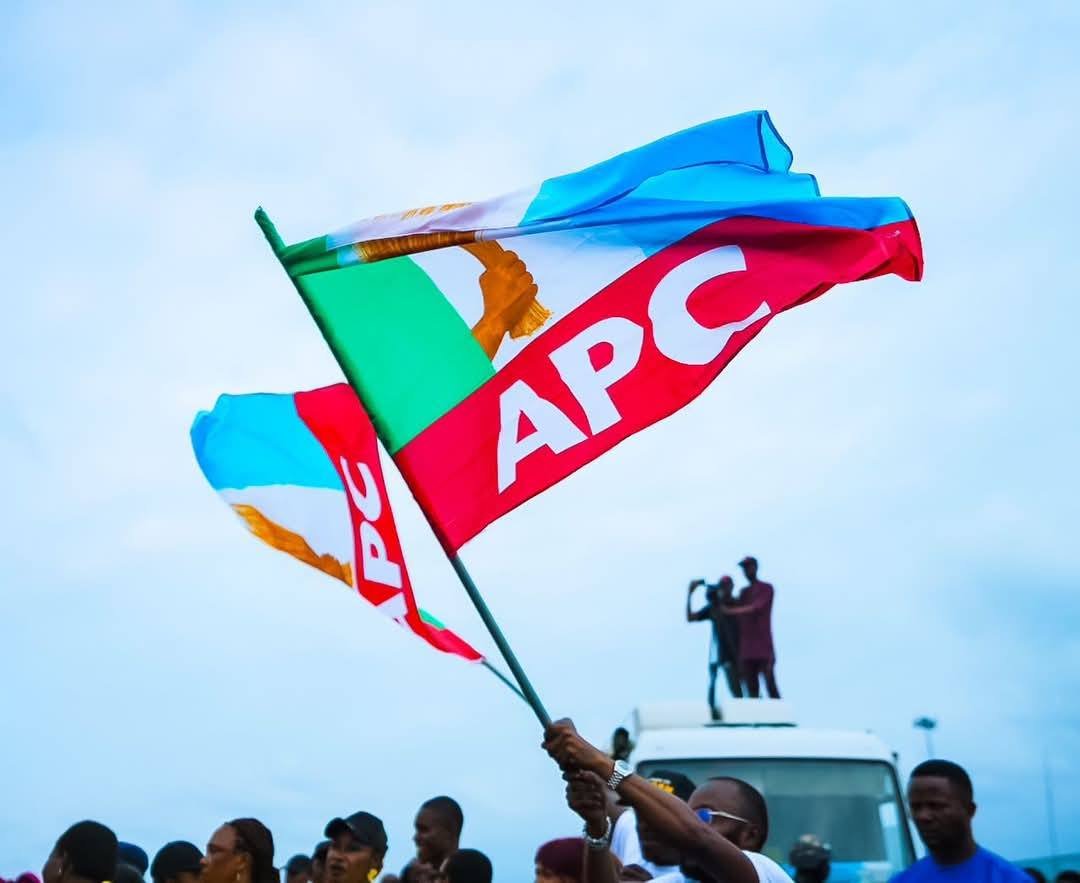

The All Progressives Congress has postponed its presidential and governorship primaries by one week. The party moved the presidential primary to May 23, 2026, and the governorship primary to May 21, 2026, from the earlier dates of May 15 and May 16, respectively. According to the APC, the adjustment aligns with a revised timetable for its 2027 general election activities.
The official reason is straightforward. But in Nigerian politics, a shift in primary dates is rarely just about scheduling.
APC Deputy National Publicity Secretary, Duro Meseko, disclosed the change at the end of the party’s 186th National Working Committee (NWC) meeting held in Abuja on Thursday. “We hereby present the new revised timetable and schedule of activities for the conduct of the 2027 general elections to the press,” he said.
The NWC also adopted both direct and consensus modes for selecting candidates for elective positions. “In this 186th meeting of the National Working Committee of the All Progressives Congress, we adopted the mode of primaries as provided in the Electoral Act: direct and consensus mode, with a caveat that members are at liberty to pick,” Meseko stated.
That “caveat” is significant. Members can choose between direct primaries — where all party members vote — and consensus — where party leaders agree on a single candidate. The flexibility is designed to reduce friction. But friction is exactly what a primary delay often signals.
The Real Story Behind the Shift
Why would a ruling party push its presidential primary back by one week? The official answer is “alignment with a revised timetable.” But timetables are not revised without reason.
One possibility is internal party maneuvering. The APC is a coalition of interests, not a monolith. Different factions have different preferred candidates for 2027. A one-week delay could be enough time to negotiate, consolidate support, or — in the worst case — prepare for a fight.
Another possibility is coordination with INEC. The electoral commission has its own timeline for election activities. The APC may have adjusted its dates to ensure compliance with INEC’s deadlines. That would be a routine administrative decision, not a political scandal.
But the timing is notable. The postponement comes as opposition parties are also jockeying for position. The ADC has been gaining defectors. The PDP is struggling with internal crises. The Labour Party is trying to rebuild. The APC, despite being the ruling party, cannot afford to appear disorganized. A last-minute shift in primary dates raises questions about whether the party is as unified as it projects.
Direct vs. Consensus — A Loaded Choice
The NWC’s decision to allow both direct and consensus primaries is not a small technical detail. It is a strategic choice. Direct primaries are more democratic but more chaotic. They require infrastructure, security, and significant turnout. Consensus primaries are smoother but less transparent. They concentrate power in the hands of party leaders.
By allowing members to “pick” between the two, the APC is giving state chapters flexibility. But flexibility can also mean confusion. Different states adopting different methods could lead to disputes over which candidates were legitimately nominated. And disputes over nominations often end up in court.
The party is hoping for smooth sailing. But Nigerian political history suggests that primary seasons are rarely smooth.
What This Means for 2027
The APC’s primary shift is not a crisis. It is one week. But it is a signal. The ruling party is recalibrating its timeline as the 2027 election approaches. The opposition is watching. So are voters.
If the May 23 presidential primary happens without incident, the shift will be a footnote. If it becomes the first of several delays — or if it triggers internal conflict — the narrative will be very different.
The party’s official statement emphasizes alignment and process. But in politics, what is not said often matters more than what is.
The Bottom Line
The APC has postponed its presidential primary to May 23, 2026, and its governorship primary to May 21, 2026 — a one-week shift from the original dates of May 15 and May 16. The party says the adjustment aligns with a revised timetable for its 2027 general election activities. The NWC also adopted both direct and consensus modes for selecting candidates, allowing members to choose.
The shift is small. The questions it raises are not. Why was the timetable revised? Is the party facing internal pressure? And will May 23 be the final date, or will there be more changes to come?
The APC has changed its primary dates. What’s really going on may not be clear until May 23 arrives.