

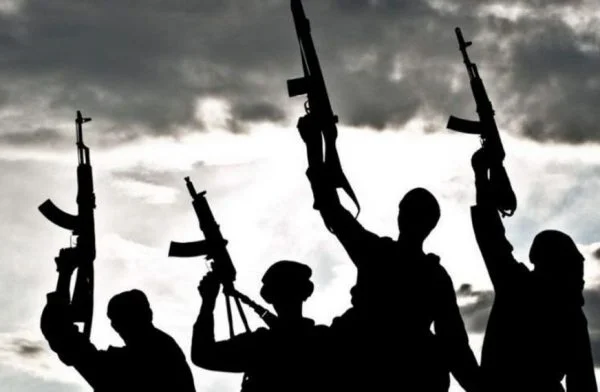
There is growing public backlash over the Federal Government’s decision to graduate and reintegrate 744 former insurgents under the De-radicalisation, Rehabilitation and Reintegration initiative known as Operation Safe Corridor.
The beneficiaries, drawn from several conflict-affected states, completed the programme on Thursday. Of the total, 597 were reportedly from Borno State, while others came from Adamawa, Yobe, Kano, and other parts of the country.
The development has sparked heated debate nationwide, with concerns raised about transparency, accountability, and the possible risks of reintegrating individuals formerly linked to violent extremism into local communities.
Reacting to the controversy, President of the Nigerian Bar Association, Afam Osigwe, said while the policy itself is not necessarily wrong, its implementation raises serious concerns over secrecy and lack of oversight.
He warned that ignoring victims’ experiences could worsen tensions in affected communities.
He said, “Reintegrating persons who may have unleashed violence or burned properties or committed other criminal activities into communities without addressing the hurt of the victims would appear as compensating perpetrators while overlooking the victims.
“We have to ensure that the communities that have experienced the brutal effects of some of their activities do not experience it a second time as a result of the return of these persons.”
Osigwe also called for stricter monitoring systems, including parole-style supervision and reintegration support to prevent relapse into extremist groups.
The Country Director of Amnesty International Nigeria, Isa Sanusi, also raised concerns, stressing the need for transparency in identifying those being reintegrated.
Sanusi said, “There are serious concerns that some of those called repentant sometimes go back to what they do. The government must be transparent about who they are and their level of involvement. Tell the people who these people are, what kind of terrorism they were involved in, and whether they were informants or killers. These things have to be made very clear.”
Similarly, the Chancellor of the International Society for Social Justice and Human Rights, Omenazu Jackson, criticised the programme, arguing that it lacks accountability for victims of terrorism.
“The biggest mistake any society can make is when there is no accountability for crime. What happens to families affected by their acts of terrorism and children made orphans?” he asked.
Jackson warned that reintegration without justice could encourage repeat offences, insisting that punishment is necessary for deterrence.
On his part, security analyst and founder of Beacon Security and Intelligence Limited, Kabir Adamu, said rehabilitation is an important part of counter-terrorism strategy but stressed the need for independent assessment of the programme’s effectiveness.
He expressed concern over military dominance in the process and the lack of transparent evaluation mechanisms.
Defending the programme, Coordinator of Operation Safe Corridor, Yusuf Ali, said many of the participants were victims who were forced into insurgency.
“These people were victims of terrorism. Some were taken at gunpoint and later surrendered. Under international law, once they surrender, you cannot kill them,” he said.
He added that the participants underwent psychological, religious, and social rehabilitation before being returned to their communities.
Also defending the initiative, Special Assistant to the President on Media and Publicity, Temitope Ajayi, insisted that the individuals were not hardened terrorists but victims of abduction and coercion.
He said, “Government is not rehabilitating terrorists; these were people that were abducted and forced to carry arms against their will.”
The debate continues as Nigerians remain divided over whether the reintegration programme enhances peacebuilding or poses a renewed security threat to communities already affected by insurgency.