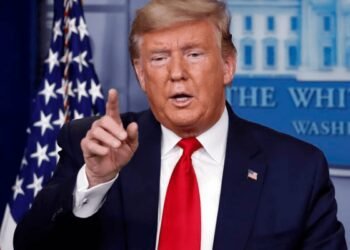
In a legal bombshell targeting the federal government, President Donald Trump and his sons have filed a $1 billion civil lawsuit against the IRS and Treasury Department, accusing them of committing “treason” by allowing a politically motivated contractor to leak their confidential tax returns in a scheme that they claim “unfairly tarnished” the family’s reputation.
The “Weaponised” Leak and a $1 Billion Demand
The lawsuit, filed in Miami federal court, centers on former IRS contractor Charles “Chaz” Littlejohn, who is currently serving a five-year prison sentence. Trump’s legal team alleges Littlejohn “weaponised his access to unmasked taxpayer data to further his own personal, political agenda” because he considered the president “dangerous” and a “threat to democracy.”

The Trumps argue the IRS and Treasury had a “duty to safeguard” their private financial information but “failed to take such mandatory precautions,” enabling the leak. They seek $1 billion in damages for what they describe as severe reputational harm, public embarrassment, and negative financial impact caused by the disclosures to The New York Times and ProPublica.
The Damaging Revelations and Trump’s Reversal
The leaks resulted in blockbuster reports just before the 2020 election. The New York Times revealed that Trump paid only $750 in federal income taxes the year he won the presidency and paid no taxes at all in 10 of the previous 15 years, contradicting his public image as a savvy billionaire. Trump had broken decades of political precedent by refusing to release his returns, citing an ongoing audit.
Facing the public fallout from the detailed reports, Trump performed a reversal in 2022, releasing the documents himself in an attempt to control the narrative.
Meanwhile, in a revealing deposition, Littlejohn downplayed his intent to cause direct harm. When asked if he aimed to hurt Trump, he stated, “Less about harm, more just about a statement. I mean, there’s little harm that can actually be done to him, I think… He’s shown a remarkable resilience.”
This admission forms a core part of the Trump legal argument: that a government contractor, driven by personal political animus, was allowed to illegally access and disseminate private data to influence a presidential election, with the agencies tasked with protection failing to stop him.
The lawsuit escalates a years-long financial controversy into a high-stakes legal battle over privacy, political targeting, and the security of sensitive government data, with the former president demanding unprecedented financial restitution for a leak he labels an act of betrayal.