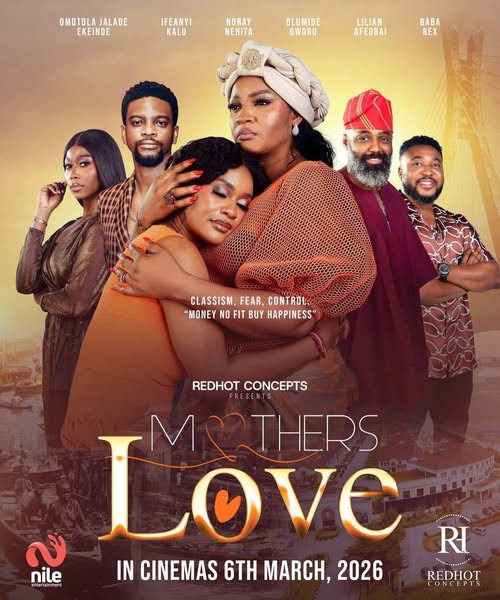
When I heard Omotola Jalade-Ekeinde was releasing a new film, my heart genuinely warmed. Not because of hype or PR. But because Omotola is one of those faces that raised us. An OG in the truest sense. The kind of actress whose presence alone once meant seriousness, quality, and box office confidence.
For many of us, Omotola wasn’t just an actress. She was the actress. That era when her name on a poster was enough reason to show up. When she stood shoulder to shoulder with Genevieve, Stella Damasus, Joke Silva, Ramsey Nouah, Richard Mofe-Damijo — and nobody questioned star power.
But the real question Nigerians are quietly asking is not “Is Omotola still great?”
It is: Can an OG still pull crowds into Nigerian cinemas in 2026?
And that is where things get complicated.
The Dancing Debate Is Bigger Than Dancing
Omotola’s comments about refusing to dance to promote her film did not land in a vacuum. They landed in a moment where Nollywood is clearly confused about marketing, professionalism, and survival. After the whole Kunle Afolayan–Funke Akindele discourse last week, the industry has been arguing loudly about what promotion should look like.
Omotola’s stance is clear: actors are not content creators, dancing should not be compulsory, and marketing should not be dumped on actors alone. And honestly? She is not wrong.
In a sane industry, she would be 100% correct. Actors act. Distributors distribute. Marketers market.
But this is not a sane industry.
This is Nigeria.
Cinema Is No Longer Hungry — Streaming Has Fed Everyone
Let’s be honest with ourselves. Nigerian cinema today is overcrowded, overstimulated, and slightly tired. Netflix, Prime Video, Showmax, YouTube, they’ve trained audiences to sit at home, pay less, and still get premium stories. A lot of films that would have killed at the box office in 2014 now feel like perfect streaming material.
That doesn’t make them bad films.
It just makes the cinema a harder sell. Watching the trailer for Mother’s Love, one thing is obvious: the story looks emotional, intimate, and heavy. The kind of film that works beautifully on a couch, lights off, phone silent. But cinemas in Nigeria today are not built for subtlety. They are built for events, noise, hype, chaos, star power, urgency.
Which brings us to the uncomfortable part.
Star Power Is Not What It Used to Be
Omotola herself is a brand, yes. But her cast reveal is not a cinema-pulling cast in today’s Nollywood reality. This is not 2008. This is not the era where one legend alone guarantees turnout.
Look at the current cinema rulers:
- Funke Akindele builds ensembles + relatability
- Toyin Abraham stacks + humour + familiar faces.
Strategic casting matters now more than ever.
Let’s not pretend. The cast of Mother’s Love is… fine. Talented, yes. Competent, sure. But in cinema economics, talent alone does not sell tickets. Faces do. Familiarity does. Hype does. If this were a streaming release, the cast would be more than enough. But for cinemas? You need heavyweights or viral names.
And this is where one wonders: why didn’t Omotola lean into OG collaborations? Not necessarily Genevieve — we joke — but her generation. Faces that carry shared history with her audience. Faces that make people say, “Ah. This one is serious.”
Instead, the cast feels… safe. Regular. New Nollywood standard.
That works on streaming. It struggles in cinemas.
OGs vs the New Cinema Reality
The painful truth is this: old Nollywood and new Nollywood do not play the same game.
Back then, consistency meant relevance. Today, visibility means relevance. Cinema releases are now part film, part spectacle, part noise. You either choose your cast strategically or you market aggressively. Sometimes you do both.
Omotola comes from an era where the work spoke first. Today, the noise speaks first. So when she says, “I’ve done my job, let others do theirs,” she is speaking from a place of earned dignity. But the industry she returned to does not reward dignity the way it used to.
She Is Right… And Still at Risk
Here is the balance many people are afraid to say out loud:
Omotola is right.
But the market does not care. Cinema audiences today do not buy tickets out of respect. They buy tickets out of excitement, curiosity, pressure, or community hype. If a film does not scream urgency, it quietly disappears.
And that is why, painful as it sounds, Mother’s Love feels better suited for streaming platforms, where storytelling, performance, and legacy can be appreciated without box office pressure.
That does not reduce its value.
It just places it correctly.
Legacy Is Not the Problem. Strategy Is.
Omotola Jalade-Ekeinde remains a force. Her legacy is untouched. Her influence is real. Her critique of the industry is valid. Nollywood truly does not respect experience enough.
But cinema in 2026 is brutal. It does not bow for legends. It demands strategy.
And until Nollywood builds a system that properly supports OGs without forcing them into influencer behaviour, we will keep having this clash between professionalism and survival.
Omotola’s return matters. Her voice matters. Her refusal to perform desperation matters. But will this particular film pull cinema crowds?
That one… remains a very open question. And asking it is not disrespect. It is honesty.