The Middle East is at war.
The United States and Israel launched coordinated strikes against Iran early Saturday morning, triggering waves of Iranian retaliation across the region and plunging diplomatic efforts into chaos.
President Donald Trump announced the operation in a video posted to Truth Social, describing “major combat operations” aimed at eliminating Iran’s nuclear and military capabilities. Israeli Defense Minister Israel Katz said the attack was a “preemptive strike” planned for months in close coordination with Washington.
Within hours, Iran’s Islamic Revolutionary Guard Corps fired missiles and drones at Israel and U.S. targets across the Gulf. Explosions were reported in Bahrain, Qatar, Kuwait, the UAE, Jordan, and Saudi Arabia.
Here’s what we know.
What Happened in Iran
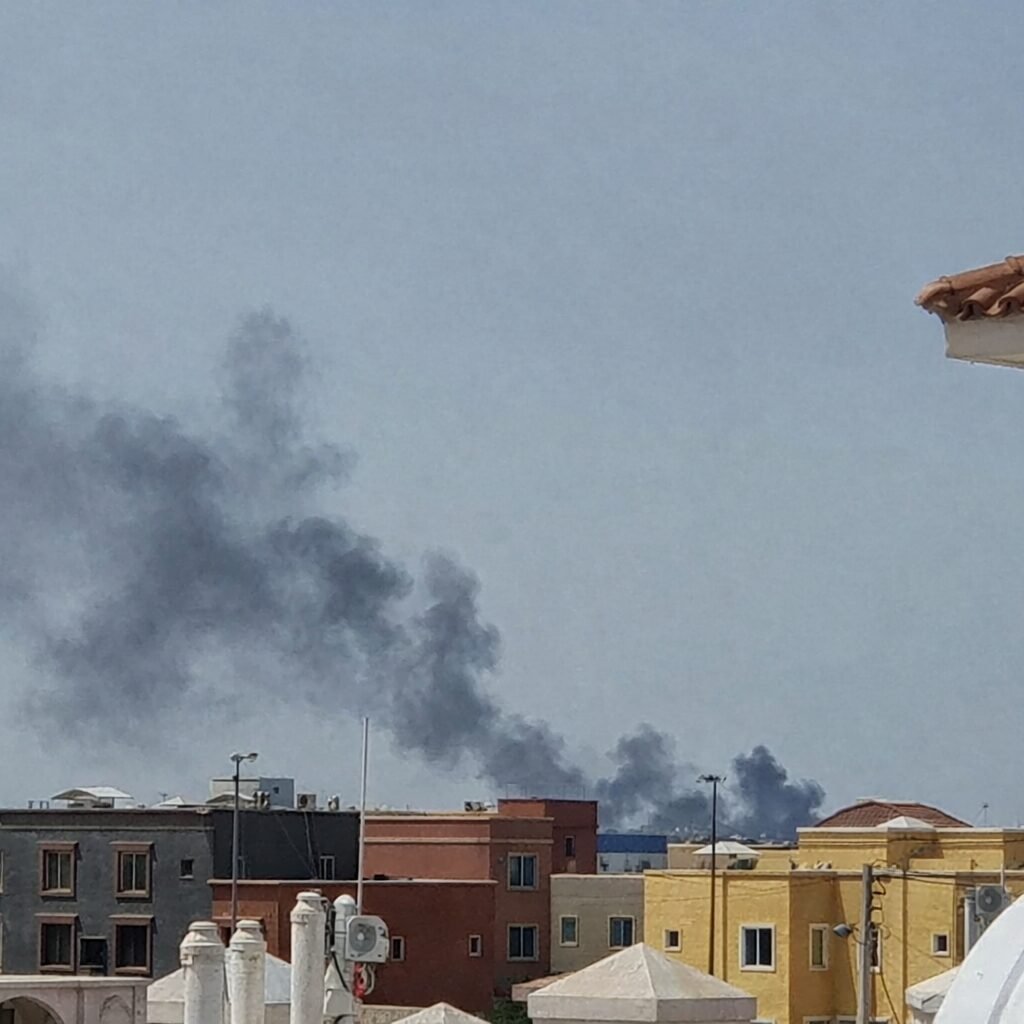
Shortly after 9:30 a.m. Tehran time (0600 GMT), explosions rocked the capital. Verified videos show smoke rising over Jomhouri Square and Hassan Abad Square. Strikes were also reported in Isfahan, Qom, Karaj, Tabriz, and Kermanshah.
Both Iran’s Supreme Leader Ayatollah Ali Khamenei and President Masoud Pezeshkian were targeted, according to three sources briefed on the operation. Khamenei was not in Tehran and has been moved to a secure location; Pezeshkian is safe, officials said.
Satellite imagery confirms strikes on the compound housing Khamenei’s office. Multiple buildings were hit, though it’s unclear if the 86-year-old leader was present.
The deadliest single incident occurred in Minab, southern Hormozgan province, where an Israeli strike hit a girls’ elementary school. At least 40 students were killed and 45 wounded, according to Iran’s state-run IRNA news agency. The BBC has not independently verified this.
Iran’s airspace has been closed. Internet monitor Netblocks reports national connectivity at 4% of ordinary levels — a near-total blackout.
Iran Strikes Back
The IRGC announced it had launched “large-scale missile and drone attacks” against Israel and U.S. assets in the region. Targets included:
· The U.S. Navy’s 5th Fleet headquarters in Bahrain — explosions reported near the Juffair area, now being evacuated
· Al Udeid Air Base in Qatar — the largest U.S. facility in the Middle East
· Military installations in Kuwait, the UAE, and Saudi Arabia — an Italian military base in Kuwait was hit, causing significant runway damage but no casualties among 300 Italian personnel
· Multiple waves of missiles toward Israel — sirens sounded across the country, with interceptions reported over Jerusalem
Jordan intercepted two missiles targeting its territory. Qatar said it “successfully countered a number of attacks”. The UAE confirmed one person killed by falling debris from air defense intercepts.
Saudi Arabia condemned “blatant Iranian aggression” against its Gulf neighbors.
What Trump Said
Trump described the operation as “massive and ongoing” in an eight-minute address recorded at Mar-a-Lago, where he was joined by Defense Secretary Pete Hegseth and Joint Chiefs Chairman Gen. Dan Caine.
“Our objective is to defend the American people by eliminating imminent threats from the Iranian regime,” Trump said. “We will ensure Iran does not obtain a nuclear weapon”.
He vowed to destroy Iran’s missiles, “raze their missile industry to the ground,” and annihilate its navy. He acknowledged American lives may be lost: “That often happens in war”.
Then he addressed the Iranian people directly:
“Stay sheltered. Don’t leave your home. It’s very dangerous outside. Bombs will be dropping everywhere. When we are finished, take over your government. It will be yours to take. This will be probably your only chance for generations”.
He also urged Iran’s military to lay down its arms in exchange for immunity, warning of “certain death” if they refuse.
The U.S. named the operation “Epic Fury.” Israel called it “Lion’s Roar”.
What Netanyahu Said
Israeli Prime Minister Benjamin Netanyahu said the goal was to “remove an existential threat posed by Iran.”
“Our joint action will create the conditions for the courageous Iranian people to take their destiny into their own hands,” he said in a video statement. “The time has come for all the people of Iran… to cast off the yoke of tyranny and bring about a free and peace-seeking Iran”.
He stressed that Tehran must not be allowed nuclear weapons: “This murderous terrorist regime must not be armed”.
What Iran Said
Foreign Minister Abbas Araghchi called the strikes “wholly unprovoked, illegal, and illegitimate.”
“Trump has turned ‘America First’ into ‘Israel First’—which always means ‘America Last,'” he wrote on X. “Our powerful armed forces are prepared for this day and will teach the aggressors the lesson they deserve”.
The IRGC declared all U.S. and Israeli assets in the Middle East legitimate targets, warning of “no redlines” and “a complex response without time constraints”.
Ebrahim Azizi, head of parliament’s national security committee, posted: “We warned you! Now you have started down a path whose end is no longer in your control”.
The Diplomatic Collapse
The attack came less than 24 hours after the third round of U.S.-Iran nuclear talks ended in Geneva without a breakthrough. Negotiators had agreed to resume discussions next week.
Omani Foreign Minister Badr Albusaidi, who mediated the talks, met with Vice President JD Vance on Friday, posting afterward: “Peace is within our reach”.
Saturday morning, he wrote again: “I am dismayed. Active and serious negotiations have yet again been undermined. Neither the interests of the United States nor the cause of global peace are well served by this. And I pray for the innocents who will suffer”.
His plea to Washington: “I urge the United States not to get sucked in further. This is not your war”.
Congressional Notification
Some “Gang of Eight” congressional leaders were notified in advance, but not given a full accounting of the legal justification, sources told CNN. Secretary of State Marco Rubio and CIA Director John Ratcliffe delivered a classified briefing earlier in the week.
Democratic Sen. Tim Kaine called the strikes “dangerous, unnecessary, and idiotic,” demanding an immediate Senate vote on his War Powers Resolution to block hostilities against Iran.
Global Reaction
· UN Human Rights Chief Volker Türk: “Bombs and missiles are not the way to resolve differences but only result in death, destruction and human misery”.
· European Union: “Deeply concerning” — Ursula von der Leyen urged restraint.
· France: President Emmanuel Macron called for an urgent UN Security Council meeting, saying France is “ready to deploy necessary resources” to protect partners.
· UK: Prime Minister Keir Starmer chaired a COBRA emergency meeting. Britain was not involved in the strikes, a government spokesperson confirmed.
· Russia: Foreign Minister Sergey Lavrov condemned the “unprovoked armed attack” and urged an immediate halt.
· China: State media called the strikes “a reckless act that pushes global stability to the brink”.
· Germany: Chancellor Friedrich Merz was informed in advance, his office said .
· Finland: President Alexander Stubb said the U.S. is now operating “outside traditional international law”.
· Spain: Prime Minister Pedro Sánchez “reject(s) the unilateral military action”.
Travel Chaos
Global airlines have suspended flights across the Middle East.
Dubai’s two main airports—including the world’s busiest for international passenger traffic—halted all operations. Lufthansa, Wizz Air, and Virgin Atlantic canceled flights through early March. Kuwait halted flights to Iran.
Iraq, Jordan, and the UAE partially closed their airspace. Israel and Iran both closed theirs entirely.
The UK Foreign Office updated travel guidance for nine countries, urging vigilance.
What’s Next
The U.S. is planning for several days of attacks, sources tell CNN. Israel said its operations will continue “as long as necessary” with the aim of a “bigger change, for years to come”.
Iran has vowed “unrestrained retaliation with no time constraints”.
The U.S. Navy’s 5th Fleet has scattered its ships at sea—a defensive posture adopted before previous strikes. The USS Dwight D. Eisenhower carrier strike group is operating in the region.
Israel’s Home Front Command warned of another wave of incoming missiles.
Reza Pahlavi, the exiled son of Iran’s last shah, called on Iranians to prepare for “final victory,” promising to announce when to take to the streets.
The only certainty: after months of threats and weeks of negotiations, war has returned to the Middle East—and this time, it may not end quickly.