
American MQ-9 Reaper drones are now flying over northern Nigeria, feeding intelligence to Nigerian commanders through a newly established U.S.-Nigeria intelligence fusion cell—the first such deployment since the U.S. lost its $100 million drone base in neighboring Niger.
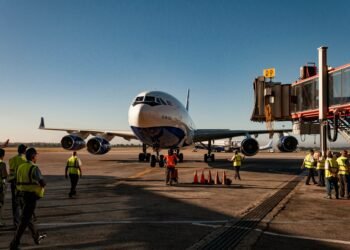
Multiple drones and roughly 200 U.S. troops are operating from Bauchi airfield in the northeast, at the request of the Nigerian government, officials from both countries confirmed to Reuters. The troops are not on the frontlines, and the drones are collecting intelligence, not carrying out airstrikes.
“This support builds on the newly established U.S.-Nigeria intelligence fusion cell, which continues to deliver actionable intelligence to our field commanders,” said Major General Samaila Uba, director of defence information at Nigeria’s Defence Headquarters. “Our U.S. partners remain in a strictly non-combat role, enabling operations led by Nigerian authorities.”
Why Now?
The deployment follows U.S. airstrikes targeting militants in northwest Nigeria in late 2025—and represents a strategic pivot after the U.S. was forced out of Niger.
In 2024, the U.S. closed its $100 million drone base in Niger, home to about 1,000 troops monitoring militants across the Sahel, after the country’s junta requested their departure. The closure was part of a broader rejection of Western military support by several Sahel nations.
Now, with Islamist insurgencies spreading across West Africa, Washington is rebuilding its surveillance network—this time, anchored in Nigeria.
“We see this as a shared security threat,” a U.S. defence official told Reuters.
What the Drones Can Do
The MQ-9 Reaper can loiter at high altitude for more than 27 hours, making it ideal for persistent surveillance. It can be used for both intelligence gathering and airstrikes, though officials say the current mission is strictly non-combat.
Uba said U.S. forces are helping Nigeria “identify, track and respond to terrorist threats.”
Neither side would comment on specific cases where U.S. intelligence has led to Nigerian military action, but the intelligence fusion cell is already operational, feeding real-time data to commanders in the field.
A Persistent Threat
The deployment comes as Nigeria’s military faces multiple, overlapping insurgencies.
In the northeast, Boko Haram and the Islamic State-allied faction ISWAP have waged a 17-year campaign. This week, suicide bombers attacked a garrison town, demonstrating the militants’ continued ability to strike urban centers.
In the northwest, near the border with Benin and Niger, a long-running banditry crisis is showing signs of mutating into an Islamist operating zone. Late last year, the U.S. carried out airstrikes in the region, targeting militants it said were threatening Christian communities—a claim Nigerian officials and conflict experts have rejected as oversimplifying a complex crisis.
“We continue to assess that these organisations will seek opportunistic targets and may attempt to demonstrate relevance through high-visibility attacks,” Uba said.
What’s Next
The timeline for the U.S. deployment will be determined in agreement between both sides, Uba said. But for now, American drones are flying over Nigeria’s north, their sensors scanning for militants, and their data flowing to Nigerian commanders on the ground.
It’s a quieter war than the one being fought in the Middle East. But for the U.S. military, rebuilding a surveillance network in West Africa—after losing its base in Niger—is no small operation. And for Nigeria, the intelligence partnership is a tool it hopes will turn the tide against insurgencies that have killed tens of thousands and displaced millions.
The drones are watching. The troops are advising. And the question—whether this will be enough to break the back of an insurgency that has outlasted every previous strategy—remains unanswered.