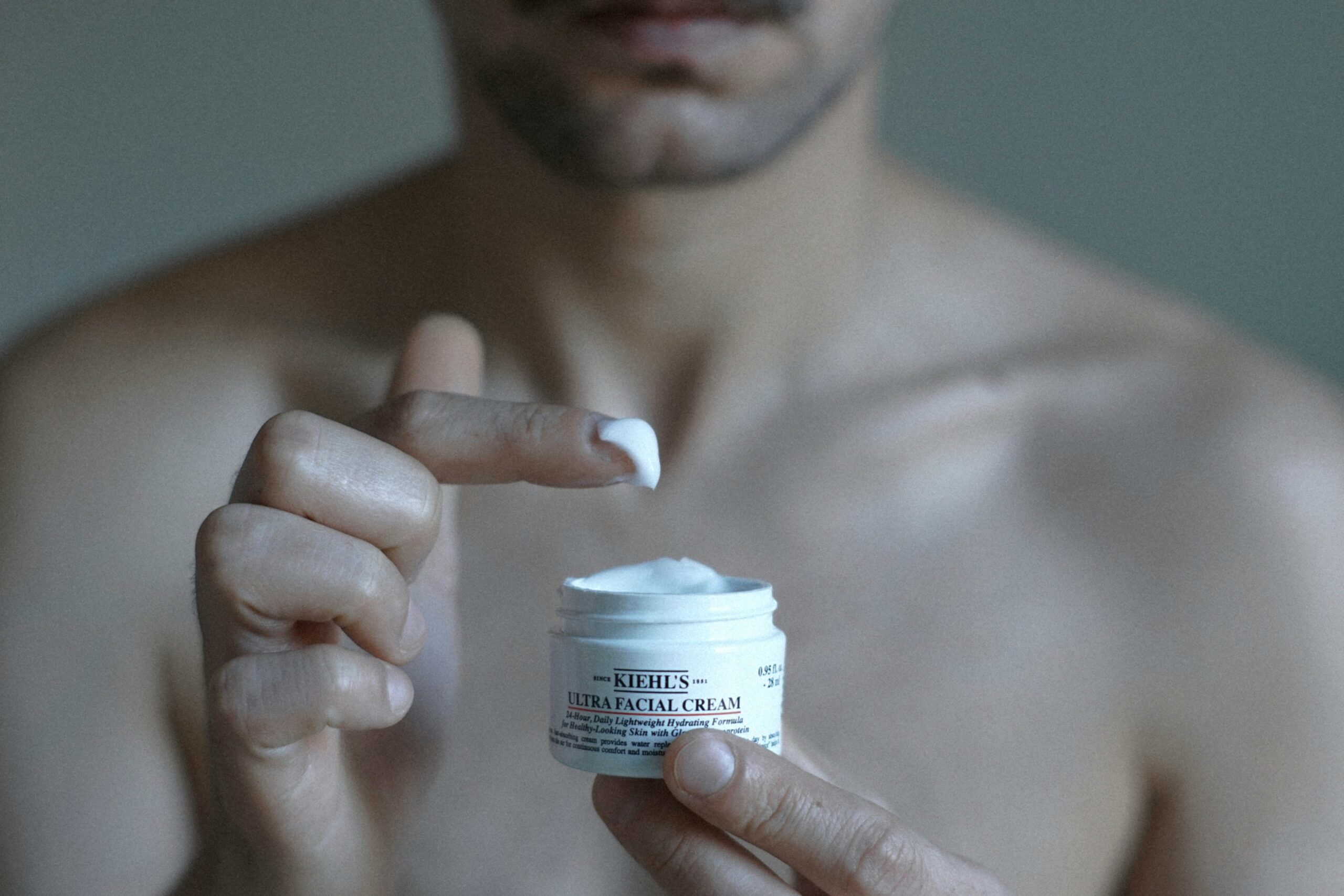

Walk into any spa in Abuja on a Saturday afternoon, and you will see them. Men in their late twenties to early forties, freshly shaven, sitting in waiting areas with the same quiet patience they might reserve for a business meeting. Contrary to what you might be thinking, they are not there because a partner dragged them. They are there because they booked the appointment themselves.
For decades, the image of the Nigerian man was simple: soap, water, maybe a splash of aftershave if he was feeling fancy. Skincare was women’s business. Lotion was optional. The idea of booking a professional facial was something that would have earned you sideways looks from your friends.
But nowadays, that script is being rewritten.
The Numbers Don’t Lie
According to market research, the Nigerian men’s grooming products market stood at over $311 million in 2024 and is projected to grow to more than $455 million by 2033. That is not a trend. That is an industry finding its footing.
What is driving this growth? A combination of factors that tell a larger story about how Nigerian men are rethinking their relationship with their own skin.
The Death of the “Skincare is Feminine” Myth
Ask a man in his fifties why he never uses lotion, and he might tell you it makes him sweat. Ask a man in his twenties, and the answer is different. Social media has done what decades of subtle cultural pressure could not: it has normalized the idea that a man can care about how his skin looks without it being a statement about his masculinity.
Men are discussing exfoliation and hydration with the same ease they once reserved for football scores. Influencers and celebrities share their routines openly. Banky W’s documented skincare journey became a reference point for men who were curious but unsure where to start. The message across the board here is that taking care of your skin is maintenance, not vanity.
The Professional Edge
In cities like Abuja and Lagos, where first impressions carry weight, appearance has become a professional tool. A clear, healthy complexion signals discipline and attention to detail. In competitive industries, men are realizing that looking rested and put together is strategic.
Facials, once considered a luxury, are now framed as an investment. The logic here is that you spend money on a good suit, on a good watch. Why would you not invest in the skin you present to the world every day?
The Complication: A Tale of Two Markets
Here is where the story gets complicated. While Nigerian men are increasingly conscious about skincare, the market is divided in ways that reveal lingering tensions.
On one hand, you have the professional class—the men booking facials, buying specialized products, and discussing the merits of different moisturizers. These men are driving demand for premium grooming products, and brands like Nivea are leaning into the market with targeted campaigns, including a ₦3 billion promotion linking men’s grooming to football through a Real Madrid partnership.
On the other hand, there remains a significant portion of Nigerian men who still consider basic lotion optional. A Pulse Nigeria survey captured the sentiment: men citing the heat, the sweat, the simple fact that they “don’t even remember”. For these men, skincare is not a routine. It is an occasional consideration, usually triggered by visible dryness or harmattan.
This divide is not just about class or income. It is about exposure, about whether a man has been given permission to care. For many, the permission is still pending.
The Local Brand Revolution
What makes this moment significant is that Nigerian men are not being sold a foreign ideal. Local brands are stepping up with products designed for Nigerian skin, Nigerian climate, Nigerian realities. Lightweight formulations that work in humidity. Oil-control products for Lagos mornings. Beard oils that understand the texture of Nigerian facial hair.
House of Tara, Zaron Cosmetics, and newer players have expanded into men-specific ranges. The message is not “look European.” It is “look like the best version of yourself.”
This matters because the history of men’s grooming in Nigeria is tangled with a more uncomfortable reality: the pressure to lighten skin. The World Health Organization once labeled Nigeria the world capital of skin bleaching, with a 77 percent prevalence rate among women. The conversation around men’s skincare cannot ignore this context. There is a difference between caring for your skin and trying to change its fundamental nature. The healthiest direction of this new movement is one that celebrates melanin, not erases it.
What Still Needs to Change
Despite the progress, barriers remain. Some Nigerian men still face social pressure or family disapproval for embracing grooming routines. The idea that skincare is “soft” persists in certain circles. And the forgetfulness cited by men in the Pulse survey is not just about memory—it is about what has been deemed important enough to remember.
The men who do maintain routines often cite a tipping point: a girlfriend or wife who encouraged them. A colleague whose skin looked noticeably better. A moment of looking in the mirror and realizing the cracks and dryness were not serving them.
The Bottom Line
So, are Nigerian men finally skincare conscious? The honest answer is: some are. More than ever before. And the numbers suggest that the number will keep growing.
But the real shift is not in the statistics. It is in the quiet normalization of a man saying, “I have a facial appointment,” without explaining himself. It is the father who teaches his son to moisturize, the same way he teaches him to tie a tie. It is in the slow, steady dismantling of the idea that caring for your skin is anything other than caring for yourself.