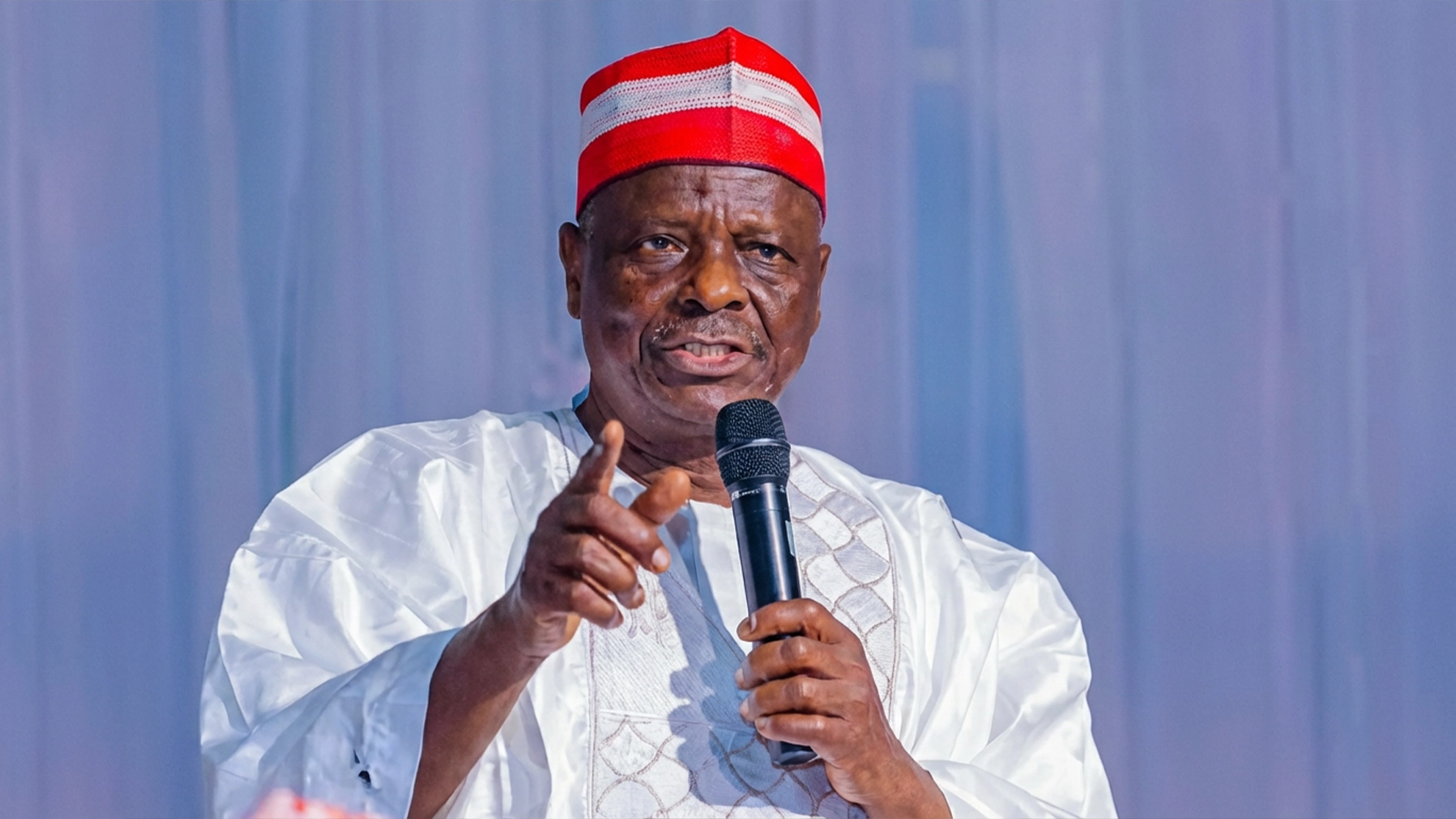

Rabiu Kwankwaso, the 2023 presidential candidate of the New Nigeria People’s Party, has formally resigned from the party he helped build, clearing the way for his expected defection to the African Democratic Congress on Monday in what political observers describe as a major realignment ahead of the 2027 elections.
In a statement issued Sunday, Kwankwaso cited “the current trajectory of the nation’s political landscape, which calls for strategic realignment” as the reason for his departure.
“As a committed and bona fide member of the party, this was not an easy decision to make,” he said. “However, I have found it necessary to identify with another political platform that offers the best opportunity to effectively change the nation.”
The New Destination
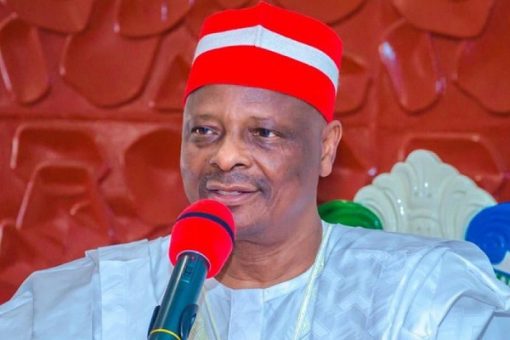
Though Kwankwaso did not name his next party in the resignation letter, multiple sources confirmed to Sunday PUNCH that he will formally join the African Democratic Congress on Monday in Kano.
A principal official of the ADC, speaking on condition of anonymity, told Sunday PUNCH that the party’s National Chairman, David Mark, and its Secretary, Ogbeni Rauf Aregbesola, will be in Kano to receive him. The immediate past Deputy Governor of Kano State, Aminu Gwarzo, is also expected to defect alongside Kwankwaso.
The move comes less than 24 hours after Kwankwaso held a “courtesy visit” with former Vice President and 2023 PDP presidential candidate Atiku Abubakar in Abuja. Atiku posted photos of the meeting on X, saying they had a “robust discussion on the state of the country.”
The NNPP’s Response
The NNPP’s reaction has been muted but dismissive. Party officials noted that Kwankwaso had effectively been absent since his expulsion in 2023, though that expulsion was later challenged in court.
In his resignation letter, Kwankwaso thanked the party’s national leadership, including National Chairman Ajuji Ahmed, the National Working Committee, and the Board of Trustees for their “steadfast support” during his time in the party. He also acknowledged members of the Kwankwasiyya movement, the political structure he built over decades in Kano, pledging that “we shall continue to collaborate and work together towards charting a better and more prosperous future for our dear nation.”
The Political Earthquake
Kwankwaso’s defection is significant for two reasons.
First, it strips the NNPP of its most recognizable figure. Kwankwaso was the party’s presidential candidate in 2023, pulling in over 1.4 million votes and establishing the NNPP as a genuine force, particularly in Kano, where he remains a dominant political figure. His departure leaves the party without its electoral engine.
Second, it consolidates opposition forces under a single platform. The ADC, which has positioned itself as a progressive alternative, now gains one of the North’s most formidable political machines. The Kwankwasiyya movement—a grassroots network across Kano and beyond—transfers its organizational strength to a party that has been courting major opposition figures.
The 2027 Calculations
Kwankwaso’s exit and expected ADC membership set the stage for a potentially unified opposition challenge to the ruling All Progressives Congress in 2027.
Speculation has mounted in recent weeks about the possibility of an opposition mega-coalition. Atiku has held talks with Peter Obi of the Labour Party and now with Kwankwaso. Oyo State Governor Seyi Makinde, a PDP heavyweight, has also been part of recent discussions. The ADC has emerged as a possible convergence point.
Kwankwaso’s own presidential ambitions are well known. He ran for president in 2023 on the NNPP ticket after failing to secure the PDP nomination. His defection to the ADC—rather than rejoining the PDP or merging with the Labour Party—suggests he sees a clearer path to the presidency through a new coalition rather than an existing party.
Political analysts note that Kwankwaso’s decision to join the ADC could tilt the balance of power in the North. His Kwankwasiyya movement remains deeply rooted in Kano, Nigeria’s most populous state, and has pockets of influence across the North-West and North-Central. Any candidate carrying his endorsement in 2027 would inherit that structure.
What Happens in Kano
The immediate impact will be felt in Kano, where the NNPP controls the state government. Governor Abba Kabir Yusuf, a Kwankwaso protégé, won the 2023 election on the NNPP platform. The party also holds a majority in the state assembly.
Kwankwaso’s defection places Governor Yusuf in a delicate position. Loyalty to Kwankwaso has been the organizing principle of Kano politics for over a decade. But the governor now leads a party his political godfather has abandoned.
For now, Yusuf has not commented on Kwankwaso’s resignation. But his silence is itself significant. If he follows Kwankwaso to the ADC, the NNPP’s grip on Kano could unravel. If he stays, he must navigate a political landscape where his mentor is now aligned with a rival party.
What Comes Next
Kwankwaso will formally join the ADC on Monday in Kano. The event is expected to draw thousands of supporters from across the state and beyond.
For the ADC, the defection is a coup. For the NNPP, it is a body blow. And for the opposition more broadly, it is a signal that the scramble for 2027 has begun in earnest.
Kwankwaso framed his departure as a strategic move for the nation’s good. In his statement, he thanked his supporters and vowed that “we shall continue to collaborate and work together towards charting a better and more prosperous future.”
Whether that collaboration includes Atiku, Obi, Makinde, or other opposition figures remains unclear. But the coordinates of the 2027 map are now shifting. And Kwankwaso has drawn his first clear lines.