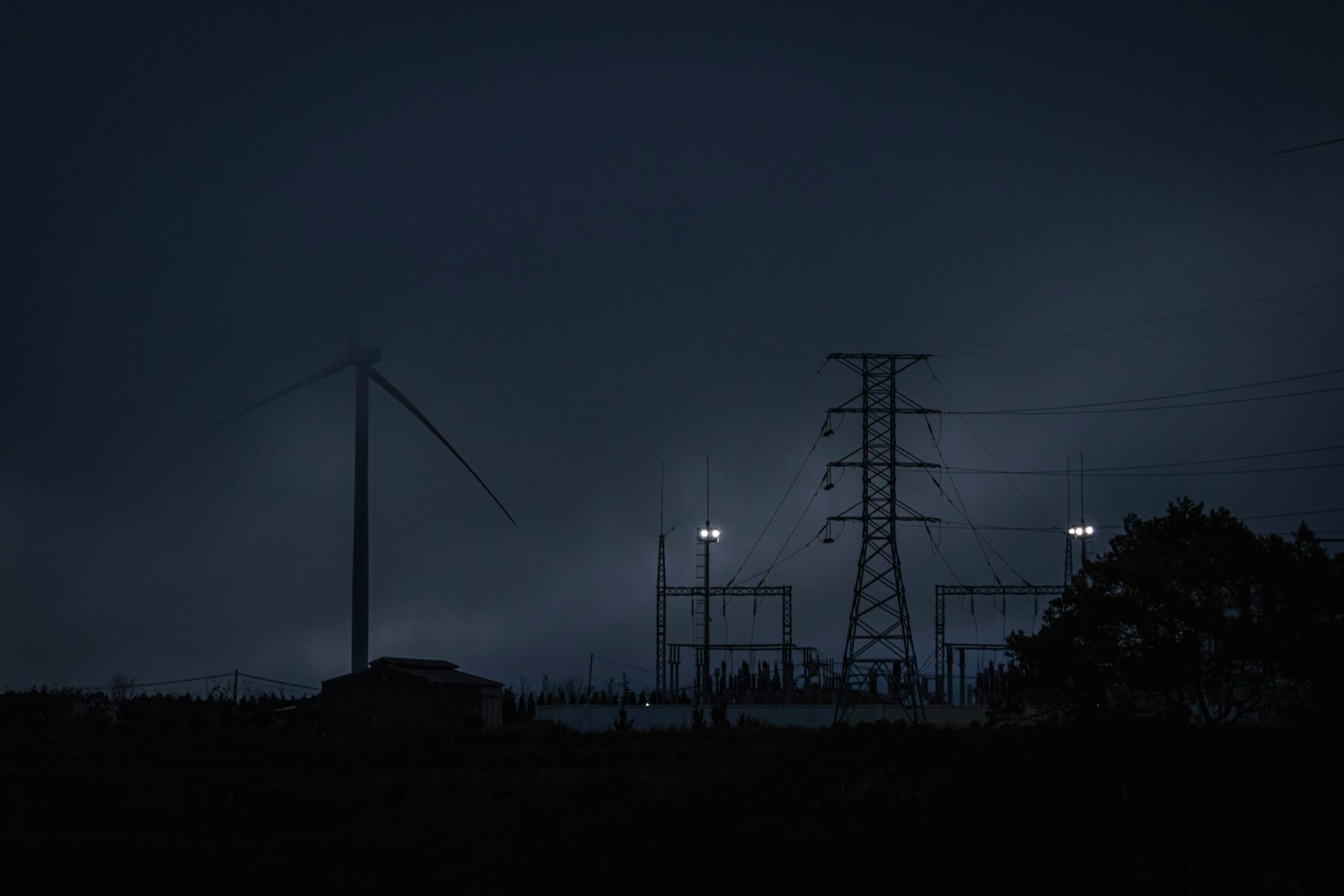

Johannesburg, recognized as South Africa’s commercial capital and Africa’s wealthiest square mile, has been hit with a dramatic 14-day ultimatum to resolve a staggering debt crisis or face total institutional collapse. State power utility Eskom announced it is preparing to interrupt, reduce, or completely terminate bulk electricity supply to the metropolis. The move comes as a prominent civil society watchdog threatens aggressive high-court litigation over a mounting R5.2 billion (over $308 million) unpaid energy bill.
Eskom Ready to Pull the Plug on the Continent’s Financial Hub
The escalating dispute threatens to plunge South Africa’s economic engine into an unprecedented infrastructure crisis. According to an official directive published by Eskom, the City of Johannesburg and its local municipal distributor, City Power, have engaged in a pattern of continuous payment defaults. The state utility revealed it has spent more than two years attempting to negotiate structured payment plans with municipal officials, but persistent non-compliance has forced its hand. The city currently owes R5.2 billion (over $308 million) in severely delinquent, overdue accounts for bulk electricity already consumed.
An additional R1.58 billion (over $90 million) current account invoice is looming, with a hard deadline of June 5. Eskom has initiated formal regulatory notices of intent to disconnect primary bulk supply points, a move that would disable power distribution to major residential, commercial, and industrial zones.

Johannesburg Swindles Workers While Eskom Bill Explodes
The threat of localized bulk blackouts has sent shock through South Africa’s corporate elite. Johannesburg is the financial heart of the African continent, serving as the global headquarters for multinational mining houses, telecommunication conglomerates, commercial banking institutions, and the Johannesburg Stock Exchange (JSE), the largest equities market in Africa by market capitalization.
For over a decade, South African businesses have fought intense macro-economic headwinds driven by Eskom’s generation shortages and rolling blackouts (load-shedding). This has forced private enterprises and wealthy households to spend billions of Rands on private solar arrays, heavy-duty industrial generators, and localized battery storage systems.
This latest crisis, however, is not a structural generation failure; it is a raw municipal cash-flow collapse. The crisis has exposed severe rot within the city’s treasury department, coming alongside leaked administrative reports indicating that Johannesburg lacks the cash reserves to fund previously collectively bargained wage increases for municipal civil servants.
Watchdog Rejects Political Loopholes and Demands
In response to the looming blackouts, civil society organization Public Interest SA has served the city administration with a formal 14-day legal notice. The group’s chairperson, Tebogo Khaas, stated that they are prepared to file an urgent application in the High Court of South Africa to institute civil and criminal proceedings against current and former municipal executives for gross financial misconduct under the Municipal Finance Management Act (MFMA).
Public Interest SA is demanding a fully transparent, audited recovery plan detailing exact repayment timelines, immediate implementation of strict municipal credit controls, and harsh consequence management for officials who oversaw the wasteful expenditure of electricity revenues collected from paying residents but never remitted to Eskom.
Johannesburg Mayor Dada Morero attempted to downplay the crisis during a media briefing, claiming the challenge extends across several South African municipalities and that the city is pursuing a “political solution” by appealing directly to the Minister of Electricity and Energy, Kgosientsho Ramokgopa.
However, Public Interest SA fiercely rejected this strategy, warning that behind-the-scenes political maneuvering cannot legally override statutory financial accounting laws, and cautioned that South Africa’s National Treasury is already preparing to freeze critical infrastructure funding allocations to the metro due to collapsing governance standards.
A Premium Economy Run by Third-World Management
The financial humiliation of the City of Johannesburg is the logical conclusion of decades of institutional rot, administrative incompetence, and the absolute normalization of non-accountability. It is a staggering paradox: how does the wealthiest municipal economy on the African continent, an area that generates billions in tax revenue from the world’s largest financial and mining conglomerates, find itself unable to pay its electricity bill? The answer is simple: systemic, unchecked state capture and corporate-scale municipal mismanagement.
Mayor Dada Morero’s pathetic attempt to seek a “political solution” by running to the Minister of Energy tells you everything you need to know about the ruling elite’s mindset. They view statutory financial laws like the Municipal Finance Management Act as mere suggestions that can be ignored over a cozy political lunch. For years, City Power has collected electricity payments from honest, hard-working residents and corporate entities who pay their bills on time. Where did that money go? It certainly wasn’t used to pay Eskom. It was swallowed up by a bloated, inefficient bureaucracy, siphoned off by corrupt supply-chain contracts, and wasted on populist projects while critical infrastructure turned to rust.
Eskom is entirely justified in threatening to pull the plug. Why should a struggling state utility, which has dragged down South Africa’s entire GDP for years, continue to subsidize a multi-billion-dollar municipality that treats energy consumption as a free ride?
If the High Court has to intervene and lock up municipal managers to enforce basic financial sanity, so be it. If Africa’s richest square mile ends up sitting in total darkness because its leaders chose to treat electricity revenues as a personal political bank, then Johannesburg will get exactly what it deserves. You cannot run a world-class financial hub with a third-world political circus.