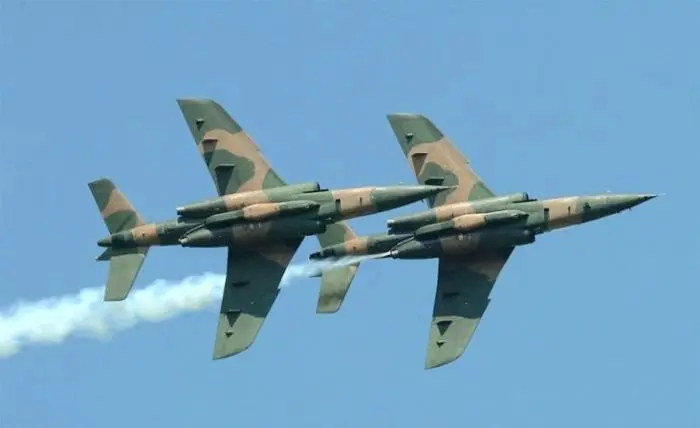
The Air Component of Operation HADIN KAI carried out precise airstrikes within the Yuwe axis of the Sambisa Forest, leading to the killing of several terrorists, according to Air Commodore Ehimen Ejodame, the Director of Public Relations and Information for the NAF. The statement, issued on Tuesday in Abuja, noted that the military has sustained intense pressure on terrorist elements in the North-East.
The operation, the NAF says, followed credible intelligence corroborated by Intelligence, Surveillance, and Reconnaissance, which confirmed the presence of active terrorist elements within fortified structures and bunkers. In plain English, they knew where the targets were before they dropped the bombs.
The Strike
NAF air assets engaged the targets with precision munitions, destroying the structures, neutralizing multiple terrorists, and eliminating key logistics facilities. Subsequent battle damage assessments confirmed the results, according to the statement. The sustained tempo of air operations, the NAF added, continues to degrade terrorist networks, leaving them increasingly exposed and disrupted, with mounting pressure forcing them into desperate and reactive actions.
The language is clinical. “Precision munitions.” “Battle damage assessments.” “Degrade terrorist networks.” But the reality on the ground is anything but clinical. Sambisa Forest has been a stronghold for terrorist groups for years. Airstrikes have been launched there repeatedly. Each strike is presented as a success. Each statement emphasizes precision and minimal civilian harm.
The Commitment
The statement also quoted the Chief of the Air Staff, Air Marshal Sunday Aneke, as reaffirming the NAF’s resolve to sustain relentless, intelligence-driven air operations until terrorist elements are completely neutralized. He stated that the NAF remains committed to the protection of its personnel, the security of the nation, and the safety of all citizens.
He further noted that the NAF would continue to intensify precision engagements across the theatre, maintaining decisive operational pressure while adhering strictly to rules of engagement and minimizing civilian harm.
The emphasis on “precision” and “minimizing civilian harm” is not accidental. The NAF has faced criticism in the past for airstrikes that reportedly killed civilians. The 2017 strike on a refugee camp in Rann, Borno State, which aid agencies said killed more than 100 people, remains a stain on the air force’s record. Every subsequent statement about precision is, in part, an attempt to rebuild trust.
The Bigger Picture
The airstrike in Sambisa is not an isolated event. It is part of a sustained campaign. The military has been operating in the North-East for years. Terrorist groups have been degraded but not destroyed. Civilian casualties have been a recurring issue. The government has been criticized for not doing enough to protect non-combatants.
The NAF’s insistence on precision is a response to that criticism. But statements are not the same as outcomes. The military can claim precision. Independent verification is nearly impossible in a conflict zone like Sambisa Forest.
What is known is that airstrikes continue. The military says they are working. The Chief of the Air Staff says the NAF will not stop until terrorist elements are completely neutralized. That is a high bar. The North-East has been a conflict zone for more than a decade. “Complete neutralization” has remained elusive.
The Bottom Line
The Nigerian Air Force carried out precise airstrikes in the Yuwe axis of the Sambisa Forest on Monday, killing several terrorists and destroying fortified structures and logistics facilities. The operation followed credible intelligence, according to the NAF. The military says it is sustaining intense pressure on terrorist elements in the North-East. The Chief of the Air Staff reaffirmed the NAF’s resolve to continue intelligence-driven operations until terrorists are completely neutralized, while adhering to rules of engagement and minimizing civilian harm.