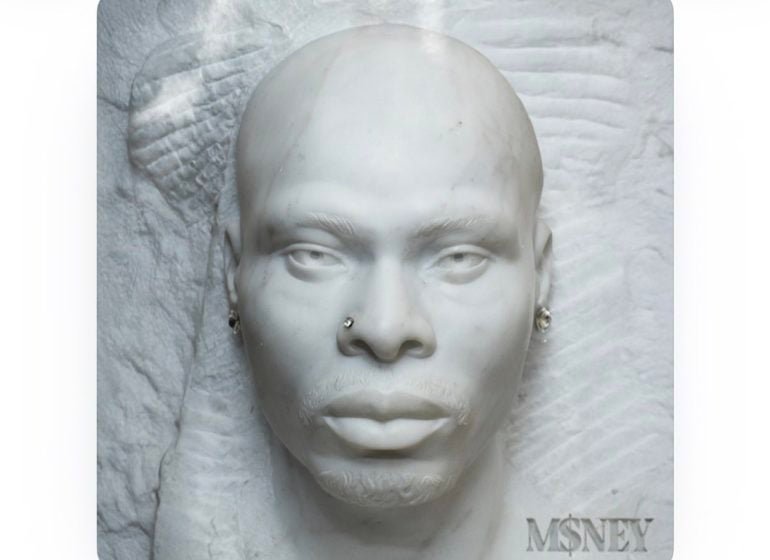

Asake has built a reputation as one of Afrobeats’ most energetic hitmakers, delivering records that dominate clubs, streaming platforms, and street conversations almost instantly. From his breakout run under Olamide’s YBNL imprint to becoming one of the biggest names in African music, Asake’s rise has been difficult to ignore.
His signature fusion of Fuji-inspired vocals, amapiano rhythms, street-hop energy, and chant-heavy songwriting created a sound that felt refreshing when he first arrived. That uniqueness helped projects like Mr Money With The Vibe stand out and positioned him as one of the defining voices of his generation.
However, with the release of M$NEY, questions about artistic evolution and creative direction have become harder to ignore.

A Strong Introduction That Quickly Loses Momentum
One of the strengths of M$NEY is its opening. The album begins with confidence, atmosphere, and the type of sonic ambition that initially raises expectations. The production feels polished, cinematic, and expensive, immediately reminding listeners why Asake remains one of the most sonically appealing artists in the industry.
But after that promising introduction, the project begins to lose direction.
The biggest issue throughout the album is not necessarily the production quality. In fact, the instrumentals are arguably the strongest aspect of the project. The beats remain vibrant, layered, and professionally arranged, often carrying songs that otherwise feel repetitive or underdeveloped lyrically.
The problem lies more in the songwriting and creative progression.
Still Trapped In The “Mr Money” Persona
One recurring concern across M$NEY is Asake’s continued dependence on the “Mr Money” identity that originally helped define his brand. While branding consistency can be effective, it begins to feel limiting when an artist repeatedly circles the same themes, flows, and energy without offering noticeable emotional or artistic expansion.
Rather than sounding like an artist entering a new phase, parts of M$NEY feel like a continuation of ideas listeners have already heard before—just repackaged with better production.
This creates the impression that Asake is becoming too comfortable within a formula that once worked perfectly for him but now risks slowing down his artistic growth.
Production Carries Several Tracks
If there is one undeniable highlight across the album, it is the production quality. Songs like “Rora” stand out largely because of their musical arrangement rather than the lyrical content itself.
The trumpet sections on “Rora” bring life and emotion into the track, elevating the listening experience significantly. The instrumentation creates atmosphere, movement, and replay value even when the writing itself feels minimal.
This pattern repeats across much of the album: excellent beats paired with underwhelming lyrical substance.
The instrumentals often sound more ambitious than the actual songwriting.
“Gratitude” Feels Familiar Rather Than Fresh
Another notable issue appears on “Gratitude,” which feels heavily reminiscent of older Asake material. Rather than sounding reinvented or evolved, the track comes across like a recycled version of ideas listeners already associate with his previous catalogue.
There is a difference between maintaining a signature sound and repeating past successes too closely. Unfortunately, “Gratitude” leans more toward repetition than reinvention.
For an artist at Asake’s level, audiences naturally expect some form of evolution—whether emotionally, vocally, lyrically, or structurally.
“Wa” Emerges As The Standout Track
Among the album’s songs, “Wa” arguably delivers the strongest overall experience. The track feels more focused sonically and carries better energy compared to several others on the project.
Even with some controversial lyrical moments, the song manages to maintain replay value because the vibe feels more complete and intentional.
Outside of “Wa,” however, many tracks struggle to leave lasting impressions. Some lack emotional depth, while others rely too heavily on repetitive flows and familiar delivery patterns.
Olamide’s Influence Still Echoes Strongly
One interesting observation throughout M$NEY is how strongly Olamide’s influence remains present within Asake’s music.
Tracks like “Forgiveness” especially carry traces of the YBNL founder’s artistic philosophy—from vocal layering to emotional framing and even parts of the songwriting structure.
That influence initially helped shape Asake into a star, but there are moments on this project where listeners may begin wondering when Asake will fully step into a more distinct and evolved artistic identity of his own.
Final Verdict
M$NEY is not a terrible album, but it feels disappointingly safe for an artist of Asake’s calibre. The production remains excellent, the sound engineering is polished, and there are flashes of musical brilliance throughout the project.
However, strong beats alone cannot fully compensate for repetitive songwriting, limited thematic evolution, and a growing sense of creative stagnation.
At this stage of his career, listeners expect more artistic risk, emotional depth, and lyrical progression from Asake. Instead, M$NEY often sounds like an artist relying too heavily on an already established formula.
The result is an album with impressive sound but limited substance.