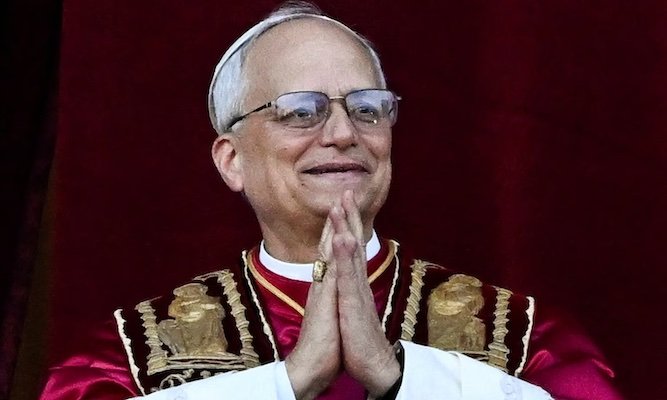
Pope Leo XIV has made history and sparked a massive theological war by releasing his first major papal teaching document, titled Magnifica Humanitas (“Magnificent Humanity”). Breaking centuries of Vatican tradition, the Pope presented the document in person alongside Christopher Olah, a co-founder of the prominent artificial intelligence safety company Anthropic.
While the document aims to address how the global Catholic church can protect human dignity as AI rapidly transforms society, conservative and hardline factions within the Church are openly furious, labeling the tech-centered message as nothing short of institutional blasphemy.
What is an Encyclical?
To understand why traditionalists are so angry, it helps to understand the massive weight this specific type of document carries. An encyclical is one of the oldest and most important tools a Pope has to communicate.
It is an official, authoritative letter written by the Pope and sent out to the global network of bishops and the 1.4 billion Catholic faithful worldwide. It doesn’t lay down strict new Church laws (which is done via a “Papal Bull”), but it serves as an authoritative guide on how Catholics should navigate modern moral, social, and economic challenges.
While popes have sent letters since ancient times, the formal encyclical system was officially set up by Pope Benedict XIV back in the 1740s.
By using this 400-year-old tradition to focus entirely on artificial intelligence, Pope Leo XIV is signaling that Silicon Valley’s tech boom is now one of the most critical moral issues on Earth.
Why Hardline Traditionalists Are Furious
The backlash from the conservative wing of the Catholic Church was instant and severe. For traditionalists, the Pope’s actions feel like a complete betrayal of sacred space.
First, the rollout itself was deeply shocking. Popes almost never attend the public press launches of their own encyclicals. By sitting on a Vatican stage side-by-side with a tech executive from a multi-billion-dollar AI company, hardline Catholics feel the Pope gave Silicon Valley an unearned, divine stamp of approval. They argue it blurs the line between sacred spiritual guidance and corporate public relations.
Second, the theological critique is intense. Traditionalist theologians are arguing that the Pope is spending too much time trying to modernize the Church and please the secular world instead of focusing on timeless spiritual doctrines. Some hardline groups have gone online to call the document “blasphemous,” claiming that focusing an authoritative papal teaching on artificial algorithms lowers the dignity of the Church.
They believe the Vatican should be condemning the rise of AI as a threat to the human soul, rather than working with tech developers to manage its growth.
A Necessary Evolution, Not an Unholy Alliance
The outrage coming from the traditionalist wing of the Catholic Church is completely disconnected from reality. Hardliners are treating this encyclical like a secular contamination of the faith, but they are entirely missing the point of what the Church is supposed to do. The Vatican cannot lock its gates and pretend the year is still 1500. Artificial intelligence is actively rewriting medicine, warfare, employment, and human relationships. For the Pope to remain silent on the most transformative technology in human history would be a massive failure of moral leadership.
The anger over Anthropic’s Christopher Olah standing next to the Pope is particularly ridiculous. When Pope Leo XIII wrote about workers’ rights in 1891, he didn’t do it in a vacuum; he looked at the reality of factories and labor unions. If a modern pope wants to write intelligently about AI safety, human data exploitation, and algorithm bias, he should be talking to the people who are actually building the technology. Listening to tech experts doesn’t mean the Pope is selling out, it means he wants his moral guidance to actually make sense in the real world.
Traditionalists love to cry “blasphemy” whenever a pontiff tries to drag the Church into the current century. But Magnifica Humanitas isn’t about bowing down to Silicon Valley; it’s about putting a moral leash on it. If the Church doesn’t establish a strong ethical framework for how AI should respect human dignity, then tech corporations will dictate those values for us. The hardliners need to stop obsessing over ancient protocol and realize that if the Church wants to save souls in the modern world, it has to learn to speak the language of the modern world.