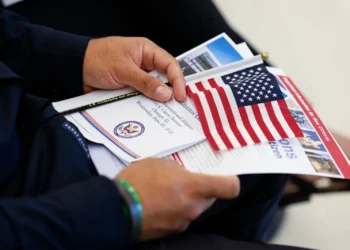
While the United States intensifies its domestic detention campaigns and mass deportation programs, Spain is moving in the exact opposite direction. The Spanish government is currently executing a massive, extraordinary regularization initiative that is on track to grant legal work and residence permits to more than 550,000 undocumented immigrants.
The sweeping humanitarian and economic policy has drawn immense gratitude from migrant families who fled violence and financial instability, but it has also triggered a fierce political backlash from conservative Spanish leaders who claim the move will permanently alter the nation’s culture and collapse overstretched public services.
The Details of the Regularization Plan
The program, originally announced by Spanish Prime Minister Pedro Sánchez in January, officially opened its application portal on April 16. The response was immediate: over 43,000 immigrants applied within the first three days, and by mid-May, the total number of applications surged to 549,596. The strict deadline for submitting paperwork is June 30, with final approvals expected to take about three months.

Under the guidelines of the policy, the legal permissions are distributed based on age:
•Adult Immigrants: Granted a temporary one-year work and residence permit. To successfully renew the permit after the first year, individuals must prove they have secured legal, contract-based employment.
•Minors and Children: Granted immediate legal status for a five-year period to ensure educational and social stability.
To qualify for the program, applicants cannot simply walk into an immigration office; they must clear a strict verification process. Immigrants must provide a valid passport, prove continuous residence in Spain for at least five months prior to January 1, 2026 (using school enrollment data, rental records, or medical history), and submit a certified, entirely clean criminal record from their country of origin covering the last five years.
A Pragmatic Lifeline for an Aging Economy
Prime Minister Sánchez has defended the mass legalization as an act of logical “normalization,” arguing that these half-a-million individuals are already living, working, and participating in the daily fabric of Spanish communities.
Independent economic analysts and local immigration attorneys point out that the policy, while deeply humanitarian, is also highly utilitarian. Spain is currently facing a severe demographic crisis due to a rapidly aging domestic population. Last year, the country’s aging index hit an all-time high, recording 148 citizens over the age of 64 for every 100 children under the age of 16.
By pulling 500,000 people out of the underground economy, Spain will instantly inject a massive wave of tax-paying workers into its strained Social Security system. For workers like Diadji Nguirane, an undocumented father from Senegal who has spent two years doing off-the-books maintenance work, the permit means he can finally secure a legal contract, pay taxes, and financially support his family alongside his partner, a hospital sanitation worker.
Spain vs. The United States
The policy highlights a stark ideological divide between Western Europe and the United States. For many South American migrants, Spain has become the preferred alternative to the American dream.
Nariola Romo, a 34-year-old former teacher who fled extortion and gang violence in Barranquilla, Colombia, with her family, originally planned to head to the U.S. After failing to secure the loans needed for the journey, her family redirected to Barcelona in 2024. Watching the mass deportations taking place across the Atlantic under the Trump administration, Romo expressed immense relief, stating that if her family had managed to reach America, they would have likely been detained and deported already.
This humane approach has infuriated Spain’s right-wing opposition parties. Isabel Díaz Ayuso, the conservative president of the Madrid region, launched a scathing attack on the prime minister’s policy, claiming the mass legalization is a conspiracy to “sabotage elections,” “manipulate the census,” and “culturally transform Spain.”
Immigration advocacy groups have quickly corrected these political talking points, noting that the newly regularized immigrants are strictly prohibited from voting in national elections. For the families on the ground, the initiative is not a political game, but a rare, life-changing opportunity to finally step out of the shadows and put down deep roots in a welcoming society.