The Supreme Court ruled 8-1 on Thursday, June 4, 2026, to uphold the Federal Communications Commission’s (FCC) power to issue multi-million dollar penalties without a mandatory prior jury trial. The consolidated ruling in FCC v. AT&T and Verizon Communications v. FCC handed a decisive victory to federal regulators, confirming the government’s ability to police consumer data privacy through its in-house enforcement framework.
The fierce legal battle stemmed from nearly $200 million in total forfeiture orders levied by the FCC against the nation’s largest wireless carriers, including $57 million against AT&T and $47 million against Verizon. The agency penalized the telecommunications giants after determining they had unlawfully sold access to sensitive customer location data to third-party aggregators without user consent, leaving the data vulnerable to rogue actors and bounty hunters.
The Seventh Amendment Confrontation
AT&T and Verizon fiercely fought the penalties, arguing that the FCC’s unilateral, internal process for assessing millions in fines completely bypassed their constitutional right to a jury trial. The telecom giants claimed that the 2024 landmark Supreme Court ruling in SEC v. Jarkesy, which stripped the Securities and Exchange Commission of its ability to use un-juristic, in-house tribunals for fraud penalties—should apply equally to the FCC.
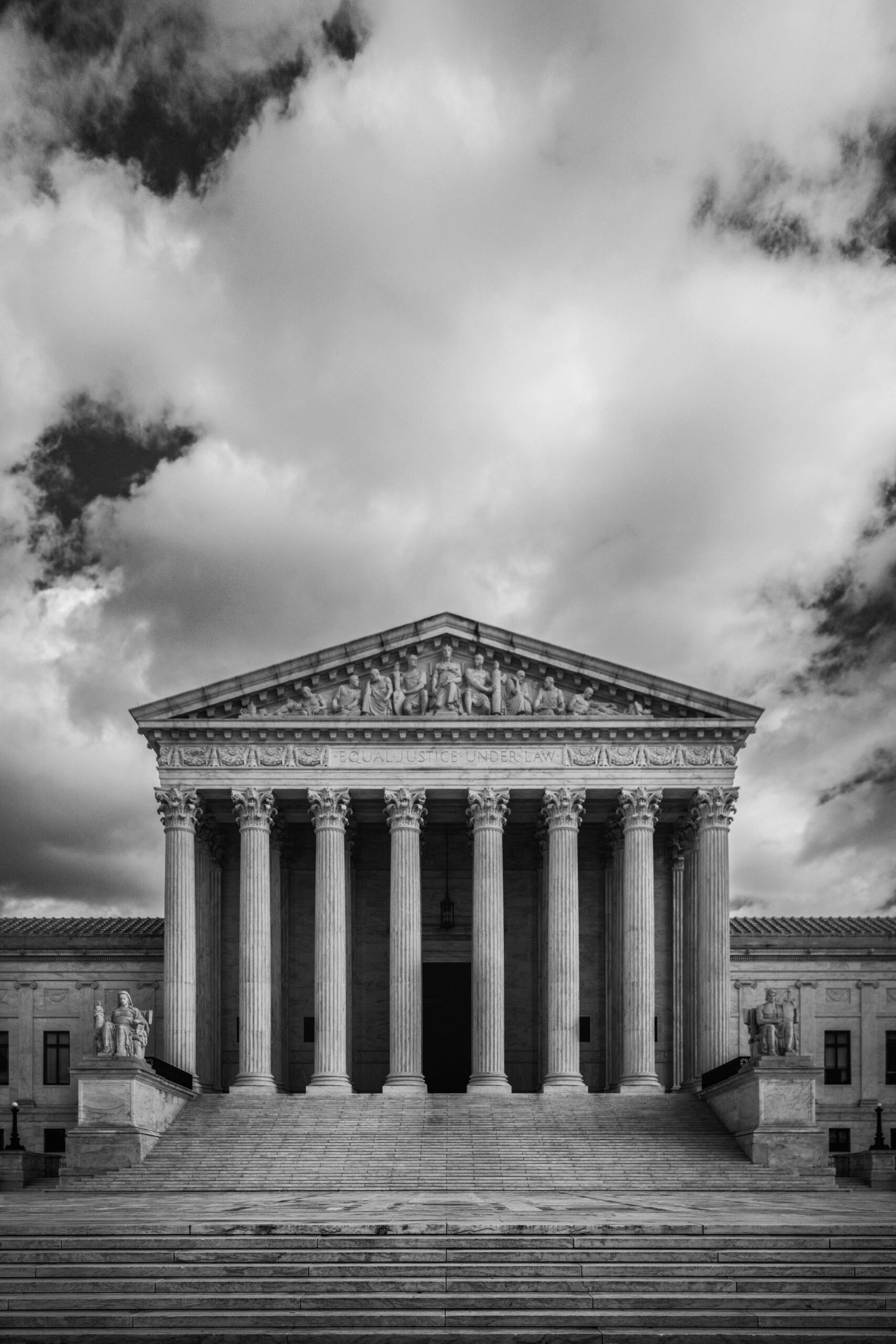
However, the Supreme Court’s conservative majority heavily distinguished the two cases based on a procedural loophole:
Writing for the 8-1 majority, Chief Justice John Roberts clarified that an FCC forfeiture order does not automatically create a binding legal debt or an immediate obligation to pay.
The majority emphasized that if a company genuinely wants a jury trial, it can simply refuse to pay the FCC’s initial penalty assessment. The federal government would then be forced to file a collection lawsuit in federal court, where the company can state its case before a jury. Because the agency cannot forcefully collect the money without eventually going to a real court if challenged, the Supreme Court ruled that the administrative framework comfortably respects Seventh Amendment protections.
The Supreme Court Just Handed Bureaucrats a License to Extort
This 8-1 decision is an absolute disaster for due process and a massive step backward for constitutional liberties. By ruling that federal agencies can issue staggering multi-million dollar “forfeiture orders” as long as they aren’t technically “immediately binding,” the Supreme Court has essentially greenlit a system of government-sanctioned reputational extortion.
Chief Justice John Roberts’ argument that companies can “simply refuse to pay” and wait to be sued in federal court completely ignores how the real world works. When a powerful federal agency publicizes a massive, official finding of guilt accompanied by a $50 million fine, the brand damage is immediate and devastating. Stock prices tank, consumer trust vanishes, and public perception is poisoned long before the victim ever gets a chance to step inside a real courtroom.
Furthermore, this ruling punishes compliance. As Justice Clarence Thomas brilliantly pointed out in his solo dissent, AT&T and Verizon did exactly what the law encourages citizens to do: they paid the fines under protest to avoid compounding penalties, and then sought judicial review to fight the unconstitutional overreach. Now, the court is penalizing them for treating a government order as obligatory. By letting administrative agencies act as prosecutor, judge, and jury in their own internal offices, the Supreme Court has weaponized the administrative state against the American people.
The Executive Branch Claims a Clean Win
The decision marks a surprising alignment between the high court’s conservative wing and federal regulatory authority, bucking a multi-year trend of rulings that chipped away at the “deep state” bureaucracy.
The Trump administration’s Justice Department aggressively defended the FCC’s system during oral arguments in April, asserting that eliminating the agency’s primary enforcement tool would utterly cripple its capacity to protect the public from corporate bad actors. Consumer advocacy groups widely celebrated the 8-1 victory, noting that a win for the telecom giants would have completely neutralized the government’s ability to combat illegal robocall networks, enforce broadcasting decency laws, and penalize corporate data harvesting.
With the legal validity of the FCC’s penalty scheme permanently secured, federal regulators are expected to sharply accelerate their crackdowns on consumer privacy violations across the tech and telecom sectors throughout the remainder of 2026.
A Dangerous Precedent for Executive Overreach
While the target of this specific ruling happened to be multi-billion dollar wireless conglomerates, the legal framework established by the Supreme Court applies to everyone. By allowing executive branch agencies to issue massive financial punishments through internal fiat, while placing the burden on the accused to risk a federal lawsuit just to get a jury, the court has dangerously expanded administrative power. The line between executive regulation and authoritarian overreach has just become terrifyingly thin.