The Ebola outbreak in Central Africa is threatening to spiral out of control. The border is closed. Traders are watching their goods rot. And U.S. health officials warn that cases could reach 20,000 or more without stronger public health measures.
The Centers for Disease Control and Prevention published a range of scenarios generated by computer models Friday, spanning from 10,000 cases to more than 20,000. If accurate, a worst-case scenario could approach the worst Ebola outbreak in history — the West Africa epidemic of 2014-2016, which resulted in more than 28,000 reported cases and more than 11,000 deaths.
“Without strong public health interventions, the modeling work suggests an outbreak of that scale is possible,” said Dr. Satish Pillai, incident manager for the CDC’s Ebola response.
The Human Toll at the Border
On the ground, the crisis is already devastating livelihoods.
Uganda closed its western border with the Democratic Republic of the Congo on May 28, about two weeks after Congo declared an outbreak of Ebola in the eastern Ituri province. The decision reflected growing fears of cross-border contagion. Exceptions were made only for emergency cases, including outbreak response, humanitarian aid, cargo, or security reasons.
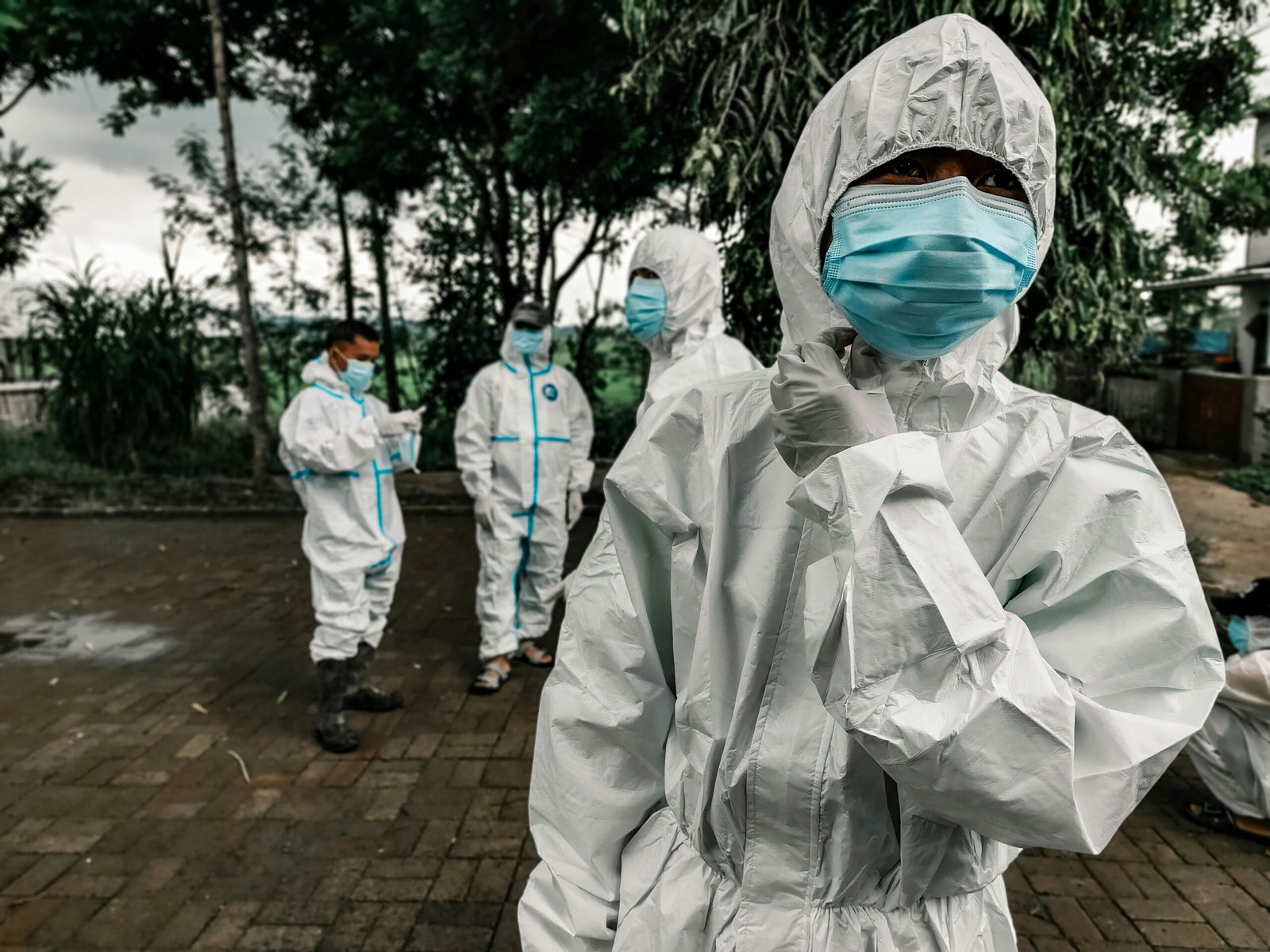
But in recent days, as the spread of Ebola in eastern Congo appeared to outpace the response, authorities in the Ugandan frontier district of Kasese have tightened the measures. Traders say they are frustrated by the slow movement of cargo trucks.
Leah Masika, a Ugandan trader, was on the verge of tears as she thought of her valuable consignment of plantains stuck in a long convoy of trucks on both sides of the border. Her cargo, destined for Uganda, was starting to leak water and would go bad within hours if there was no movement.
“Our things are here rotting,” she said.
Sylvia Asiimwe, a clearing agent, pointed to the queue of trucks stretching over a mile on the Ugandan side. At least seven were carrying fish imported from China and destined for the Congolese cities of Beni and Butembo. Asiimwe was adamant those towns are in the province of North Kivu, not the Ebola epicenter of Ituri.
“The fish is going to spoil,” she said. “So much money.”
The Scale of the Outbreak
The current outbreak in Congo is suspected to have infected over 1,000 people. The number of confirmed cases is much lower because many suspected victims die outside hospitals without firm proof they had Ebola.
Congolese authorities, as of Thursday, have confirmed 452 cases with 82 deaths in total. Seventy-one new cases were confirmed within 24 hours, which authorities say is a sign of “active community transmission.”
The World Health Organization, while declaring the current outbreak a public health emergency of international concern, discouraged border closures. But the UN agency also acknowledged that neighboring countries are at high risk of contagion.
Uganda has confirmed 19 Ebola cases, all linked to the outbreak in Congo after some Congolese nationals sought treatment in the Ugandan capital, Kampala, before it was known there was an outbreak. The disease was believed to have been spreading for days or weeks before the outbreak was declared on May 15.
The Modeling and Its Limits
The CDC’s modeling report attempts to project how things might play out depending on different factors — including how many infections and deaths have already occurred, and how successful responders are in quickly identifying and isolating infected people.
Assuming around 50 people had died and about 20% of infected persons were successfully isolated by late May, most simulations suggest at least 20,000 cases and 4,000 deaths will occur in Africa over three months.
Pillai said the actual isolation rate is unknown but is considered to be “on the lower end of the scenarios” that CDC modeled.
Higher isolation rates of 50% or 70% could result in the number of cases being more like 10,000, CDC officials said. But if the actual number of deaths was greater in late May than currently recognized, that could make the outcomes worse.
However, Jennifer Nuzzo, director of Brown University’s Pandemic Center, cautioned that it can be extremely difficult to predict how outbreaks will progress. “I wouldn’t read too much into the specific numbers. It’s really hard to make an accurate projection when you have limited data,” she said.
Some CDC modeling during the large Ebola outbreak in West Africa proved to be way off. The CDC estimated in 2014 that in a worst-case scenario where nothing was done, as many as 1.4 million people might become infected. That turned out to be more than 50 times higher than what actually happened.
A Particularly Dangerous Strain
All available vaccines and treatments for Ebola do not work for patients with the rare Bundibugyo type spreading in Congo, making the outbreak especially worrisome. There are no specific treatments or vaccines for this strain. The disease is often fatal.
The outbreak response has been complicated by an armed conflict between Congo’s government and the Rwanda-backed M23 rebel group, as well as attacks by the Islamic State-affiliated group the Allied Democratic Force. The violence has caused massive displacement of people living in the conflict areas, officials say.
Ebola, named for a tributary of the Congo River, was first discovered in 1976 in simultaneous outbreaks in Congo and present-day South Sudan. Outbreaks are believed to start with the virus spilling over into humans from an infected animal such as a fruit bat.
Economic Devastation
The Uganda-Congo border is several hundred miles long and crossed by numerous footpaths beyond formal border posts. Trade is often booming along the route up to Mpondwe, and there is kinship between the Bakonzo people on the Ugandan side and the Banande on the other.
Mpondwe is Uganda’s top border post for informal exports, valued at an estimated $131 million in 2023, according to the Uganda Bureau of Statistics.
After the recent border closure, some shops were shuttered, and young men, deprived of casual work, sat on stools dolefully.
“The situation is bad,” said Ismail Mumbere, who often works as a vendor of roadside snacks on the Ugandan side. “A lot of people earn from here, in many businesses. But now the government has told us there is Ebola. Ebola has wasted our work.”
Officials were trying to stop Congolese nationals from crossing to Uganda by way of more than two dozen footpaths along the Mpondwe border.
The U.S. Response
Earlier this week, Nuzzo said the risk to the United States seems low. “I don’t think it’s a scenario that it’s going to come here and spread broadly,” she told reporters. The CDC echoed that assessment in an article released Friday.
That is due in part to the U.S. government’s decision to ban entry of people without U.S. passports, as well as U.S. green-card holders who visited Congo, Uganda, or South Sudan in the previous 21 days. People with U.S. passports who traveled to those countries are undergoing health screenings and being funneled into four receiving airports.
What Comes Next
A meeting of the local Ebola task force was likely to come up with “a more restricted way on how both the cargo or the trucks get into the country in a systematic way,” said Arafat Bwambale, a surveillance officer for Kasese.
That alarms traders for whom the Mpondwe border post is the primary route of business.
Masika, the plantain dealer, said she would not order more goods from Congo until the current outbreak was over. But she would be in trouble if the cargo already in transit did not reach various locations in and around Kampala, where the fruits, deep-fried or boiled, are a staple of breakfast menus in restaurants.
“We are begging them to help us and open the border,” she said. “We will not go back to Congo.”
The Bottom Line
The Ebola outbreak in Congo has confirmed 452 cases and 82 deaths, with 71 new cases in a single 24-hour period — a sign of “active community transmission.” Uganda has closed its border, leaving traders facing ruin as their goods rot in queues stretching over a mile. The CDC warns that without stronger public health interventions, the outbreak could reach 20,000 cases, approaching the scale of the 2014-2016 West Africa epidemic. There are no effective vaccines or treatments for the rare Bundibugyo strain spreading in Congo. The risk to the United States remains low, officials say.