
President Trump has spent years purging the Republican Party of dissenters. He has backed primary challengers, mocked his critics, and demanded total loyalty.
But it’s not working.
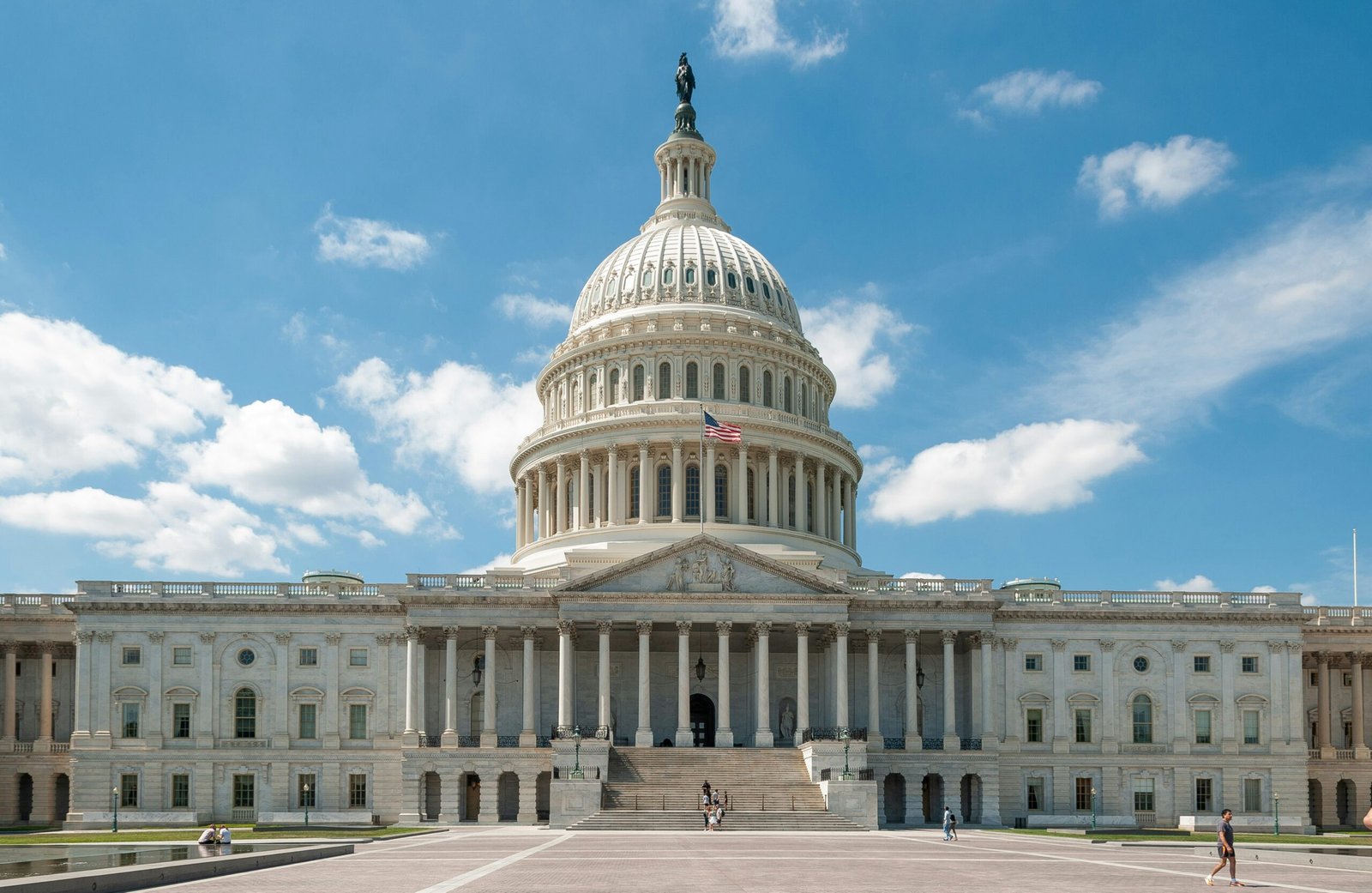
Tension is mounting between Trump and Republicans on Capitol Hill as members of the president’s party become increasingly vocal on a number of hot-button issues ahead of the midterm elections. The examples keep piling up — despite Trump’s success in defeating GOP House members and senators who defy him in Republican primaries.
Four House Republicans joined Democrats to pass a war powers resolution aimed at forcing the president to end the war in Iran. Six Republican senators voted with Democrats on a proposal to block the construction of Trump’s planned White House ballroom unless Congress formally authorizes the project. Six GOP senators also banded together with Democrats to block Trump from bringing back a controversial $1.8 billion “anti-weaponization” fund, which members of both parties have cast as a “slush fund” that could dole out money to Trump allies — including people convicted of Jan. 6 crimes against police.
Republicans have also been vocal in opposing Trump’s decision to name Bill Pulte, the director of the Federal Housing Finance Agency, as acting director of national intelligence. Three GOP senators voted on a measure to bar Pulte from serving in the role.
The ‘Lame Duck’ Factor
Some of the pushback is coming from members who were defeated by Trump-backed Republicans in primaries but who remain in the House and Senate. Sen. Bill Cassidy of Louisiana is one of those Trump primary victims, along with Rep. Thomas Massie of Kentucky, who voted for the war powers measure.
These lawmakers — along with GOP Sens. Thom Tillis of North Carolina and John Cornyn of Texas — have seemingly felt emboldened to buck the president’s agenda in their final months in office.
“The House margin was always pretty narrow, but now that you’ve antagonized Tillis, Cassidy, Cornyn, and you add to that the kind of dynamics you already have with Murkowski and Collins, I think you’re creating a much bigger challenge to actually getting anything passed in the Senate this year,” said Marc Short, who worked as Trump’s legislative affairs director during his first administration, referring to Sens. Lisa Murkowski of Alaska and Susan Collins of Maine.
Tillis is not running for reelection after battling with Trump last summer over his massive tax cut legislation. Cornyn was defeated in a primary in May by Texas Attorney General Ken Paxton, who was backed by Trump.
Murkowski and Collins have frequently voted against Trump on various issues. Collins is up for reelection this year in a state Trump has repeatedly lost in presidential elections, while Murkowski is not up for reelection until 2028.
The Blanche Nomination in Jeopardy
The chances of acting Attorney General Todd Blanche’s nomination getting through the Senate are unclear. GOP members on the Senate Judiciary Committee that will consider his nomination include Tillis and Cornyn.
Sen. John Curtis of Utah warned that Blanche’s nomination could be held up if the anti-weaponization fund survives. “We have lots of must-pass legislation. We have now the nomination of Todd Blanche that we can hold up if we feel like he’s not keeping up with his promise,” Curtis told reporters.
Tillis has warned he will not support Blanche’s nomination unless Blanche condemns the Jan. 6, 2021, attacks on the Capitol. When asked about Tillis’s comments, Trump on Friday called the senator “a loser” who “is trying to make trouble by opposing anyone.”
Senate Majority Leader John Thune of South Dakota suggested to reporters on Thursday that Blanche’s nomination was not guaranteed.
“I think you know, obviously, most of our members are pretty deferential to who the president wants in some of these key positions, and he’s obviously serving in the role already and clearly has experience in it, so that’ll serve him well. But this is an environment where nothing’s a safe or a sure bet these days,” Thune said.
The Political Calculus
For lawmakers facing tough reelection bids, political considerations factor strongly in their decisions on when to back and when to buck the administration. Of the six Republican senators who voted to block ballroom construction, three — Collins, Sen. Dan Sullivan of Alaska, and Sen. Jon Husted of Ohio — are all facing uphill reelection bids in November.
Collins, Husted, and Sullivan also voted with Democrats to block the anti-weaponization fund. Tillis, who is not running for reelection and has become a vocal critic of the administration, voted with Democrats on both pieces of legislation.
A similar factor emerged in the House war powers resolution vote when Reps. Brian Fitzpatrick of Pennsylvania and Tom Barrett of Michigan, who are each running in highly competitive House races, were among the four Republicans to vote with Democrats.
“I think that’s completely fine and a pretty good look for them,” said one Republican operative. “They do need to push back against the Trump administration.”
The White House Response
A White House official told The Hill that there is always a give and take when working with lawmakers, but that as the leader of the GOP, the president and Republican lawmakers remain closely aligned. The official noted the passage of legislation such as the One Big Beautiful Bill Act, the Laken Riley Act, the Guiding and Establishing National Innovation for U.S. Stablecoins Act, and a $9 billion rescissions package.
A White House spokesperson dismissed questions over Trump’s relationship with lawmakers on the Hill as “nonexistent divisions” fueled by the media and Democrats.
“President Trump is committed to maintaining Republican majorities in the House and Senate. The White House and President Trump have enjoyed working closely with House and Senate Republicans to deliver on many important promises to the American people,” Abigail Jackson told The Hill.
But the votes tell a different story. And with the midterms approaching, the divisions are only getting harder to ignore.
The Bottom Line
Tension is mounting between President Trump and Republicans on Capitol Hill as GOP lawmakers increasingly break with the White House on war powers, spending, and nominations. Four House Republicans voted for a war powers resolution to end the Iran war. Six Senate Republicans voted to block Trump’s White House ballroom and his $1.8 billion “anti-weaponization” fund.
Three GOP senators opposed Trump’s pick for acting director of national intelligence. Retiring and primary-losing Republicans have felt emboldened to buck the president, while vulnerable incumbents are calculating that distancing themselves from Trump could help them in competitive races. The White House calls the divisions “nonexistent.” The votes say otherwise.