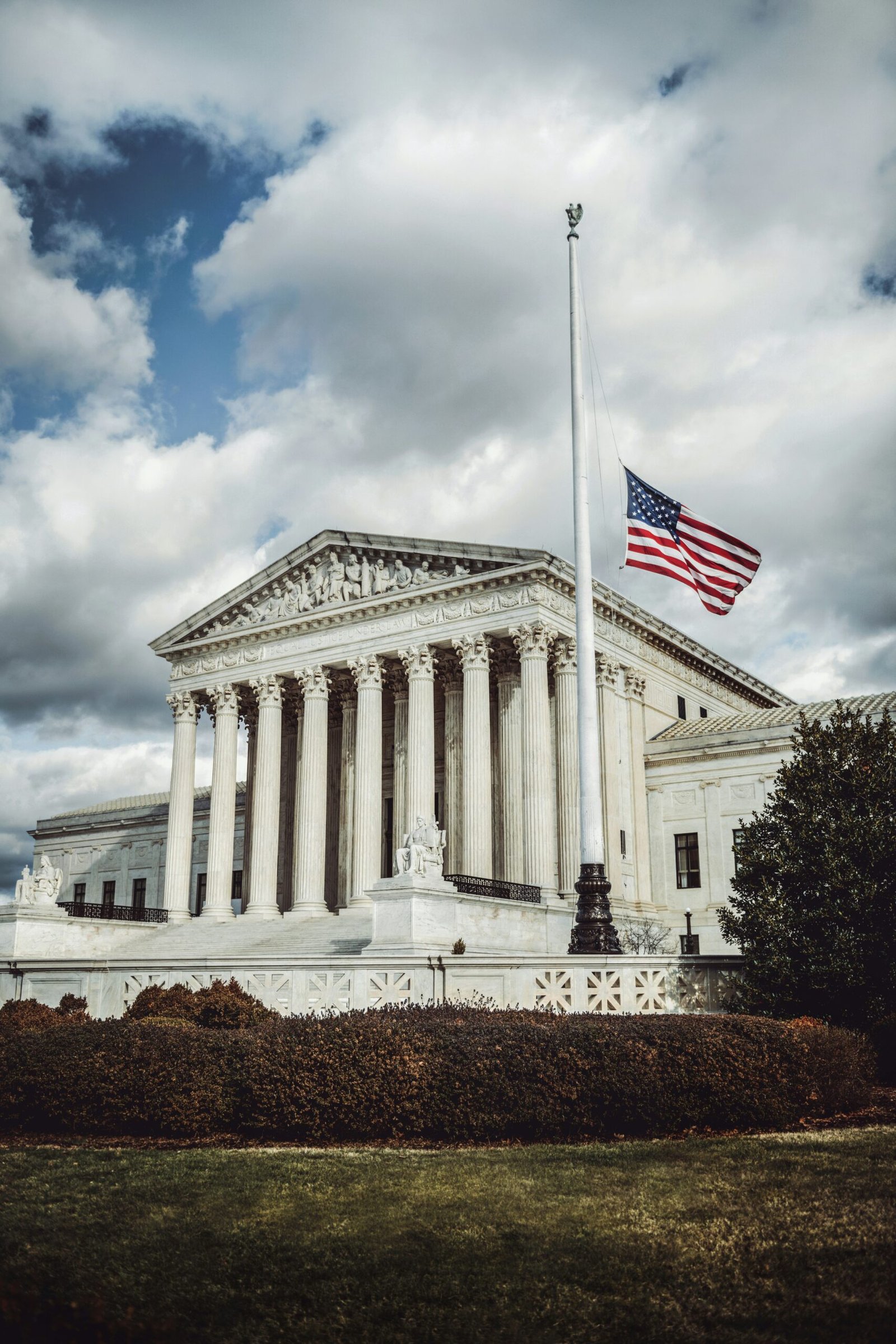
The Supreme Court ruled Monday that President Donald Trump does not have the authority to fire Federal Reserve Governor Lisa Cook from the central bank for now.
In a 5-4 ruling, the court rejected Trump’s bid to stay a lower federal court ruling that had prevented Cook from being terminated as her lawsuit challenging her dismissal proceeds. The court did not rule whether Trump will ultimately have the power to fire Cook or any other member of the Fed.
Chief Justice John Roberts wrote the opinion for the majority, which included his fellow conservative justice Brett Kavanaugh, as well as the court’s three liberal members, Elena Kagan, Sonia Sotomayor, and Ketanji Brown Jackson. The four other conservative justices dissented.
The Fight Over Cook’s Firing
The ruling came nearly nine months after Trump said he was firing Cook because she had been accused by a Trump-appointed official of committing mortgage fraud before becoming a Fed governor. But she remained on the Fed’s Board of Governors after a federal district court judge and then the Supreme Court blocked her removal pending the outcome of her lawsuit.
Despite Trump’s claim that he wanted to remove Cook because of the mortgage fraud allegation, Cook and others believed he was motivated by her refusal to vote for interest rate cuts that the president demanded from the Fed. Under the Federal Reserve Act, a president can remove a Fed governor only “for cause.”
Cook’s Statement
“This was never about mortgage documents signed years before I became a Federal Reserve governor,” Cook said in a statement on Monday. “It was an attempt to remove me on a manufactured pretext because I refused to bow to political pressure and continued to set interest rates based only on what would best serve the American people. That is the most fundamental obligation of a Federal Reserve governor.”
Cook, the first Black woman to serve as a Fed governor, was an appointee of former President Joe Biden. She had denied the allegations of mortgage fraud, which were made last summer by FHFA Director Bill Pulte.
The Court’s Reasoning
During oral arguments in January, multiple justices expressed skepticism at arguments by a Justice Department lawyer that Trump had legal grounds to fire Cook. Justice Brett Kavanaugh said that the argument that a president could fire any Fed governor for cause without being subject to review by a judge “would weaken, if not shatter, the independence of the Federal Reserve.”
The ruling affirms a key principle: that the Federal Reserve must make policy decisions guided by evidence and independent judgment, free from political interference.
The Bottom Line
The US Supreme Court ruled 5-4 that President Trump cannot fire Federal Reserve Governor Lisa Cook for now, rejecting his bid to remove her while her lawsuit proceeds. The court did not decide whether Trump ultimately has the power to fire Fed governors. Cook, the first Black woman to serve on the Fed, said Trump’s attempt to remove her was a manufactured pretext for her refusal to cut interest rates. The ruling was seen as a victory for Federal Reserve independence.