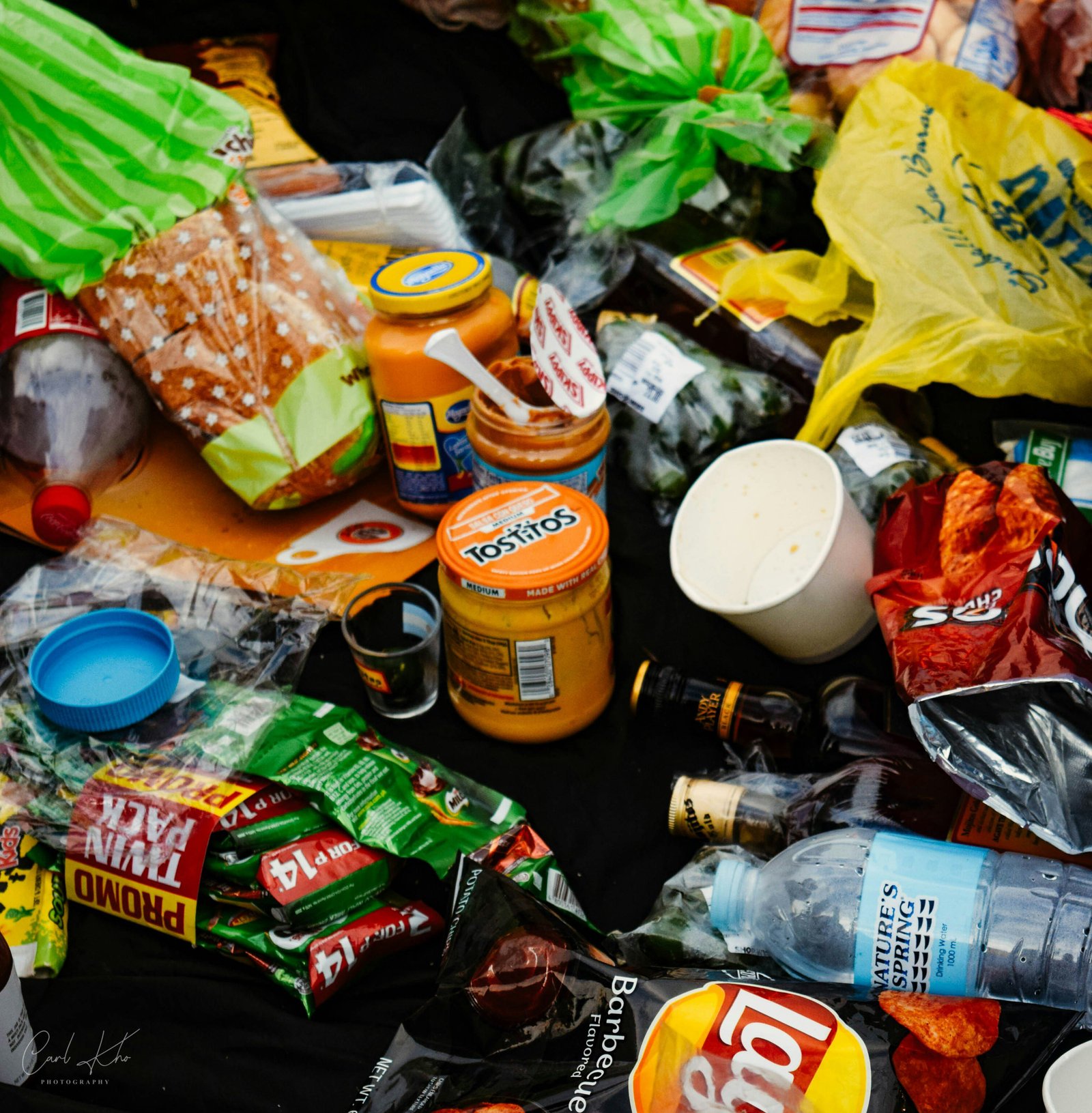

You know that moment just after you tap the “buy now” button when the excitement and adrenaline rush fade? Or when your package arrives, you open it and then feel… nothing. The thing you wanted so badly hours or even days ago is now just another thing.
That, my friend, is overconsumption at its finest. It is not just about buying too much. It is about the gap between what we think we need and what we actually do. And that gap is costing us a lot more than money.
Its Hidden Toll on Your Health
When we talk about overconsumption, we usually focus on clothes, gadgets, and fast fashion. But one of its most damaging forms is the one we barely notice: food.
In Italy, researchers quantified “metabolic food waste”—the excess calories consumed by overweight and obese populations. The numbers are staggering: 2,696 billion kilocalories per year, equivalent to 1.59 million tons of over-consumed food
The same study found that this overconsumption is responsible for 8.78 million tons of CO₂ equivalent annually—about 2.29% of Italy’s total emissions. The environmental price tag? €1,340 per person per year. And beyond the carbon footprint, overeating drives land use, ecotoxicity, and freshwater depletion, largely through the overconsumption of meat, fats, oils, and sweets.
In China, the situation is similar. One study found that the average person’s excessive food intake is twice the amount of household food waste. The total excessive food consumption equates to 18.7 million tons of annual cereal production—4.3 times the country’s annual production growth. That is food grown, transported, processed, and consumed that no one actually needed.
The environmental footprint is massive: 39 million tons of CO₂ equivalent, 31.4 billion cubic metres of water, and 11.18 million tons of coal equivalent in energy. This is not a waste that happens at the farm or in the store. It happens on our plates.
Why We Can’t Stop: The Psychology of More
If overconsumption is bad for us and the planet, why do we keep doing it?
Part of the answer lies in how our brains work. A 2024 study by the American Psychological Association found that when people are distracted while enjoying something, they enjoy it less. This leads to a phenomenon researchers call “hedonic compensation”: we consume more to make up for the satisfaction we missed.
In other words, when you scroll through your phone while eating dinner, you are not just distracted. You are training yourself to need more food to feel satisfied.
Stress makes it worse. Research published in the Journal of Business Research found that stress slows down how quickly we get bored of experiences—whether it is eating, listening to music, or playing a game. Stressed people take longer to feel satisfied, so they keep consuming. The pattern recognition that helps them cope with low control also keeps them stuck in a cycle of overconsumption.
This is not just about food. The same psychological drivers apply to shopping, scrolling, and binge-watching.
Social Media: The Engine of Excess
If overconsumption has an engine, it is social media. Influencers have turned self-care from a practice of genuine well-being into a shopping list. As one study notes, “self-care has undergone a transformation from a practice rooted in genuine well-being to one centered on the conspicuous display of products”.
The research found that exposure to self-care influencers directly drives unsustainable consumption behaviours. Influencers build emotional connections and a desire to mimic, which leads to unnecessary purchases. This is especially true for Gen Z, who are more inclined to imitate influencers than Millennials, who care more about authenticity.
The content is designed to trigger impulses: “TikTok made me buy this,” “restock my bathroom with me,” “morning shed with me.” These are not product reviews. They are product placements dressed up as lifestyle content. And they work because they bypass our rational brains and speak directly to our desire for an aspirational self.
The numbers bear this out. The average person is exposed to up to 10,000 ads per day, compared to 500–1,600 in the 1970s. Children see an average of 20,000 commercials annually. Given these statistics, it’s safe to say that we are not making independent choices. We are responding to a system designed to keep us wanting.
What We Can Actually Do
The problem is systemic, but that does not mean individual action is meaningless. The Sustainable Consumption Guide from Oxford University suggests a simple framework: three questions to ask before every purchase:
- Do I need it?
- Can I reuse it?
- What happens when I throw it away?
These questions do not require perfection. They require slowing down. They interrupt the pattern of impulse buying and create space for a different choice.
The Natural History Museum adds practical suggestions: repair instead of replace, borrow instead of buy, and choose second-hand. These are not sacrifices. They are money-saving habits that also reduce environmental harm. Buying second-hand reduces pressure on harmful supply chains and keeps usable items from landfill.
On food, the path is clearer than we think. Eating less meat and reducing food waste are both better for the planet and easier on the wallet. Dropping meat entirely is not realistic for everyone, but shifting toward plant-based meals on weekdays is a start.
The Bottom Line
Overconsumption is not a moral failing. It is a structural problem with psychological roots, amplified by social media and built into the economy. We are not weak for wanting things. We are human.
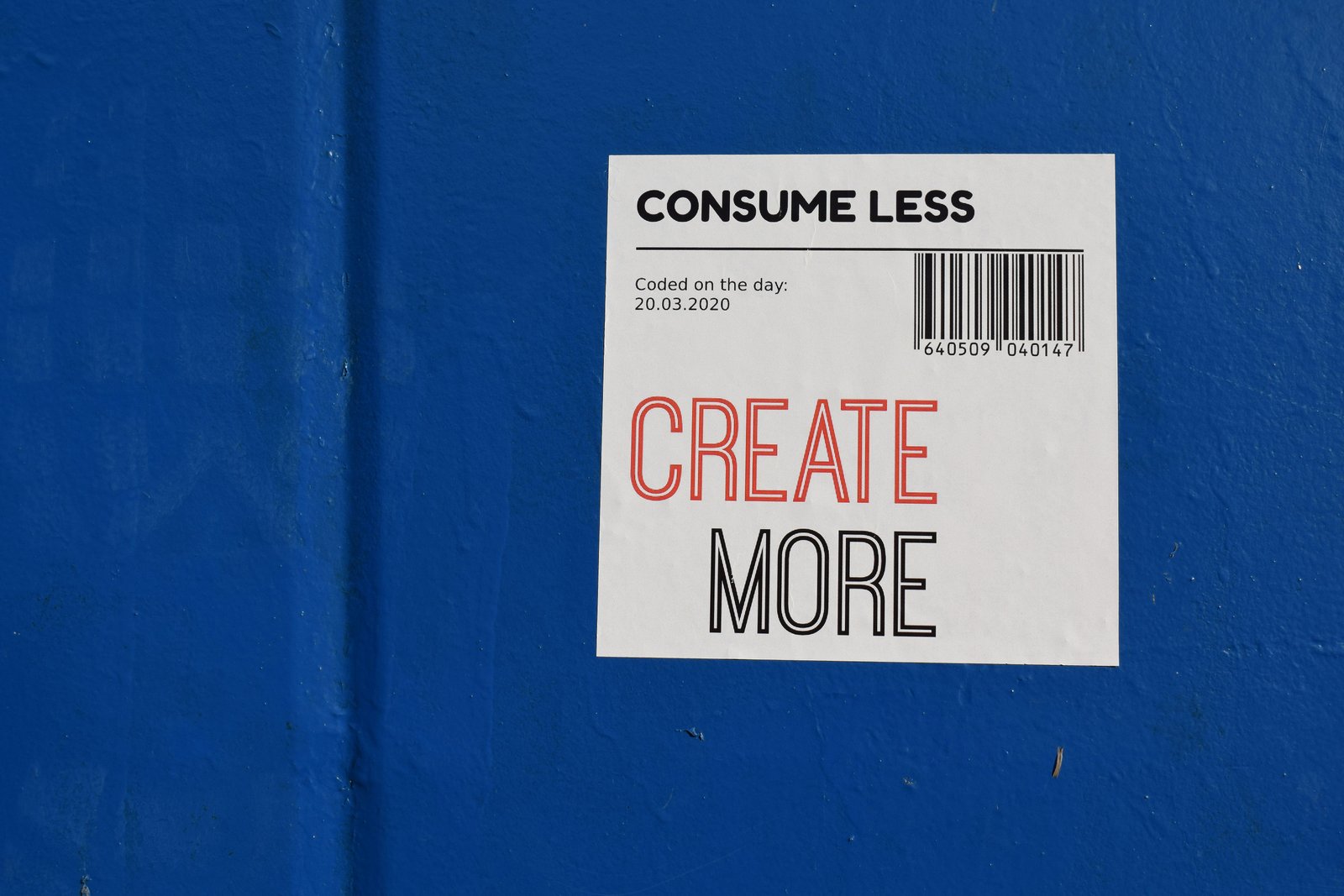
But we can make different choices. Not all of them. Not perfectly. Just enough to break the cycle. Each time we ask “Do I actually need this?” we reclaim a bit of agency. Each time we repair instead of replace, we push back against a system designed to make us throw things away.
The most sustainable thing you can do is not buy a better product. It is to buy less. And that is not just good for the planet. It is good for you.