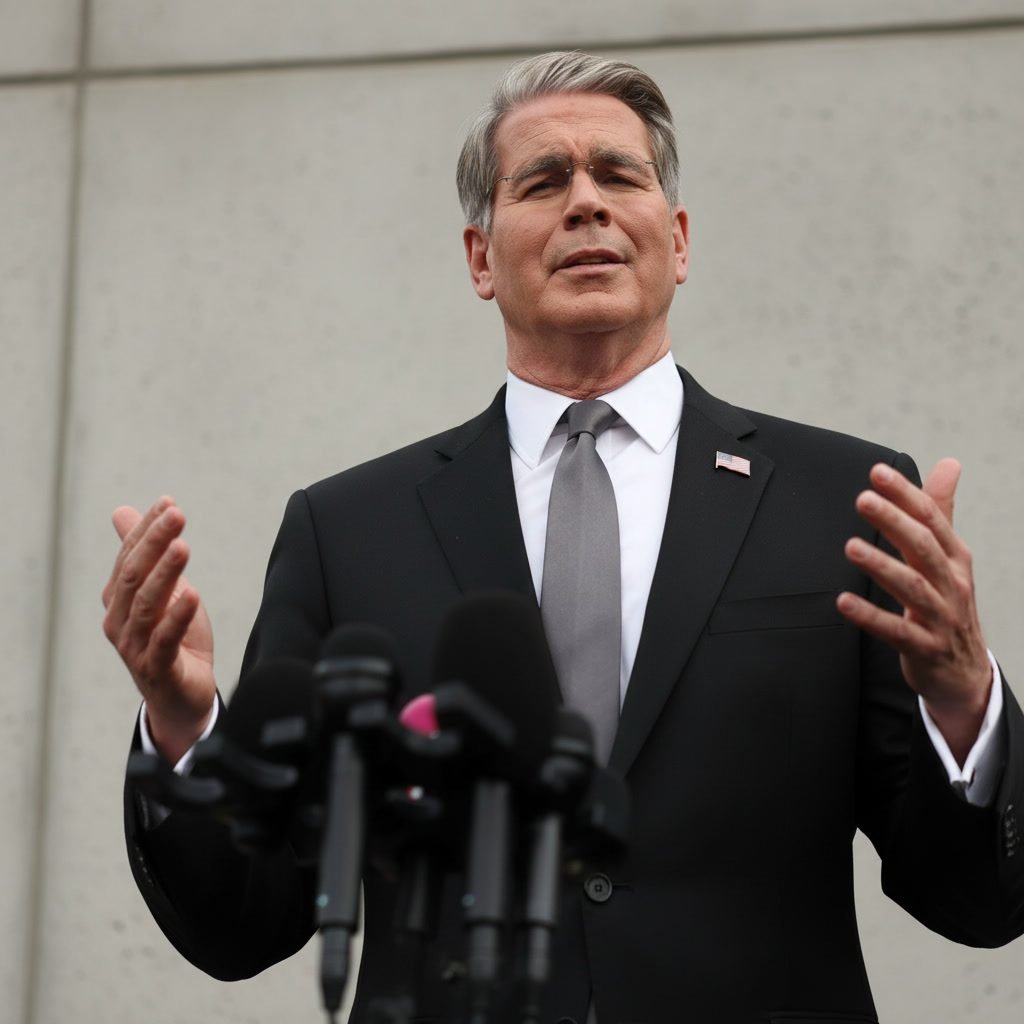
Treasury Secretary Scott Bessent will hold a press conference Monday to announce new sanctions against Iran, which he described to CNBC as the greatest campaign of “coordinated economic isolation in the history of the world.”
“At dawn begins an economic D-Day — the single greatest financial offensive ever marshalled against an adversary,” Bessent wrote in a Financial Times opinion piece published Sunday.
The Treasury Secretary told CNBC last week that the US will “collapse” the Islamic Republic with the “toughest sanctions in history.”
What the Sanctions Mean
The Trump administration is demanding that US allies and the rest of the world stop doing business with Iran. Bessent said the US will use its “full might” against anyone who does not comply.
“We are going to them and saying you are either with us or against us,” Bessent told CNBC. “It is time for our allies and the rest of the world to make a decision, and we are going to squash the economy of this murderous regime.”
President Donald Trump has also threatened severe financial penalties against any nation that helps Iran evade sanctions, calling it “Economic Warfare and Isolation on an unprecedented scale.”
Iran’s Response
Iran’s Islamic Revolutionary Guard Corps has dismissed the threats, according to state media. An IRGC spokesperson said Sunday that Iran has ways “to counter the adverse effects of the enemy’s war” and that it can “easily establish economic relations with countries.”
“The U.S. president says that he ordered an economic war and launched the most severe economic campaign against Iran,” the IRGC spokesperson said, according to state media. “This amounts to an implicit admission of the enemy’s humiliating defeat in the military arena.”
The Analysis
Iran is one of the most sanctioned countries in the world, said Helima Croft, head of global commodity strategy at RBC Capital Markets. It is unclear whether more economic pressure will change Tehran’s behavior.
Iran seems to believe that it can outlast a Trump administration that wants the war to end quickly, Croft said. Tehran still has the ability to attack ships in the Strait of Hormuz and infrastructure in the Middle East.
“Iran still has significant disruptive capabilities,” Croft said. “The question is how is this going to change with additional economic sanctions.”
The Bottom Line
Treasury Secretary Scott Bessent is announcing new sanctions against Iran, which he calls the “toughest” in history and an “economic D-Day.” The Trump administration is demanding allies stop doing business with Iran. Iran’s Revolutionary Guard has dismissed the threat, saying it can outlast US pressure. Analysts warn that Tehran still has the ability to disrupt global oil shipments and Middle East infrastructure.