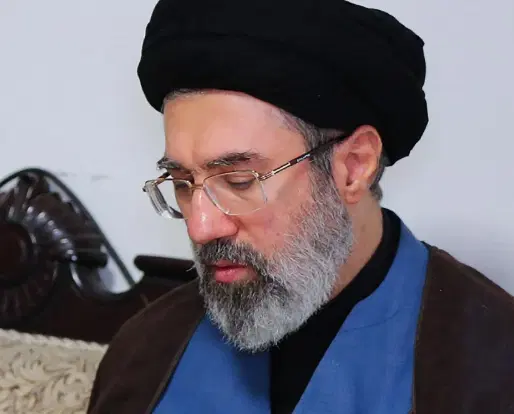
Iran’s Supreme Leader Mojtaba Khamenei has called on Muslim-majority countries, particularly Gulf nations, to strengthen unity and cooperation, warning that divisions among them only benefit their adversaries.
Khamenei made the appeal in a message shared on his Telegram account to mark Islamic Unity Week, an annual observance commemorating the birth of Prophet Muhammad.
In the message, he urged Muslim countries to work together in areas including security, defence and economic cooperation. He argued that those who deliberately or unintentionally create divisions among Muslims ultimately serve the interests of their enemies.
Khamenei questioned whether the situation in Palestine would have become so severe if Muslim countries had remained united.
His appeal comes six months after US and Israeli airstrikes on Iran reportedly killed his father and predecessor, Ayatollah Ali Khamenei, and triggered the current conflict. Mojtaba Khamenei has not appeared publicly since he was reportedly injured in the attacks.
The latest call for unity follows a similar message he issued to Iranians on Friday, when he said measures that could undermine social cohesion had been prohibited. He also urged officials to avoid “discouraging statements” capable of weakening public morale.
Addressing Gulf Arab leaders specifically, Khamenei asked whether “rogues without identity” would have dared to seek control of their territories and resources if the region’s governments and populations had been “united under the flag of Islam.”
Relations between Iran and the Gulf Arab monarchies have remained tense for decades. Since Iran’s 1979 Islamic Revolution, several Gulf states have regarded Tehran’s revolutionary ideology and growing regional influence as a threat to their political systems.
The tensions have intensified during the current conflict, with Iran targeting US military facilities and other infrastructure in Gulf countries.
“My emphatic and repeated recommendation to the rulers of Islamic countries, especially the countries of West Asia and the Gulf, is to identify your real enemy, understand his plan and confront it,” Khamenei said.
War deepens Iran’s economic challenges
Iran’s leadership has also acknowledged the growing economic impact of the conflict and prolonged US sanctions.
The government said tackling the economic consequences of sanctions and the war remained a major priority. Its plans include controlling inflation, stabilising markets, creating employment, increasing domestic production and gradually reducing reliance on the US dollar.
Despite the economic difficulties, Tehran has signalled that it will continue resisting pressure from Washington while pursuing diplomatic options.
Iran has also maintained that it controls the Strait of Hormuz, a strategically important waterway through which a significant portion of the world’s energy supplies passes.
President Masoud Pezeshkian said Iranian imports and exports had fallen by nearly 35% as a result of US sanctions and the naval blockade of Iranian ports.
He, however, said Iran had managed to sell about 90 million barrels of oil during a brief memorandum of understanding with the US in June, when Washington allowed Iranian crude exports.
The agreement subsequently collapsed following disagreements between the two sides, particularly over arrangements concerning the Strait of Hormuz.
Pezeshkian later appealed on state television for the interim agreement to be revived, arguing that it could provide a pathway towards easing the country’s economic difficulties.
“We can solve our problems and gain our privileges with the memorandum of understanding,” he said, referring to the document that had offered Iran immediate sanctions relief and access to frozen assets.