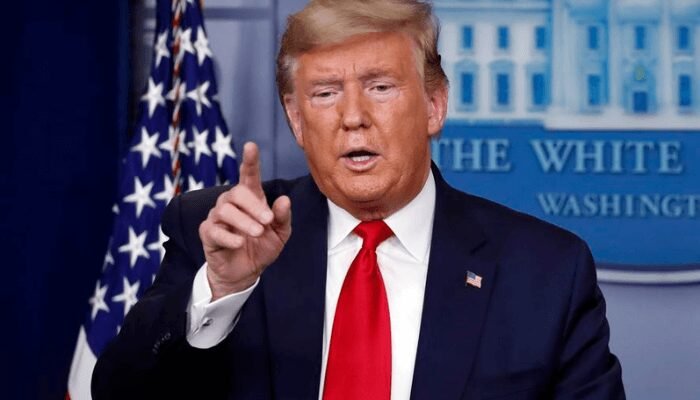

US President Donald Trump is set to meet with oil refiners and fuel distributors on Tuesday as his administration explores measures to increase domestic refining capacity and reduce gasoline prices for consumers.
A White House official disclosed that the meeting will bring together representatives of small, medium and large refining and distribution companies. Interior Secretary Doug Burgum, Energy Secretary Chris Wright and National Energy Dominance Council Executive Director Jarrod Agen are also expected to attend.
The official spoke anonymously because details of the meeting had not yet been publicly announced.
White House spokeswoman Taylor Rogers said Trump remains focused on ensuring that his energy policies translate into lower costs for Americans.

“President Trump is laser-focused on ensuring his successful energy dominance agenda translates into the most cost savings possible at the pump for consumers,” Rogers said.
She added that the president would discuss measures to expand refining capacity, increase energy production throughout the supply chain and ultimately bring down prices at petrol stations.
The administration’s renewed focus on fuel prices comes as the cost of living remains a major concern for American voters ahead of the midterm elections. A Reuters/Ipsos poll conducted in early August found that nearly half of Americans identified living costs as their biggest voting concern, while about 70 per cent disapproved of Trump’s handling of the issue.
The White House official said the administration was seeking “concrete, near-term steps” to increase refining capacity, particularly as additional Venezuelan crude enters the US market.
Refining capacity constraints globally have contributed to elevated fuel prices even as crude oil prices have declined. Valero recently estimated that conflicts in Iran and Ukraine had taken about five million barrels of daily refining capacity offline.
ExxonMobil CEO Darren Woods previously told CNBC’s “Squawk Box” that restrictions affecting refineries had created a “disconnect” between crude oil prices and what motorists pay at the pump.
According to Woods, the situation means an increase in available crude does not necessarily result in an immediate reduction in gasoline prices.
Trump has also stepped up efforts to increase access to Venezuelan oil. On Friday, he announced an agreement with Venezuela that he said would give the US majority control of more than 65 billion barrels of oil reserves.
The move forms part of the administration’s broader strategy to increase oil supplies and lower fuel costs, particularly amid disruptions to global crude flows caused by the war with Iran.
Refiners along the US Gulf Coast have already benefited from increased supplies of Venezuelan crude, giving them additional oil to process.
Tuesday’s discussions are also expected to examine whether lower operating costs are being reflected in the prices consumers pay. Officials will consider further measures that could reduce prices at petrol stations.
Trump has previously called on fuel retailers to lower prices directly. In July, he praised Freedom Fuel Network after it sold gasoline for $3.47 per gallon and encouraged other retailers to adopt similar pricing.
However, questions emerged over the source of some of the discounted fuel after a supplier alleged that gasoline sold at reduced prices had been supplied through a distributor accused in a lawsuit of failing to pay about $4 million in fuel invoices.
Freedom Fuel was not named as a defendant in the case and has not been accused of wrongdoing.