Democrats have gained a significant advantage over Republicans in party identification among American voters, according to the latest quarterly figures from Gallup.
The survey showed that 49% of respondents identified with or leaned towards the Democratic Party, including independents who were asked to choose between the two major parties. Republicans, meanwhile, recorded 39%.
The 10-point Democratic lead represents a major change from the final quarter of 2024, when Republicans enjoyed a four-point advantage. That period came shortly after Donald Trump won the presidential election and Republicans secured control of both chambers of Congress.
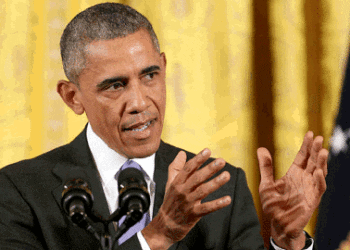
The current Democratic margin is the party’s strongest since 2008, when Barack Obama was elected president, according to the New York Times.
The findings add to signs that Trump’s second term may be facing growing disapproval among voters, potentially creating an opportunity for Democrats in the upcoming midterm elections.
Trump began his second term with an approval rating of 52% in January 2025, based on the New York Times’ average of polling data. His numbers have since deteriorated, with the latest average showing 58% of voters disapproving of his performance and only 38% approving.
The decline has followed several major decisions by the administration, including cuts to the federal workforce, the introduction of tariffs that have pushed up prices, the passage of a costly spending package and military action against Iran.
Democrats are hoping to turn the president’s declining approval ratings into electoral gains when Americans vote in November.
The party is considered well positioned to make a serious attempt at reclaiming the House of Representatives. Winning back the Senate, however, remains more challenging, although recent polling has given Democrats renewed confidence.
Gallup’s data also points to a long-term rise in the number of Americans who do not identify primarily with either major political party.
In 2002, around one-third of those surveyed identified as Democrats, Republicans or independents. By last year, independents accounted for 45% of respondents, while just 27% identified as either Democrat or Republican.