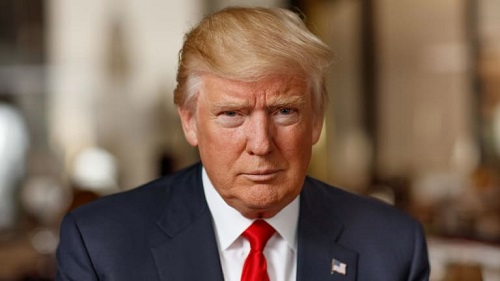

Concerns are growing across the United States that President Donald Trump could challenge the results of the forthcoming midterm elections in some states if Democrats make significant gains, raising questions about the potential impact on the country’s electoral process.
The concerns centre on whether Trump would use federal agencies, legal challenges or other government powers to contest results that could weaken Republican control of Congress.
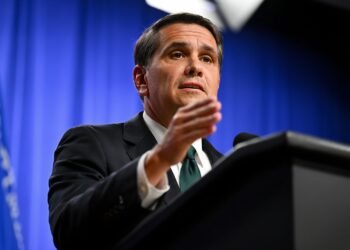
Trump has already directed the Department of Justice to deploy 1,000 election monitors to polling locations across the country. Attorney General Todd Blanche defended the decision, saying Trump “is doing the same thing that every single administration has done in our generation.”
However, Trump’s continued refusal to accept the outcome of the 2020 presidential election has fuelled concerns about the purpose of the monitoring exercise. He has repeatedly alleged that elections were rigged, despite failing to provide credible evidence to support several of his claims.
Critics have also pointed out that Trump supporters were among those convicted of election-related offences following the 2020 election.
Questions have also emerged over whether the president could direct the Justice Department to file lawsuits against states or local authorities if Republicans suffer losses in November.
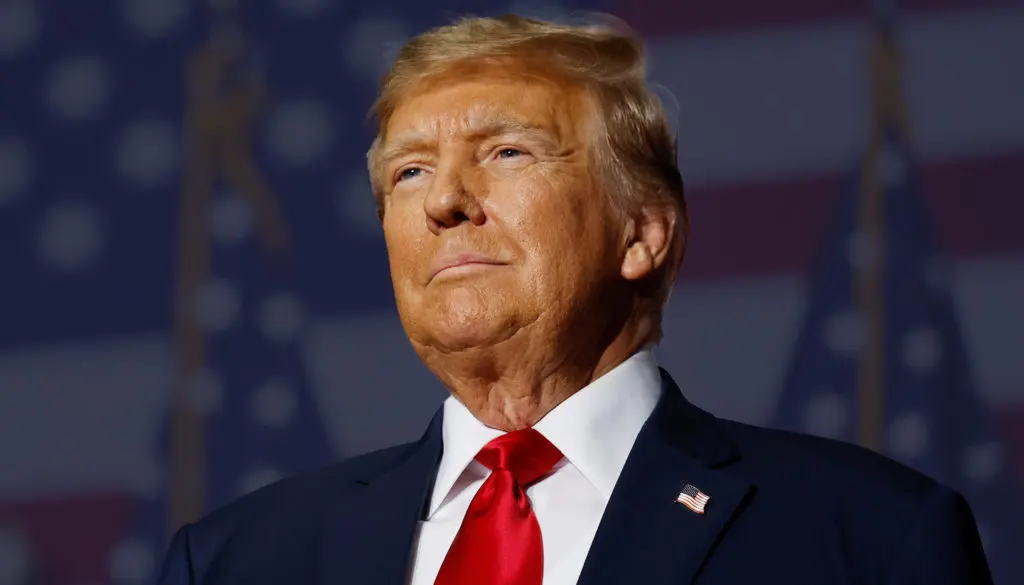
One such move has already been initiated. Trump reportedly instructed Blanche to file a lawsuit seeking to prevent the certification of Alaska’s Senate election if incumbent Republican Senator Dan S. Sullivan loses.
The dispute concerns Alaska’s ranked-choice voting system, which allows voters to rank candidates in order of preference. The arrangement enabled another candidate named Dan J. Sullivan to reach the general election as a Republican alongside the incumbent, Dan S. Sullivan, and Democratic candidate Mary Peltola.
Although critics have questioned the system, the US Constitution provides that the “Times, Places and Manner of holding Elections for Senators and Representatives, shall be prescribed in each State by the Legislature thereof.”
The Alaska Supreme Court has also ruled that the alternative, Dan Sullivan, cannot be removed from the ballot.
There have been suggestions that Democrats may have supported the second candidate to confuse voters because of the shared name. However, a pre-emptive legal challenge to an election result could establish a precedent that future administrations might use to contest elections.
Another concern involves the possible seizure of voting equipment and ballots by federal authorities.
Trump has previously pursued voting machines and election materials in Puerto Rico, Atlanta and Arizona as part of efforts to find evidence supporting his claims that Democrats or foreign actors interfered with the 2020 election. However, no evidence has been produced showing that the machines altered votes to defeat him.
Critics fear that similar allegations could emerge after the 2026 midterm elections, particularly if Democrats win in states where they traditionally enjoy strong support.
The seizure of voting machines could also complicate the certification process by disrupting the chain of custody for election materials. State officials might then face difficulties determining whether the equipment had been handled appropriately, potentially delaying the confirmation of results.
Questions have also been raised about whether Trump could consider deploying the military if the election results go against Republicans.
Some of his associates reportedly advocated military intervention following the 2020 election, while Trump was said to have seriously considered such proposals.
Former Chairman of the Joint Chiefs of Staff Mark Milley and former Defense Secretary Lloyd Austin sought to reaffirm the military’s nonpartisan role during a 2021 press conference.
“The United States military is an apolitical institution,” they said, adding, “We don’t arbitrate elections. That’s the job of the judiciary and the legislature and the American people. It is not the job of the U.S. military.”
The Trump administration has recently denied plans to deploy troops in response to a possible Democratic victory in the midterms.
However, Trump told The New York Times in January that he regretted not ordering the National Guard to seize voting machines in three swing states he lost in 2020. Defense Secretary Pete Hegseth has also taken steps that have drawn attention in discussions about the administration’s approach to election security.
In anticipation of possible disputes, several states have established election-response teams and legal units to prepare for challenges, file lawsuits where necessary, and protect the integrity of their electoral processes.
Trump may be less inclined to challenge results in Republican-led states because doing so could place Republican officials responsible for administering elections under scrutiny. Alaska, however, could be an exception because of the dispute surrounding its Senate race.
Democratic-leaning states are expected to face greater uncertainty if the president decides to contest results that favour the opposition.
Another potential flashpoint is whether Trump would urge Republicans in Congress to reject newly elected Democratic lawmakers if his administration challenges results in certain states.
The Supreme Court has ruled that the House of Representatives cannot exclude duly elected members who meet the constitutional qualifications for office.
Despite that position, the Trump-aligned Center for Renewing America has argued that democratic socialists cannot truthfully take the oath of office. The organisation has also outlined a proposed process for the House to exclude lawmakers belonging to that political movement.
The possibility of such disputes has intensified concerns about the period following the midterm elections, particularly if the results produce a significant shift in congressional power.