
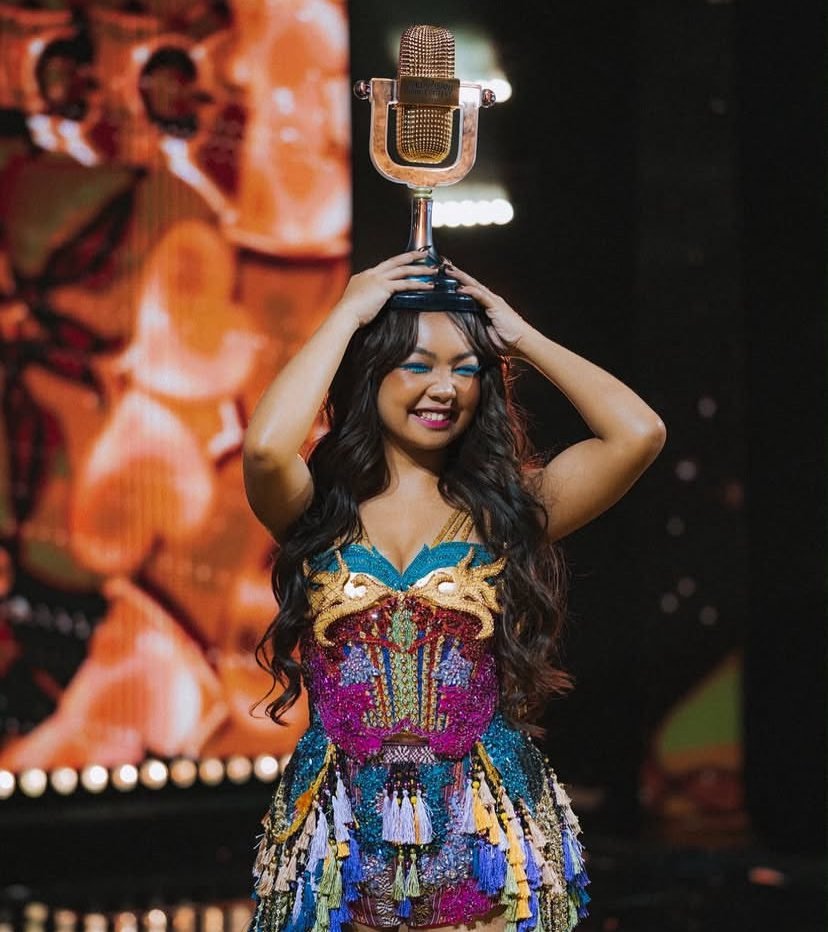
Filipino singer Carmelle has emerged winner of the first Asian edition of the Eurovision Song Contest after delivering an energetic performance of her dance-pop track, “Sobra-Sobra,” in Bangkok on Saturday.
The 19-year-old defeated 10 other contestants to claim the title in the competition, which was decided through votes from national juries in participating countries and viewers across the world.
Following her victory, Carmelle said her winning song promoted female empowerment and was dedicated to Filipino women.
“I made history, since this was the first time,” she told The Associated Press. “It’s such a big responsibility for me, because this one is a global stage, so thank you everybody who voted for me.”
Thailand’s musical duo Mang x Daou finished in second place with their romantic pop song, “Aroma,” while Vietnam’s Tóc Tiên secured third position with her performance of “Em Tiên.”
Malaysia’s Aina Abdul came fourth after performing her ballad, “Bluest Sky,” while Thinla of Laos finished fifth with the upbeat dance track, “Bae.”
Other countries represented at the inaugural Asian edition included Bhutan, South Korea, Mongolia, Nepal, Cambodia and Bangladesh.
The contestants arrived at the competition venue in Bangkok aboard tuk-tuks, the three-wheeled motorised vehicles commonly seen in the city’s tourist areas. They waved their respective national flags as thousands of spectators cheered them inside the city-centre venue.
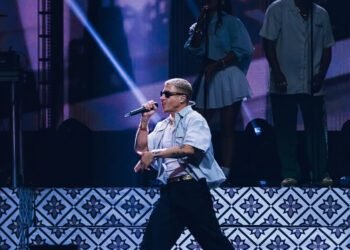
Bulgarian singer Dara also made a special appearance at the event, performing “Bangaranga,” the song that earned her victory at the 70th edition of the Eurovision Song Contest in Vienna earlier this year.
The Eurovision competition was established with the aim of promoting music beyond political differences, although it has repeatedly faced controversies linked to international conflicts.
Russia was removed from the European competition in 2022 following its full-scale invasion of Ukraine.
The ongoing Israel-Hamas war in Gaza has also generated tensions around the contest, with protests held outside venues and organisers introducing restrictions on political flag displays.
Five countries that have participated in the European competition for years — Spain, the Netherlands, Ireland, Iceland and Slovenia — boycotted this year’s event over Israel’s participation