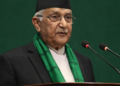

Former Prime Minister KP Sharma Oli was arrested Saturday, less than 24 hours after a rapper-turned-politician was sworn in as Nepal’s new leader, marking a dramatic turn in a months-long reckoning over the violent suppression of Gen Z-led protests that left 76 people dead.
Oli, 74, and his former home minister, Ramesh Lekhak, were taken into custody following a recommendation by a government-appointed investigative panel that they face prosecution for criminal negligence over the September 2025 crackdown. The arrests come a day after Balendra Shah, leader of the Rastriya Swatantra Party, was sworn in as prime minister following a landslide election victory fueled largely by public anger over the protest deaths.
Police spokesperson Om Adhikari said both men would be brought to court Sunday.

What Sparked the Protests
The unrest began in early September 2025 after the government, under Oli, imposed a 72-hour ban on social media in response to rising online criticism of corruption and a stagnant economy. The ban, intended to quell dissent, instead triggered massive street demonstrations led largely by young people—many of them Gen Z activists who had organized online before the shutdown.
Over two days of violence, security forces opened fire on protesters. By the time the unrest subsided, 76 people were dead, more than 2,500 were injured, and a teenager in school uniform had become the face of a brutal crackdown.
The protests ultimately forced Oli to resign in September 2025, ending his fourth—and shortest—stint as prime minister.
The Investigation and Arrests
A probe commission established after Oli’s resignation found that he and Lekhak bore responsibility for failing to take action to stop hours of firing on protesters by police. The panel recommended prosecution for criminal negligence.
On Saturday, police acted on that recommendation.
Oli’s lawyer, Tikaram Bhattarai, called the arrest illegal and said it would be challenged in the Supreme Court. “There is no risk of him fleeing or avoiding questioning,” Bhattarai told Reuters.
Oli’s Communist Party of Nepal (Unified Marxist Leninist) called the arrest an act of “revenge” and demanded his immediate release. Party official Shankar Pokhrel said protest notes would be handed to the government in all 77 districts of Nepal on Sunday.
The New Prime Minister’s Message
Shah, a popular rapper who entered politics on an anti-corruption platform, took office Friday. Hours later, his home minister, Sudan Gurung, announced the arrests on Facebook with a message that signaled a sharp break from the past:
“No one is above the law. This is the beginning of justice. The country will take a new direction now.”
Gurung dismissed criticism from Oli’s party as expected, adding: “This is not revenge against anyone, just the beginning of justice.”
Oli’s Political Legacy
Oli was prime minister four times between 2015 and 2025 but never served a full five-year term. His popularity peaked in 2020 when he published a new political map including a small stretch of disputed land controlled by India—a nationalist gambit that briefly rallied public support.
But his popularity faded. In this month’s election, Shah defeated him in his own home constituency—Oli’s second electoral loss since the restoration of multi-party democracy in Nepal in 1990.
The September protest deaths loomed large over that election. Shah’s Rastriya Swatantra Party swept to power on a platform of accountability, promising justice for the 76 who died.
What Comes Next
Oli, who has had two kidney transplants, was transferred from the police office where he was first held to a hospital, witnesses said. His lawyer confirmed he would challenge the arrest in court.
Lekhak’s legal team could not immediately be reached for comment.
For now, Nepal’s political landscape has been reshaped. A rapper is prime minister. A former leader who once claimed he was above the law is in custody. And a country that watched its security forces kill 76 of its young citizens is waiting to see whether “the beginning of justice” will be followed through to its end.