
In just 28 days of war, the United States and Israel have systematically dismantled the upper echelons of Iran’s power structure. From the Supreme Leader himself to the commanders of the Revolutionary Guards, from intelligence ministers to nuclear scientists, the Islamic Republic’s leadership has been decimated in a campaign analysts describe as unprecedented in modern military history.
The toll is staggering. At least 70 senior Iranian officials have been killed since February 28, with the first strike alone eliminating 40 leaders in “less than one minute.” Here are the most prominent figures lost.
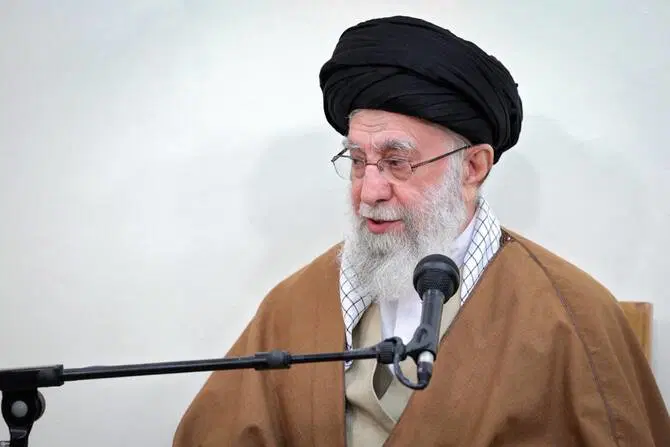
The Supreme Leader
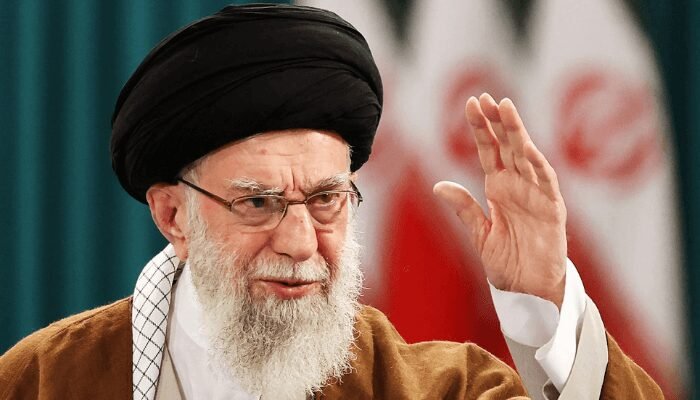
Ayatollah Ali Khamenei, 86 — Supreme Leader since 1989, Khamenei was killed on February 28 in a U.S.-Israeli air strike on his compound. His 36-year rule was marked by the consolidation of power through the security apparatus and the expansion of Iran’s regional influence. His death, on the first day of “Operation Roaring Lion,” effectively decapitated the regime he built.
Senior Officials
Ali Larijani, 67 — Secretary of the Supreme National Security Council, was a veteran powerbroker and close adviser to Khamenei. A former Revolutionary Guards commander and nuclear negotiator, he played an important role in shaping Iran’s security and foreign policy. He was killed in a U.S.-Israeli air strike in the Pardis area on March 17, along with his son and one of his deputies.
Esmail Khatib, Iran’s intelligence minister, was killed in an Israeli strike on March 18. A hardliner cleric and politician, he worked in Khamenei’s office and was mentored by him before heading the civilian intelligence apparatus in August 2021.
Ali Shamkhani — A close adviser to Khamenei and a key figure in Iran’s security and nuclear policymaking, Shamkhani was killed in U.S.-Israeli strikes on Tehran on February 28. He had earlier survived an attack on his home during the 12-day June war between Israel and Iran.
Top Military Commanders
Mohammad Pakpour — Commander-in-Chief of the Islamic Revolutionary Guard Corps, Iran’s most powerful military force, was killed in the February 28 strikes in Tehran. He rose through the ranks to lead the IRGC after his predecessor, Hossein Salami, was killed in the 12-day war in June 2025.
Aziz Nasirzadeh — Iran’s defence minister and a career air force officer- was killed in the same wave of strikes targeting senior leadership in Tehran on February 28. He played a key role in military planning and defence policy.
Abdolrahim Mousavi, Chief of Staff of Iran’s armed forces, was killed in the February 28 strikes during what Iranian media said was a meeting of senior leadership in Tehran. He was responsible for coordinating Iran’s military branches and overseeing conventional forces.
Gholamreza Soleimani — Commander of Iran’s Basij paramilitary force, was killed in U.S.-Israeli strikes on March 17. A senior Revolutionary Guards officer, he led the force central to internal security and the enforcement of state authority.
Behnam Rezaei, The Revolutionary Guards’ navy intelligence chief, was killed in an Israeli strike in the port city of Bandar Abbas on March 26. The Israeli military said he was responsible for collecting information on regional countries.
Alireza Tangsiri — Commander of the IRGC Navy, was killed in an Israeli strike on March 26, according to Iranian state media. He was responsible for the Guards’ naval operations in the Persian Gulf, a critical artery for global oil shipments.
Nuclear and Intelligence Figures
Mohsen Fakhrizadeh — The father of Iran’s nuclear weapons program, Fakhrizadeh was assassinated in 2020 in a covert operation widely attributed to Israel. His death, years before the current war, foreshadowed the systematic targeting of Iran’s nuclear infrastructure that has now escalated to full-scale conflict.
Hossein Salami — IRGC Commander-in-Chief- was killed in the June 2025 war, creating the vacancy that Pakpour later filled. His death marked an early escalation in the conflict that would eventually draw in the United States and spread across the region.
The Strategy
The targeting of Iran’s leadership is not random. Israeli military officials describe a strategy of “decapitation” designed to cripple the regime’s decision-making capacity and force a collapse of command and control. Analysts call it “Whac-A-Mole” — a relentless campaign that has left Iran unable to field a coherent leadership structure.
Mohamad Elmasry, a Doha Institute for Graduate Studies analyst, told Al Jazeera: “The U.S. and Israel know that the Supreme Leader is the symbol of the regime. Killing him sends the most powerful message that they’re not just going after the government — they’re trying to dismantle the entire system.”
What Remains
With Khamenei dead, his potential successors eliminated, the intelligence ministry leaderless, and the IRGC’s command structure in ruins, Iran faces an unprecedented leadership vacuum. The country’s military and political institutions, built over four decades around the Supreme Leader and the Revolutionary Guards, are now operating in survival mode.
Whether the regime can reconstitute its leadership — and whether the U.S. and Israel will allow it to — will determine the next phase of a war that has already reshaped the Middle East. For now, the list of the fallen grows with each passing day.