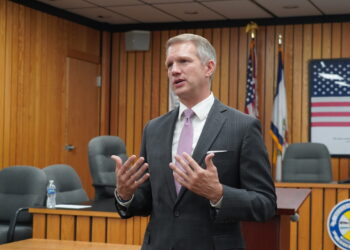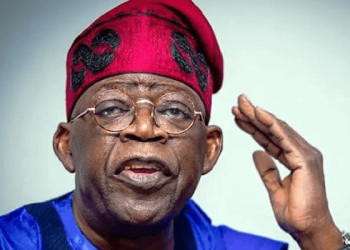


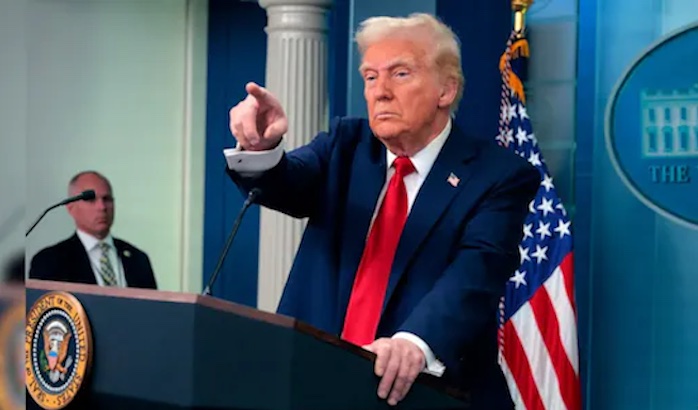
President Donald Trump formally launched his Board of Peace on Thursday in a move that has immediately sown division among world powers, raising profound questions about whether the new body is meant to complement or eventually rival the United Nations as the world’s primary forum for diplomacy.
While framed as a vehicle to secure the Gaza ceasefire, Trump’s expansive vision for the board—and its controversial $1 billion membership fee—has triggered alarm among traditional U.S. allies and a cautious response from major global powers, many of whom are pointedly refusing to join.
The unveiling ceremony at the World Economic Forum in Davos was stark in its revelations. Alongside the United States, the room contained representatives from nations like Saudi Arabia, the UAE, Egypt, Turkey, and Belarus, but no delegates from any other permanent member of the U.N. Security Council (Russia, China, France, or Britain) were visibly present. This split underscores a fundamental tension: is this a coalition of the willing, or the nucleus of an alternative global order that sidelines Western democracies and established institutions?
Inside the ‘Board of Peace’: A $1 Billion Ticket and Vague, Expansive Powers
Trump’s proposal is audacious in both its financial demand and its open-ended mandate. He stated that permanent members must contribute $1 billion each to fund the board, a staggering sum that has acted as a deterrent for many nations. More concerning to diplomats is the board’s ill-defined, potentially limitless scope. “Once this board is completely formed, we can do pretty much whatever we want to do,” Trump declared, suggesting it could evolve far beyond its initial Gaza mandate.
While Trump insisted the board would work “in conjunction with the United Nations,” his own language highlighted its perceived superiority. He praised the UN’s “tremendous potential” but argued it had been underutilized, positioning his new creation as the vehicle to finally unlock global peace—implying the 78-year-old institution had failed. A U.N. spokesperson quickly clarified that any engagement would be strictly limited to the context of the Gaza ceasefire resolution, attempting to contain the board’s ambitions.
Why Allies Are Alarmed: A Snub to the Post-War Order
The alarm among traditional U.S. allies is palpable and rooted in clear geopolitical signals. Britain stated it was “not joining at present.” France has outright declined. China remains silent. This collective hesitation from the world’s major democracies and powers is a stunning diplomatic rebuke to a presidential initiative.
Analysts see the board’s composition as particularly telling. Of the approximately 35 committed nations, few are democracies. The roster is dominated by autocratic Gulf states, regional powers like Turkey, and nations with strained relations with the West, such as Belarus. The inclusion of Israel and Hungary—both led by Trump-aligned populists—further defines the board as a project aligned with the president’s personal political brand rather than traditional multilateral values. This has sparked fears that the “Board of Peace” is less about global consensus and more about creating a loyalist bloc that operates outside—and potentially against—the UN’s democratic and rule-based framework.
A Rival in the Making?
The most important question on everybody’s mind: Is this a rival to the UN? remains unanswered but deliberately provoked. By demanding billion-dollar commitments, inviting a selective group of nations, and claiming the power to “do pretty much whatever we want,” Trump has constructed a body that inherently challenges the UN’s universality and consensus-driven model.
For now, it operates under a UN Security Council resolution for Gaza, giving it a veneer of legitimacy. But the empty chairs from London, Paris, and Beijing at its launch speak louder than the signatories in the room. They signal a world deeply skeptical of Trump’s latest disruptive gambit, viewing the “Board of Peace” not as a partner for the UN, but as the opening salvo in a struggle to define who gets to manage—and fund—the world’s conflicts in the years to come.