
They were suspended. Or so a faction claimed. A press conference was held. Announcements were made. Headlines were written.
Now the African Democratic Congress has stepped in and erased it all.
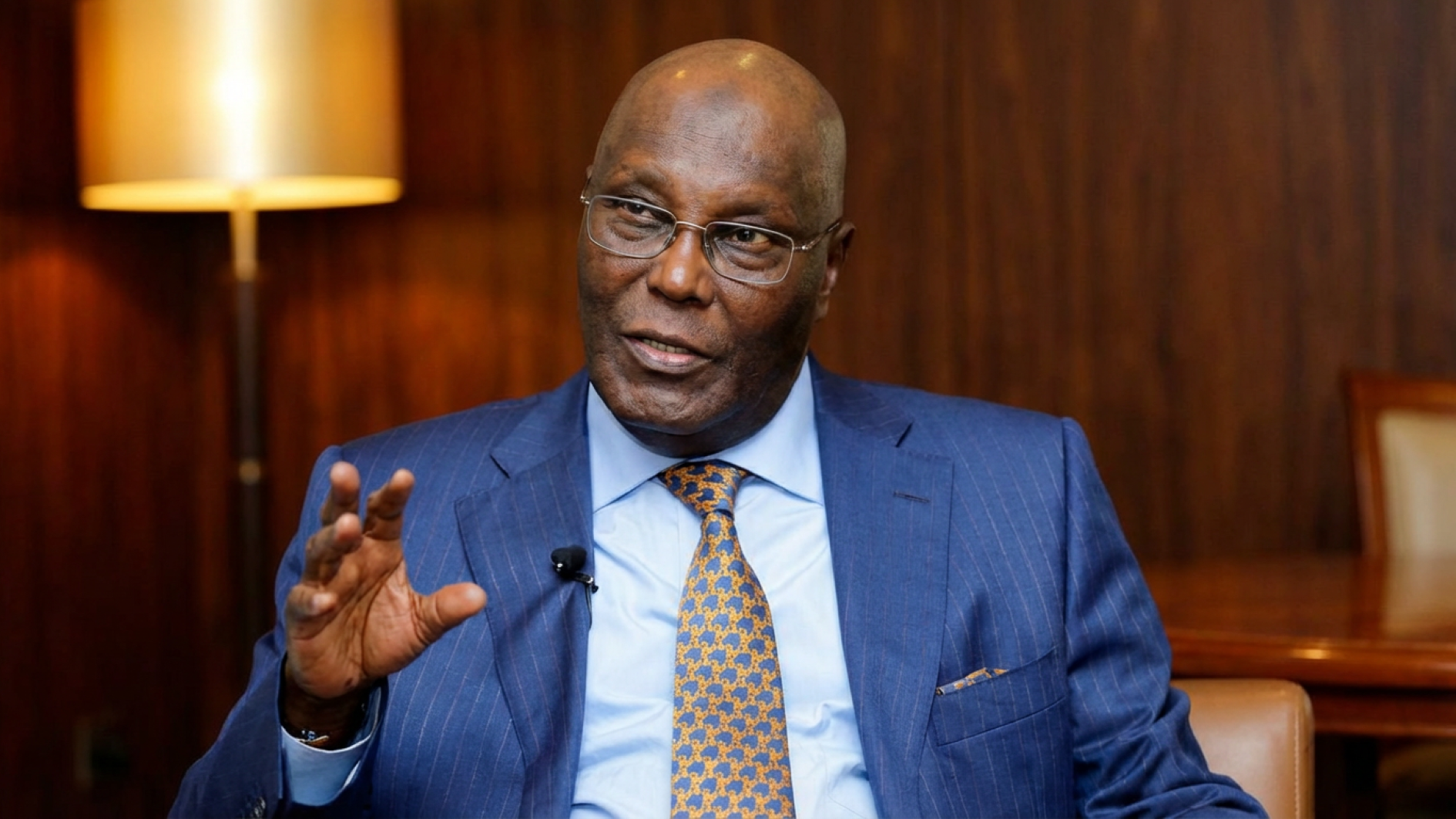
The ADC has declared that the reported suspension of former Vice President Atiku Abubakar and former Secretary to the Government of the Federation, Babachir Lawal, by a faction of the party in Adamawa State is a nullity. The party insists that the group behind the move lacks the authority to take such action and that the announcement carries no weight within its ranks.
In plain English, the suspension never happened.
‘They Are Just Jesters’
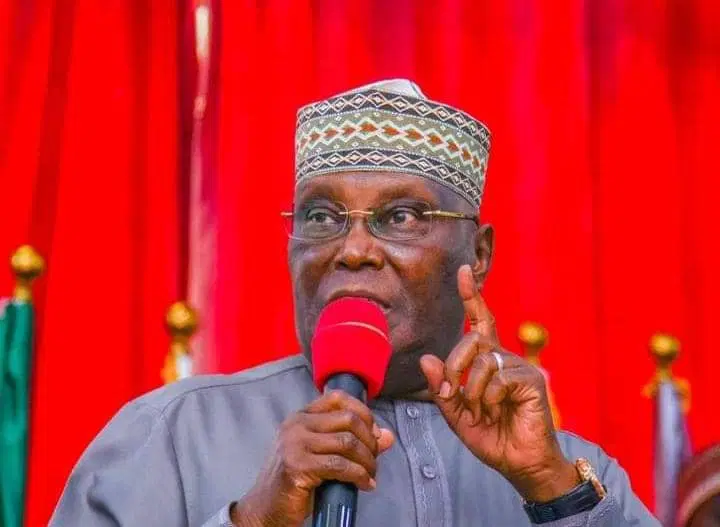
The party’s National Publicity Secretary, Bolaji Abdullahi, did not hold back when asked whether any disciplinary steps would be taken against those involved. “No, no, no,” he said. “There’s nothing to it. It doesn’t make sense. Those saying it — they suspended Atiku and Babachir Lawal — don’t have the power to do that. No, they don’t have the power to do that. They are just jesters.”
That is striking language from a party spokesperson. He did not call them mistaken. He called them jesters. Performers. Not serious people.
The response followed a press conference in Adamawa, where factional state chairman Raji Zumo announced the suspension of Atiku, Lawal, and the party’s transition committee chairman, Sadiq Ibrahim. Zumo accused the trio of fostering disunity, creating parallel structures, undermining lawful authority, and disregarding a subsisting court order.
The ADC’s national leadership has now dismissed those accusations as worthless.
The Deeper Crisis
The suspension drama is not happening in a vacuum. The ADC is grappling with internal disputes over its national leadership. Separate factions led by Nafiu Bala Gombe and Kingsley Ogga — both expelled during the party’s national convention on April 14 — are now laying claim to the position of national chairman. That contradiction is not lost on observers. The same people the party expelled are now claiming to lead it.
The Independent National Electoral Commission had earlier withdrawn recognition of the party’s leadership structures amid the dispute. That means, from INEC’s perspective, the ADC does not currently have a clear, recognized leadership. That vacuum has allowed factional figures like Zumo to step forward and make announcements that the national party is now forced to clean up.
Despite the tensions, the leadership aligned with former Senate President David Mark insists the party remains intact following the convention. The convention was held. Leaders were affirmed. Expulsions were issued. The Mark-led group considers itself the legitimate authority. The question is whether INEC — and the public — agrees.
‘Callous and Anti-Democratic’
ADC chieftain Eze Chukwuemeka Eze went further than the party’s official statement. He described the move by the Adamawa faction as “a callous act by hunger-driven sycophants and enemies of democracy.”
In a statement, Eze dismissed the suspension as illegitimate, saying it was orchestrated by a “non-existing faction” of the ADC in Adamawa State. “The purported suspension of Atiku and Babachir is a callous act by a few ADC hunger-driven sycophants and enemies of democracy in Adamawa State,” he said. “No living individual or group can make Atiku irrelevant in the politics and culture of Adamawa State.”
Eze also took aim at the broader political context. “It is hunger, deprivation and foolishness, ironically inflicted on these same individuals, that prompted this embarrassing move. Who is this Raji Zumo? It is only under Tinubu and the APC that such individuals will attempt to suspend respected leaders of a political party.”
He warned that attempts to destabilize opposition politicians would not secure re-election for Tinubu in 2027. “The President Tinubu knows the game is over due to his abysmal performance,” Eze said. “He has turned himself into a curse to Nigeria.”
What This Means
The ADC is trying to project stability. A faction attempted to suspend two of the most prominent political figures associated with the party. The national leadership responded by calling the faction “jesters” and declaring the suspension a nullity. That is damage control.
But the damage is already visible. INEC has withdrawn recognition of the party’s leadership. Expelled members are claiming to be the chairman. Factions are holding press conferences and announcing suspensions that the national party says are meaningless. Whether the ADC can present itself as a serious opposition force ahead of 2027 depends entirely on whether it can resolve these internal disputes before they define the party in the public imagination.
The Bottom Line
So what happened with the Atiku and Lawal suspension? A factional ADC chairman in Adamawa State announced that the former vice president and former SGF had been suspended. The ADC’s national leadership immediately declared the suspension a nullity, saying the faction had no authority to take such action. The party’s spokesperson called the individuals behind the move “jesters.” A party chieftain described the act as “callous” and driven by “hunger and foolishness.”
The suspension is void. Atiku and Lawal remain members of the ADC. But the fact that a faction felt emboldened to announce its suspension in the first place is a sign of deeper instability within the party. The ADC may have backtracked on this suspension. But the internal crisis that made it possible is far from resolved.