After less than 20 days of flying as the mighty Air Force One, the plush 747 donated by Qatar is heading back to a Texas hangar.
The Boeing 747-8, which entered presidential service earlier this month following an accelerated 10-month conversion, is expected to leave service again in the coming weeks for what officials have described as a final effort to “max out” its capabilities. The process is expected to take roughly four weeks.
US President Donald Trump confirmed the aircraft would be sent away in about a month, speaking at Joint Base Andrews after returning from the FIFA World Cup final.
The VVIP jet, refitted by defense contractor L3Harris in a striking red, white, dark blue, and gold livery, currently serves as an interim presidential aircraft while Boeing continues work on the long-delayed next-generation VC-25B fleet, now expected to enter service in mid-2028.
The Missing Piece: Protection, Not Comfort
While the aircraft already incorporates an advanced communications suite and extensive mission equipment, aviation and defense experts have consistently pointed to one significant capability gap: survivability.
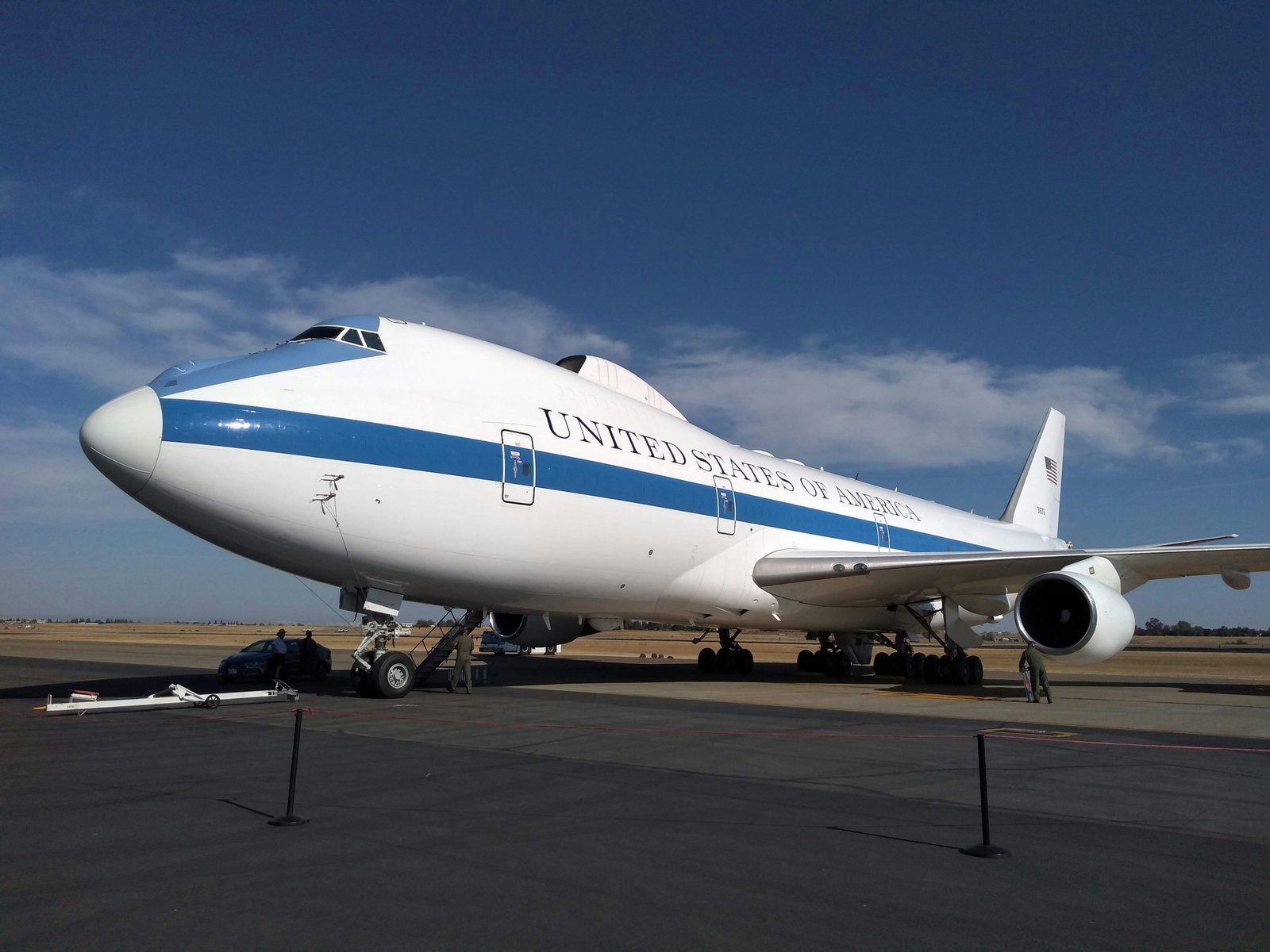
Unlike the long-serving VC-25A presidential aircraft, the temporary jet does not appear to carry the extensive defensive systems traditionally associated with Air Force One. The existing VC-25As are equipped with a sophisticated self-protection package that includes missile approach warning sensors, infrared jammers, directional infrared countermeasure laser turrets, and chaff and flare dispensers. The aircraft are also heavily hardened against electromagnetic pulse events.
By contrast, careful examinations by experts of the converted aircraft found no visible evidence of missile-warning sensors or external defensive countermeasure systems. The Air Force has acknowledged that the aircraft lacks certain “less commonly used mission sets.”
That capability gap has already influenced presidential travel. Following the aircraft’s first presidential mission on July 1, reports indicated that the Secret Service preferred not to use it on certain overseas flights because it lacked defensive countermeasures typically expected for higher-risk international operations. During one overseas itinerary, an older VC-25A was used for part of the journey before the temporary aircraft resumed presidential duties for the return flight.
What the Month-Long Upgrade Will Likely Include
The relatively short upgrade window offers the biggest clue about what work lies ahead. A complete Air Force One conversion normally requires years of engineering, extensive structural modifications, and thousands of miles of specialized wiring. The first conversion of the temporary aircraft was completed in roughly ten months by around 400 employees working continuous shifts.
Because the upcoming visit is expected to last only about four weeks, experts believe the work is likely to focus on installing a modular self-protection package rather than fundamentally rebuilding the aircraft. The most probable additions include missile approach warning sensors, directional infrared countermeasures and expendable chaff and flare systems.
These systems would significantly improve protection against shoulder-fired heat-seeking missiles, one of the most realistic threats faced by large aircraft operating near airports.
Analysts have suggested that modular systems such as Elbit’s C-MUSIC or Northrop Grumman’s Guardian could provide a practical solution. These systems have already been adapted for commercial airliners and foreign government Boeing 747s, allowing defensive capabilities to be added in weeks instead of years.
What the upgrades are unlikely to include is full nuclear-grade hardening. Achieving the level of electromagnetic pulse protection found on the permanent Air Force One fleet requires extensive structural work and major electrical redesign that cannot realistically be completed during a one-month maintenance period.
Where the Work Will Happen
Although neither the Air Force nor L3Harris has confirmed where the work will take place, the most likely destination is the company’s Mission Integration facility at Majors Field in Greenville, Texas, where the aircraft’s initial conversion was completed. The Boeing 747, now carrying military serial 25-3300, also conducted its 2026 flight-test campaign from Greenville under the callsign “Vader 01.”
The Bottom Line
The Qatar-donated Boeing 747 serving as temporary Air Force One is heading back to Texas for security upgrades after less than 20 days in service. The four-week retrofit will likely add missile-warning sensors and countermeasure systems to address a critical capability gap. Until the upgrades are complete, the US president will travel on the older, less luxurious VC-25A from the Reagan era.