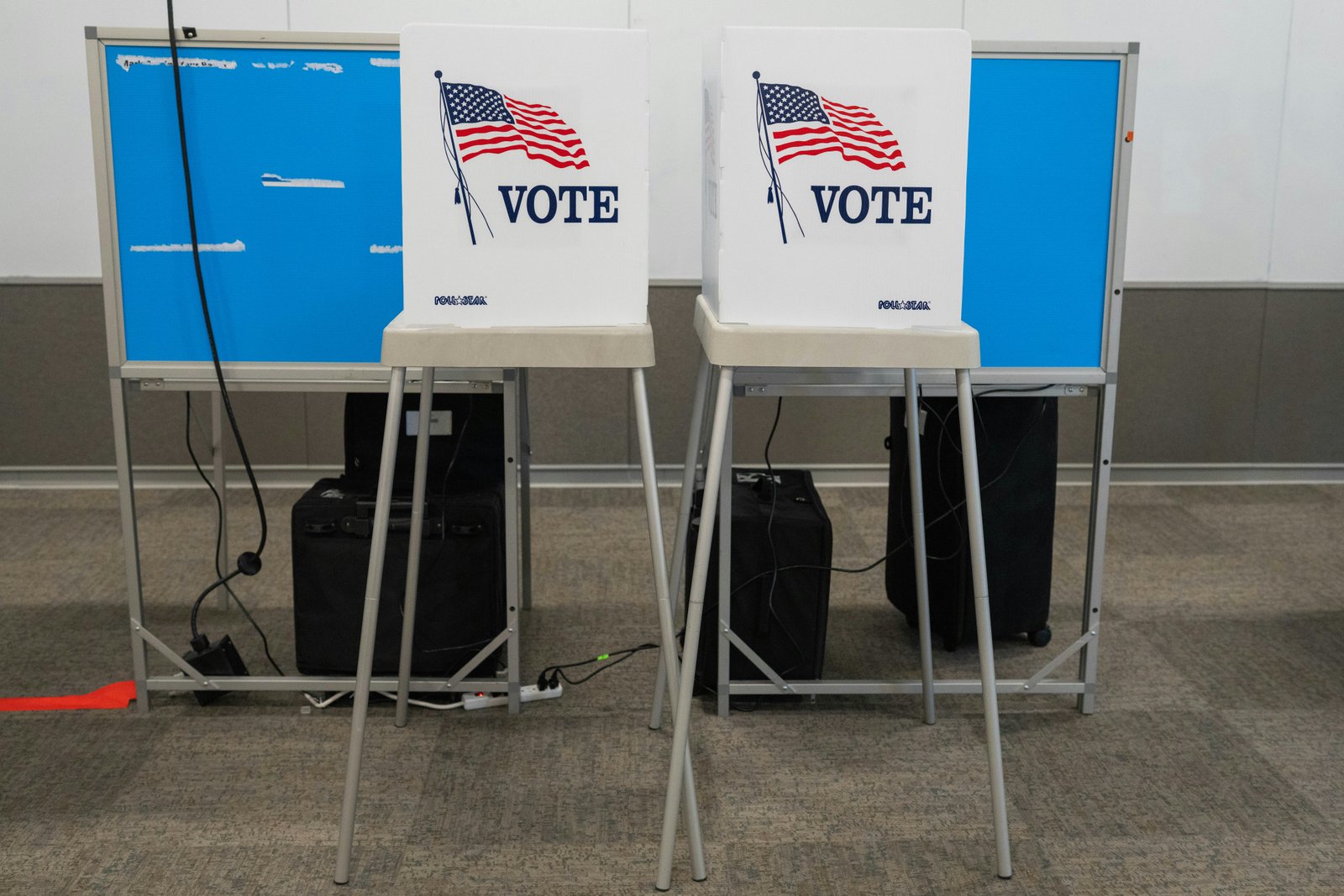

The Alaska 2026 midterms ranked-choice voting system has produced one of the most unusual election lineups in modern political history. Following the certification of the top-four primary results on September 1, voters in Alaska are officially set to choose between a sitting U.S. Senator, a challenger who shares the exact same name as that Senator, and a convicted federal felon currently serving a 20-year prison sentence in New York. Because Alaska’s election rules send the top four vote-getters from an open, nonpartisan primary directly to the general election regardless of party, fringe candidates and strategic wildcards now have a direct shot at shaping key congressional outcomes.
Namesake Challenger and Convicted Felon Shake Up General Election Roster
At the center of the Senate race, incumbent Republican Sen. Dan Sullivan faces a high-stakes challenge from former Democratic Rep. Mary Peltola. However, things got complicated when Daniel J. Sullivan, a former teacher, entered the race. Republican officials tried to remove the challenger from the ballot, claiming his candidacy was a deliberate attempt to confuse voters and split the conservative vote. After legal appeals, courts ruled that the challenger can stay on the ballot as “Daniel J. Sullivan Jr.,” while the incumbent will be listed as “Dan S. Sullivan (Incumbent)”.

Meanwhile, in the race for Alaska’s sole seat in the U.S. House of Representatives, Republican Rep. Nick Begich will face off against independent Bill Hill and Democrat Eric Hafner. Hafner is currently serving a 20-year sentence in a New York federal prison for making threatening communications to state officials. Despite being incarcerated thousands of miles away, the unique nonpartisan system cleared the way for Hafner to qualify for the November ballot after another candidate suspended their campaign.
How Ranked-Choice Voting Works in Alaska’s November System
Alaska adopted its nonpartisan primary and ranked-choice voting model back in 2020 to reduce political polarization and encourage moderate consensus. Instead of separate party primaries, all candidates run on a single ballot, and the top four move forward. In November, voters rank candidates in order of preference. If no candidate wins an outright majority of first-preference votes, the lowest candidate is eliminated, and their voters’ second choices are redistributed until someone passes the 50% threshold. While the system aims to give voters more options, the 2026 lineup shows how easily it can yield unpredictable ballots featuring prison inmates and confusing candidate names.
Opinion
Looking at what is happening in Alaska alongside the chaotic news coming out of the U.S makes it hard not to feel frustrated with the current state of politics. On one end, you have an election system that allows a federal inmate serving time in New York to end up on an Alaska congressional ballot. On the other end, you have political leaders making dangerous moves on the global stage.
Ranked-choice voting was originally sold to the public as a clever way to stop extreme political fights and give regular people better choices. Instead, it seems to have created a chaotic circus where anyone who fills out paperwork can disrupt an entire election. The fact that an inmate locked up across the country can get on a ballot to represent working-class Alaskans proves that the legal loopholes are far too wide. Everyday voters deserve real leadership and serious policy discussions, not administrative confusion and weird technicalities that turn the voting booth into a guessing game.
Between political leaders playing games with foreign conflicts and an election setup that puts felons and decoy names on public ballots, voters are left feeling exhausted. Politicians need to drop the theatrics, fix broken systems, and start focusing on real leadership instead of constant chaos.
Ultimately, the impact of the Alaska 2026 midterms ranked-choice voting outcome will depend on whether voters can navigate the confusing ballot options to elect real, accountable representatives in November.