Three Australian appellate judges have rejected an Indigenous elder’s landmark bid to prosecute King Charles III over the alleged genocide of Aboriginal and Torres Strait Islander people.
The ruling by Victoria’s Court of Appeal leaves Uncle Robbie Thorpe, a 68-year-old elder of the Krautatungalung people, with one final domestic option: seeking permission to appeal to the High Court of Australia. The High Court accepts only about 10% of applications for leave to appeal.
The Case
Thorpe has been attempting since 2023 to launch a private prosecution against the monarch in Melbourne Magistrates’ Court. His case alleges that the King, who is also Australia’s head of state, along with the Australian government and its institutions, is perpetuating genocide by maintaining systems that disadvantage Indigenous people across numerous socioeconomic measures.
Indigenous Australians make up about 4% of the population. They die younger, experience worse health outcomes, and are more likely to be imprisoned or unemployed than other Australians, according to official statistics.
Monday’s ruling was Thorpe’s third legal defeat since he began his campaign.
The Immunity Problem
The British monarch is immune from all criminal and civil liability in the United Kingdom. This provides an immunity that is even broader than that of a US president because it extends to personal acts that are outside official power, Sydney University constitutional lawyer Anne Twomey said.
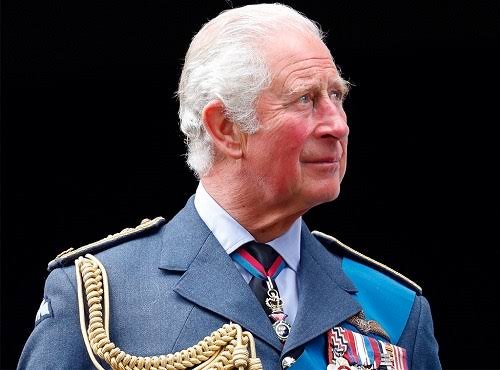
The King’s common law immunity in Britain has likely been inherited by Australia, a former British colony that continues to recognize Britain’s monarch as its own head of state. Twomey said she is unaware of the monarch’s common law immunity ever being tested in Australia.
The International Criminal Court
Thorpe said Monday he did not expect to receive a fair hearing in Australia. After exhausting his options in Australian courts, he said he would take his allegations against the monarch to the International Criminal Court in the Netherlands.
“The International Criminal Court will expose Australia for what it really is — a lying, racist, illegal occupation committing genocide,” Thorpe said.
The ICC does not recognize head-of-state immunity and has the jurisdiction to prosecute on a charge of genocide. But an individual such as Thorpe does not have the option to launch a private prosecution in the ICC.
The UN Security Council can refer a prosecution, but Britain would veto such a move against King Charles, Australian National University international lawyer Don Rothwell said. The most common path is for an individual to make the ICC’s Office of the Prosecutor aware of evidence, as happened in cases against Russian President Vladimir Putin and Israeli Prime Minister Benjamin Netanyahu.
“An individual cannot commence a prosecution. If they’ve exhausted all of their options under Australian law, the best that they can do is seek to provide evidence that they believe constitutes the crime of genocide. It’s then up to the International Criminal Court to determine whether they would seek to prosecute,” Rothwell said.
The Bottom Line
An Australian court has rejected Indigenous elder Robbie Thorpe’s bid to prosecute King Charles III for genocide. The court found the case had no real prospect of success. Thorpe now plans to take his allegations to the International Criminal Court, though individuals cannot launch private prosecutions there. The King enjoys broad immunity from criminal and civil liability, which Australia has likely inherited.
My Opinion
Robbie Thorpe has lost three times in Australian courts. He will probably lose again. The King is immune from prosecution. The law is clear. The courts have no choice but to apply it. But the law being clear does not make it just.
The numbers are not in dispute. Indigenous Australians die younger. They go to prison more often. They earn less. They are unemployed more. They are statistics published by the Australian government itself. Thorpe says that is genocide. The courts say he cannot prosecute the King for it. Both things can be true. He cannot win. And he is not wrong about what is happening.
The international route is not promising either. The ICC does not allow private prosecutions. The Security Council would never refer a case against King Charles. Britain would veto it. So Thorpe will keep knocking on doors that will not open.
That is not a reason to stop. There is a long tradition of losing cases that eventually change the law. Thorpe is 68. He has been fighting this fight for years. He may not live to see it succeed. But the statistics will still be there. And the question of whether a monarch should be immune from prosecution for genocide will not go away just because a court says it cannot hear the case.