
A major national security operation is underway in Benin to hunt down the architects of a shocking Sunday coup attempt, after a dramatic and unexplained development in the hostage crisis that lay at its heart.
Two senior military officials, seized by mutineers as the crisis erupted, have been mysteriously freed, a high-level government source has exclusively revealed. The circumstances of their release—whether by force, negotiation, or escape—remain shrouded in secrecy, and it is unclear if other hostages are still being held by the fleeing plotters.
The foiled putsch has sent shockwaves through a region weary of political instability and exposed deep fissures within the Beninese state.
Dawn of a Mutiny
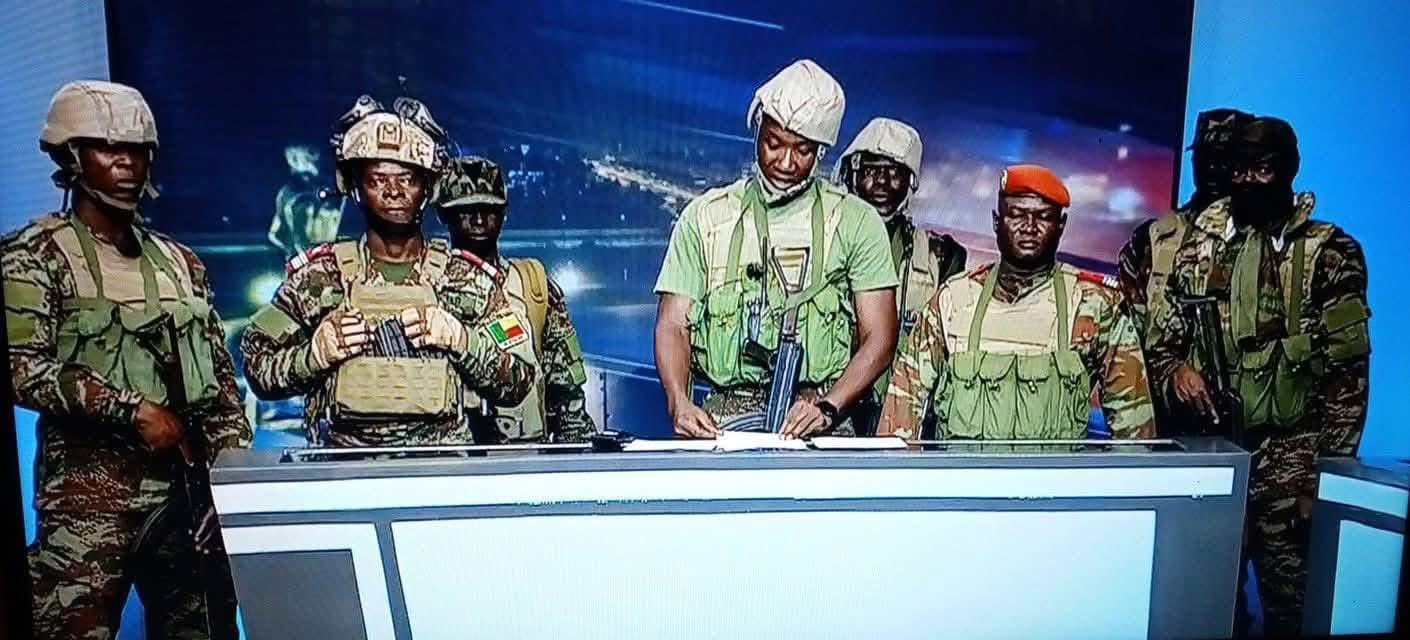
The chaos began in the early hours when a group of soldiers, led by the fugitive Lt. Col. Pascal Tigri, seized the national television station. In a grainy broadcast, they denounced President Patrice Talon’s rule, citing the “abandonment” of soldiers fighting jihadists in the north, crippling healthcare cuts, and oppressive political tactics.
Gunfire rattled near the presidential palace in Cotonou, plunging the capital into fear. Yet, within hours, the tide turned with brutal efficiency.
At the urgent request of Benin’s government, regional powerhouse Nigeria intervened decisively. Nigerian fighter jets screamed into Beninese airspace, launching precision strikes that “dislodged the coup plotters” from their strongholds at the TV station and a key military camp. The thunderous explosions that rocked Cotonou were the sound of the mutiny being bombed into retreat.
“A direct assault on democracy will never succeed on our watch,” a Nigerian defense spokesperson stated.
A “Sharp Turn” and a Nationwide Dragnet
By evening, a defiant President Talon addressed the nation, declaring the situation “totally under control” and vowing that the “treachery will not go unpunished.” He confirmed loyalist forces had cleared “the last pockets of resistance.”
But the story was far from over. The revelation that the two high-value hostages had been freed marks a critical and puzzling new phase. Their release has not slowed the intense manhunt; security forces are scouring the country for Tigri and his co-conspirators, who remain at large. Fourteen individuals, including a previously dismissed soldier, have already been arrested.
The government now faces the dual task of rounding up the plotters and investigating what this hostage release means. Was it a sign of the plotters’ collapse, a secret deal, or something else entirely?
A Region on the Edge
The attempt has triggered a stark regional response. ECOWAS, the West African bloc, has rapidly deployed troops from Nigeria, Ghana, Sierra Leone, and Ivory Coast to secure Benin’s critical infrastructure. Stung by a string of successful coups in Mali, Burkina Faso, Niger, and Guinea, ECOWAS is signaling a new, hardened resolve to protect remaining democracies.
The incident has also become a flashpoint in a global narrative. Pro-Russian social media accounts celebrated the coup attempt, highlighting the geopolitical undercurrents as Moscow courts juntas in the Sahel. Benin, a key Western ally and one of Africa’s stable democracies, represents a strategic foothold.
Why It Matters
The plotters’ manifesto points to the scandal simmering beneath Benin’s stability. President Talon, a pro-Western businessman set to step down next year, is credited with economic growth but accused of authoritarian drift. His government recently barred the main opposition candidate from an upcoming election and extended political terms—moves critics call democratic backsliding.
The mutineers channeled this frustration, alongside the genuine grievances of soldiers dying in the north’s expanding jihadist conflict. Their failed gamble has now exposed these raw nerves to the world.
As the manhunt presses on and the freed hostages are debriefed, Benin is left to grapple with a shattered sense of security and the unsettling question of who, exactly, it can trust within its own ranks.