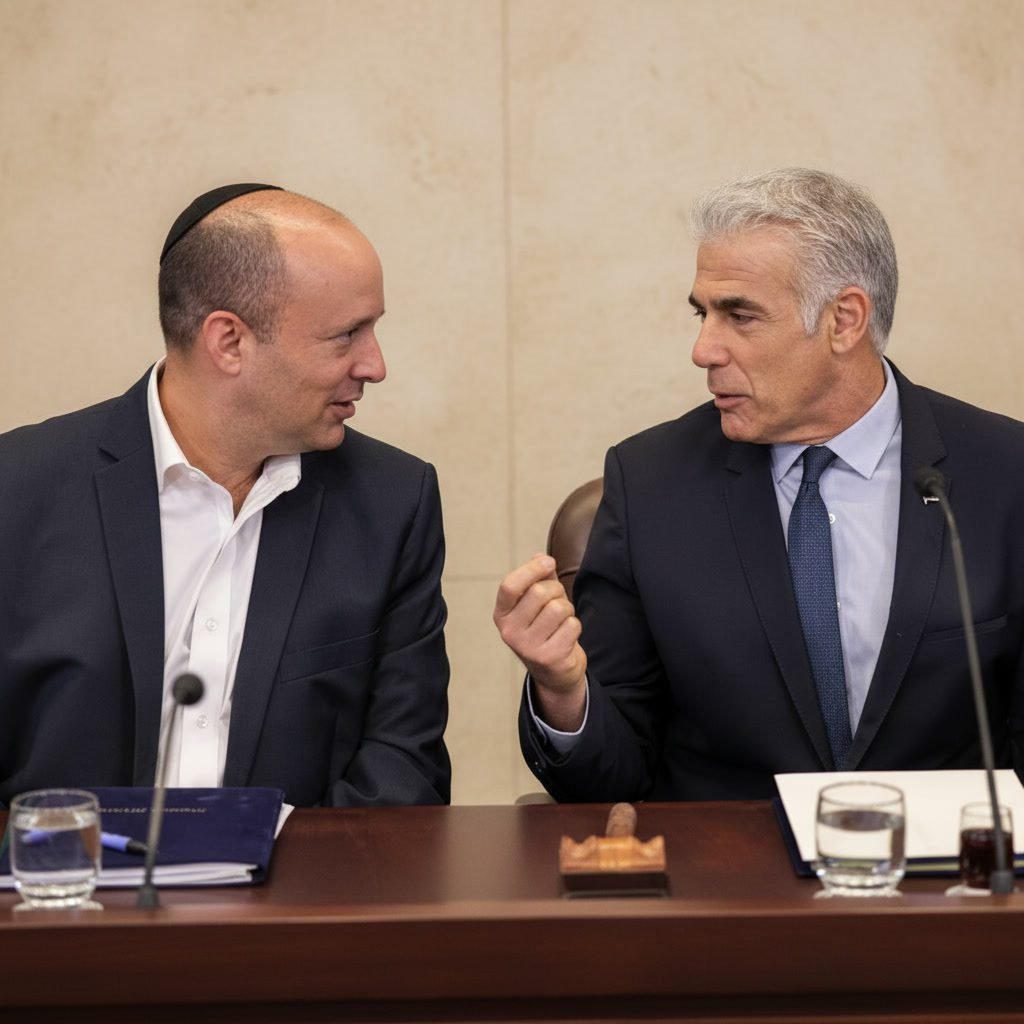

The announcement, made from Jerusalem, confirms that Naftali Bennett and Yair Lapid will merge their respective political factions into a single ticket headed by Bennett. This move is designed to consolidate the “anti-Netanyahu” vote, which has been scattered across a dozen smaller parties since the coalition collapsed in late 2022.
Ideological Rivals, Political Partners
The alliance is a study in contrasts, bringing together two leaders with fundamentally different visions for Israel’s future:
•Naftali Bennett: An Orthodox Jew and former tech entrepreneur, Bennett holds hard-line views on Palestinian statehood and security, often positioning himself to the right of Netanyahu on military matters.
•Yair Lapid: A secular, centrist former journalist, Lapid is seen as the face of liberal Israel, favoring diplomatic solutions and social reform.

The Common Enemy
Despite these differences, the two leaders maintained a famously close working relationship during their 2021-2022 “Change Government.” Their statement on Sunday emphasized that the merger is intended to “put an end to internal divisions” within the opposition.
The Wartime Context
The 2026 election comes at a moment of unprecedented national tension. As Israel continues to strike Hezbollah “forcefully” in Lebanon and monitors the fallout of the Iran-US impasse in Islamabad, the opposition argues that Netanyahu’s focus has been compromised by his efforts to maintain a narrow, right-wing coalition.
Many have questioned whether the current administration is applying an unsustainable military model in the north, a point the Bennett-Lapid alliance is expected to hammer during the campaign. With the Trump administration actively reshaping Middle Eastern diplomacy, including the recent cancellation of peace envoys to Pakistan, Bennett and Lapid are positioning themselves as more stable partners for Washington.
Netanyahu’s Counter-Move
The Prime Minister’s camp has already dismissed the merger as a “marriage of convenience” between politicians who have nothing in common but ambition. Netanyahu is expected to campaign on his decades of experience, arguing that a Bennett-Lapid government would be a “weak and divided” experiment that Israel cannot afford during a regional war.
While the merger unites two major players, the opposition still faces challenges from smaller parties on the left and right that have yet to join the unified bloc. As the joint news conference scheduled for Sunday evening approaches, the question remains: can a former commando and a former talk-show host convince a war-weary public that they are the duo to lead Israel through its most dangerous decade? The battle for the soul of the Jewish state has officially begun.
Will the ideological gap between Bennett’s hard-line base and Lapid’s secular supporters cause the new party to fracture under pressure, or is the desire to unseat Netanyahu a strong enough glue to hold this “odd couple” together through the 2026 vote?